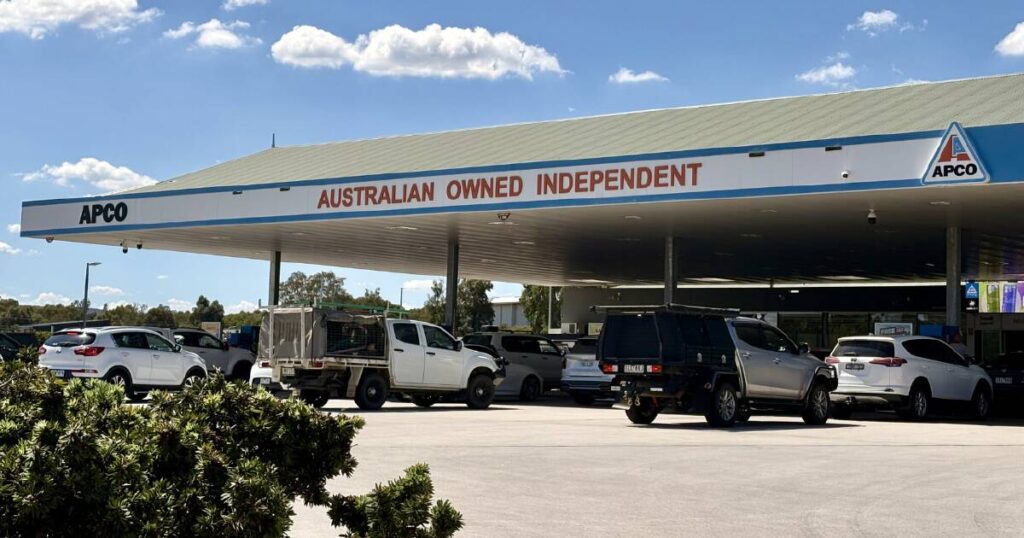
The Victorian government has enacted new fuel price regulations effective immediately in response to soaring fuel costs affecting residents across Australia. The legislation requires fuel retailers to set a daily cap on prices and publish these rates in advance. This initiative aims to protect consumers from rising prices and is part of a broader effort to stabilize fuel supply throughout the region.
Senator Bridget McKenzie, representing Wodonga, criticized the government for its handling of Australia’s fuel reserves, stating, “This government doesn’t know what’s actually going on.” She expressed concern that suburban and regional areas are facing significant challenges due to high fuel prices and dwindling supply.
Effective from March 10, 2024, the new laws stipulate that retailers must establish prices for the following day by 14:00, or risk penalties exceeding $3,000, increasing to over $24,000 if the matter goes to court. The price cap will be enforced for a 24-hour period starting at 06:00 the next day, allowing only price reductions during this timeframe.
Victorian Premier Jacinta Allan emphasized that these measures would help families avoid excessive charges at the pump and potentially save them hundreds of dollars annually. The Minister for Consumer Affairs, Nick Staikos, added that the new price cap would enable consumers to shop around for better deals and apply downward pressure on overall fuel costs.
The backdrop of these regulations includes a history of panic buying and fluctuating consumer confidence during crises. A study conducted in 2024 highlighted that public sentiment often leans towards a desire for government intervention during severe situations, further complicating the fuel supply landscape.
Federal Climate Change and Energy Minister Chris Bowen provided insights into the current state of Australia’s fuel reserves, stating that the country has 36 days of petrol, 34 days of diesel, and 32 days of jet fuel available—representing the highest levels in over a decade. Nevertheless, Senator McKenzie urged Bowen to ensure that Australians are not exploited at the pump by companies aiming to profit from global conflicts.
In the broader economic context, Sally Auld, chief economist at NAB, warned that the ongoing “energy shock,” driven by rising global energy prices, poses new challenges for the Reserve Bank of Australia, particularly as inflation rates exceed target levels. “Energy prices feed into almost every part of the economy,” Auld stated, highlighting the extensive impact of fluctuating oil and gas prices across the supply chain.
The Reserve Bank of Australia recently raised interest rates for the first time since October 2023, with forecasts suggesting another increase in May 2024, bringing the total rate to 4.1 percent. This shift in monetary policy reflects broader concerns surrounding inflation and economic stability.
Global oil prices have also been influenced by geopolitical tensions. Following statements from former US President Donald Trump regarding military operations in Iran, the price of Brent Crude Oil fell below $90 per barrel. Brent Crude is a key benchmark for oil pricing worldwide, which experienced a significant spike to $119.50 per barrel on March 9, 2024, marking the largest increase since the onset of the Ukraine invasion.
As Australia navigates these complex challenges, the new fuel price regulations represent a proactive step towards safeguarding consumers and stabilizing the economy in a landscape marked by uncertainty and volatility.