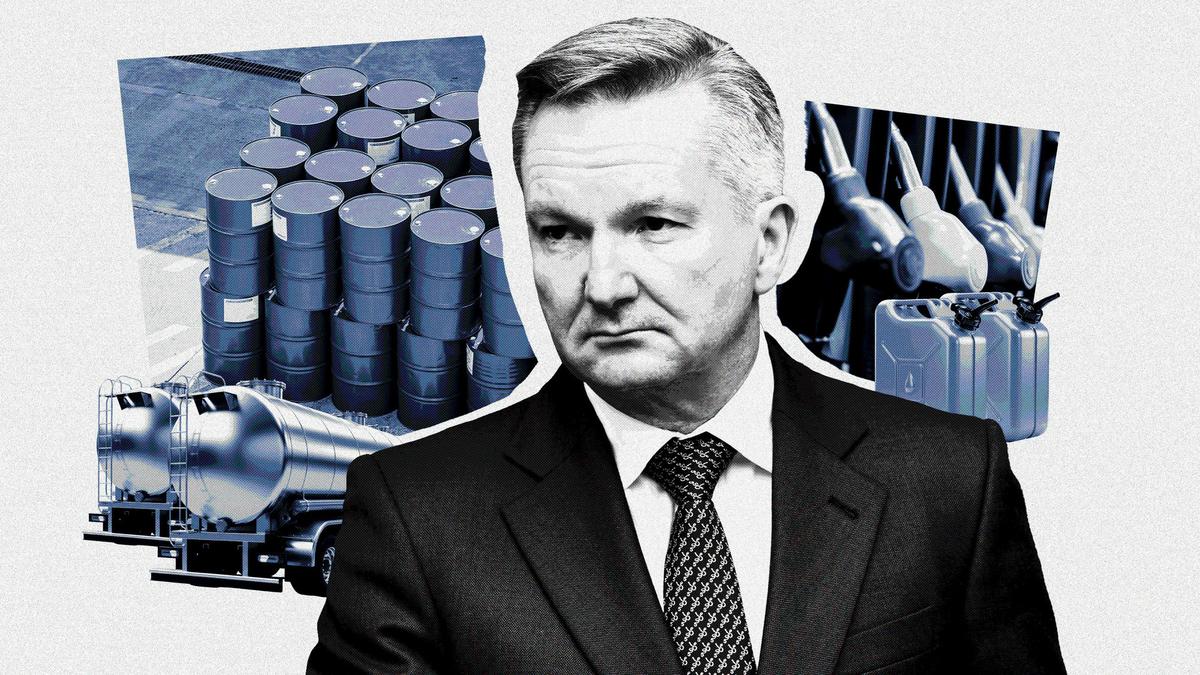




Energy Minister Chris Bowen is under intense scrutiny following reports of significant fuel shortages affecting regional and rural Australians. During a press conference in Sydney, Bowen characterized the situation as “unacceptable,” particularly for farmers who have been hit hard by the crisis.
He revealed that Australia currently holds approximately 1.6 billion litres of petrol, sufficient for a 37-day supply, alongside 2.7 billion litres of diesel and 800 million litres of jet fuel, which correspond to 30 days and 29 days of supply, respectively.
Bowen addressed the escalating demand, noting a staggering 100 percent increase at terminals across the nation. “This has particularly affected people in regional areas,” he stated, emphasizing that the government is actively working with the industry to resolve the situation as swiftly as possible.
In a recent decision, the government opted to release part of its minimum stock obligation for diesel, a move Bowen described as “not an easy decision.” When asked about the likelihood of fuel shortages worsening, he reassured Australians that the country is “as well-prepared as we possibly could be.” Furthermore, he insisted that under the Albanese government, no oil refineries would be closing.
Opposition energy spokesman Dan Tehan expressed his discontent with Bowen’s handling of the situation, accusing him of being “asleep at the wheel.” He criticized Bowen for relying too heavily on state governments for information about the shortages. “Why wasn’t he doing this work two weeks ago?” Tehan demanded, highlighting the need for immediate action to ensure fuel security across the nation.
Tehan contended that Bowen has been “complacent,” urging him to prioritize communication with distributors to address the shortages effectively. He remarked, “Chris Bowen has one job, and that is to provide fuel security across this nation.”
The fuel crisis comes amid ongoing geopolitical tensions in the Middle East, which have contributed to rising fuel prices globally. Australians are facing the prospect of prices exceeding $3 per litre, with some service stations reporting completely empty pumps.
Earlier this week, the Royal Automobile Association of South Australia reported unprecedented diesel prices, with averages reaching $2.46 per litre and some locations charging as much as $2.49. The Albanese government has faced mounting criticism and calls to contain the situation more effectively.
In response to the crisis, the government announced it would temporarily relax fuel standards to facilitate the importation of an additional 100 million litres of fuel into the country.
Peter Nattrass, principal advisor for the RAA, urged the public not to panic buy, stating, “We still have plenty of supply in the system and only isolated cases of stations running out.”
As the situation evolves, the focus remains on securing adequate fuel supplies for all Australians, particularly in rural and regional areas that are most affected.