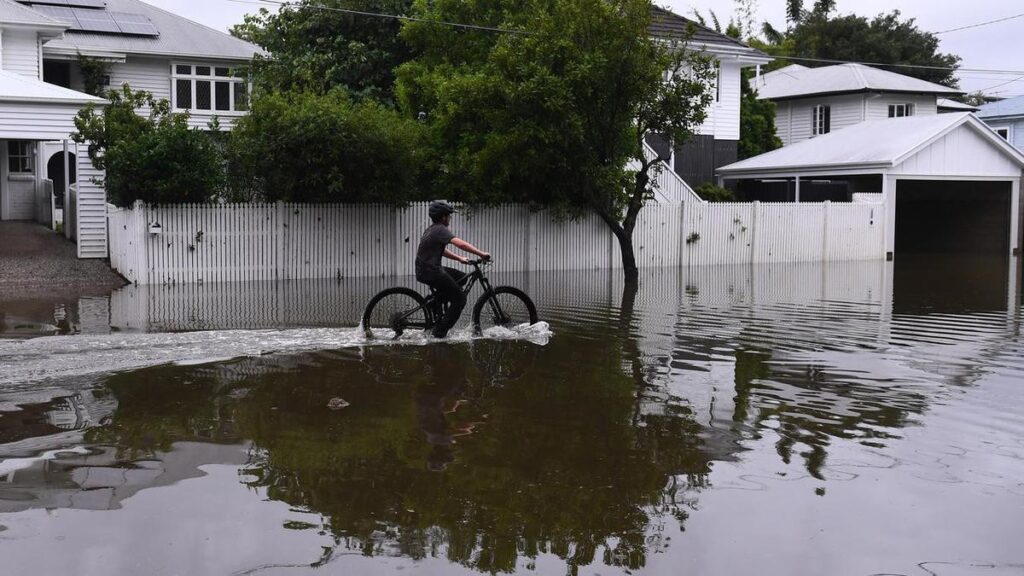
Australia’s ex-tropical cyclone Alfred has emerged as one of the most financially devastating climate-related disasters of 2025. The storm caused an estimated economic loss of approximately $US1.2 billion (around $A1.8 billion) as it swept through southeast Queensland and northern New South Wales. This ranking is part of a broader report released by the UK-based humanitarian relief charity, Christian Aid, which identified ten of the most economically catastrophic climate events, collectively resulting in over $US120 billion in damages.
Top Climate Disasters of 2025
The report highlights that the most expensive climate-related incident was the Palisade and Eaton wildfires in suburban Los Angeles, which occurred in January. The wildfires led to economic losses exceeding $US60 billion. Following this, a series of cyclones in November triggered destructive flooding and landslides across several Southeast Asian nations, including Thailand, Indonesia, Sri Lanka, Vietnam, and Malaysia. These disasters incurred costs around $US25 billion and resulted in over 1,750 fatalities, marking them as among the deadliest climate events of the year.
The report compiled by Christian Aid is part of an annual effort to document extreme weather occurrences, showcasing the significant economic and human toll attributed to climate change. The charity utilizes data from Aon, an insurance giant, which primarily focuses on insured losses. However, this often overlooks the broader impacts, including lost income, environmental degradation, and human displacement.
Impacts of Ex-Cyclone Alfred
Following the ex-tropical cyclone Alfred, a “rapid attribution study” conducted by ClimaMeter revealed that the storm produced more rainfall than it would have without the influence of human-driven climate change. Initially classified as a category four storm, it was downgraded prior to landfall but still delivered significant rainfall and damage. Researchers noted that Alfred’s trajectory was unusually far south, raising alarms about the potential for future storms to affect unprepared urban areas due to rising ocean temperatures.
In the context of climate change, scientists anticipate a decrease in the overall number of cyclones; however, those that do form are expected to be more intense. Davide Faranda, research director at the Laboratoire de Science du Climat et de l’Environnement, emphasized that these recorded events are not isolated incidents but rather predictable outcomes of a warming atmosphere driven by decades of fossil fuel emissions.
Wealthy nations tend to experience higher economic costs from such disasters due to elevated property values and greater insurance coverage. In contrast, poorer nations often face more severe consequences from climate extremes, as they possess fewer resources for recovery and adaptation.
Patrick Watt, chief executive officer of Christian Aid, underscored the urgent need for adaptation strategies, particularly in the Global South, where resources are already stretched thin. “The poorest communities are first and worst affected,” he stated, highlighting the pressing challenges climate change presents to vulnerable populations.
As the world grapples with the escalating costs of climate-related disasters, the findings from Christian Aid serve as a critical reminder of the urgent need for action to address adaptation and mitigation strategies in the face of an increasingly volatile climate.