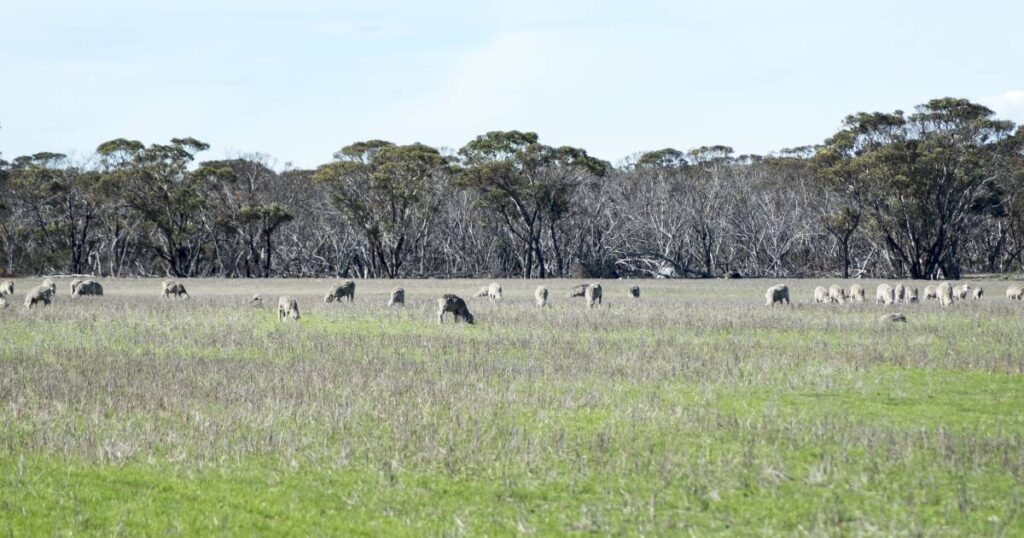
The outlook for land values in Western Australia (WA) is optimistic for 2026, largely fueled by family-operated farming businesses. According to Jon Bahen, real estate manager at Nutrien Harcourts West, a record grain harvest and high livestock prices have led to unprecedented demand for rural land. This trend reflects a strong appetite for expansion among local farming families, particularly throughout 2025.
Bahen reported a remarkable increase in transactions, with a rise of 23 percent from the previous year. “While land values have been described as steady, we have seen premiums paid for strategically located parcels by adjoining and local farmers,” he stated. The focus on productive cereal and mixed farming properties has driven robust demand across the State. Significant family units have changed hands, particularly in the northern and eastern Wheatbelt regions.
Despite a general perception that land prices have plateaued following a decade of consistent growth, Bahen noted that interest from investors, local producers, and corporate entities remains strong. Larger properties are often considered too extensive for single local operators, leading to the formation of syndicates among local producers to acquire these parcels.
Family Operators Dominate Market
Bahen emphasized that average land prices do not fully capture the strong desire for expansion in certain areas of WA. Prime properties surrounded by substantial local family farming operations have commanded impressive prices. “The largest players in the market are the family farming units, keen to continue expanding, which drives the ongoing trend of farm aggregation that has been present for 40 years,” he explained.
While corporate investment has garnered attention, actual interest has been concentrated in higher rainfall areas within the Great Southern and regions receiving over 400 millimeters of rain. “WA still represents the best value land in Australia,” Bahen added, indicating that well-capitalized local growers often outbid corporate investors, leveraging their financial resources.
Investment in carbon farming has been limited, primarily occurring in the lower rainfall zones of the northern and eastern Wheatbelt. Companies like Woodside and other private operators have engaged in this market, expanding their portfolios. Bahen suggested that the carbon market has growth potential. Should commodity prices decline or seasonal conditions worsen, the sector could become increasingly significant, potentially establishing a price floor for land values.
Record Transactions Highlight Market Trends
During 2025, Nutrien Harcourts WA facilitated the sale of Cumberland Farms in West Holleton, a property spanning 7,500 hectares that was purchased by the UK’s Dakin family for $12 million plus plant, equipment, and stock. This acquisition starkly contrasts with their other holdings in Northumberland, UK.
The auction conducted by Paul Tomason at Esperance for the farm Second Wind exemplified the rising farm values. The 774-hectare property sold for $9.3 million, illustrating a five-fold increase in land values over the past decade.
“The outlook for values in 2026 looks very positive, with corporate farming families remaining the major players in the market,” Bahen concluded. “Given the early activity we are observing, significant holdings are likely to become available.”
As the agricultural landscape in WA evolves, family-operated farms seem poised to lead the charge in shaping land value trends in the years ahead.