



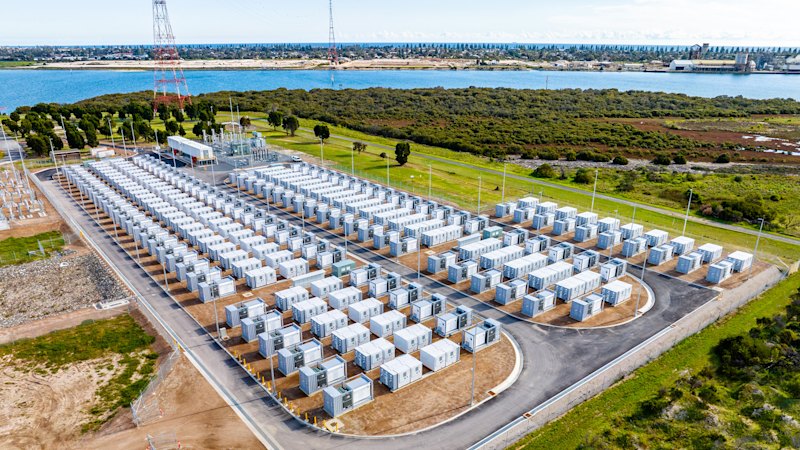
Large-scale batteries are poised to surpass gas as a dominant source in Australia’s electricity grid by 2027. This shift, predicted by analysts, could significantly alter the energy market’s dynamics and lead to reduced power bills for consumers. Australia has emerged as the third-largest market for utility-scale batteries globally, following China and the United States, driven by decreasing costs and attractive investment opportunities.
The surge in battery projects has resulted in a substantial increase in shovel-ready initiatives across Australia. According to energy consultancy Rystad Energy, these new projects are expected to exceed the current gas capacity of the grid within two years. Major energy companies, including Origin and AGL, alongside newer entrants like Akaysha, Quinbrook, and Neoen, are backing these developments.
Batteries can operate profitably by storing electricity generated during the day at lower prices and releasing it during peak evening demand when prices are higher. This operational model contrasts sharply with the stagnation in investment for new gas-fired power generation. Most energy experts emphasize the ongoing necessity of gas as a reliable backup for renewable energy sources, particularly in periods of low wind and solar output. Notably, gas remains excluded from the federal government’s Capacity Investment Scheme, which supports new energy supplies.
David Dixon, an analyst at Rystad Energy, highlighted the implications of the increasing battery supply. He noted, “You’re going from a situation where there is limited competition [during the evenings] to this scenario where you’ve got 15 gigawatts entering the market – more than the entire gas fleet.” This influx of battery capacity is expected to exert downward pressure on electricity prices during peak times.
Almost half of the new batteries are anticipated to become operational this year, with the remainder entering service in 2027. Dixon referred to this transition as “transformational,” as these batteries will also utilize excess solar and wind energy produced during the day that would otherwise go unused, a phenomenon known as curtailment.
The rapid expansion of both large and small-scale batteries represents a notable achievement for Australia’s clean energy transition, particularly in light of the challenges facing renewable projects. For instance, last week, Origin Energy cited the slow pace of renewable installations as a reason to delay the closure of its Eraring coal power station, the largest in the nation. This facility is now one of several projects that heavily invest in grid-scale batteries, which account for approximately half of the initiatives in the market operator’s connections pipeline.
Data compiled by UNSW energy systems analyst Dylan McConnell revealed that the total power supplied to the grid by large batteries surged by 143% year-on-year in 2025, despite the initial low base. In contrast, gas generation declined by around 14%. This excess supply from new battery projects could theoretically lower wholesale electricity prices, historically influenced by gas power generation.
While the growing presence of batteries may reduce reliance on gas during peak periods, McConnell cautioned that this does not fundamentally alter gas’s role as a backup source in the energy landscape. He stated, “Batteries are eating gas’ lunch for around four hours a day. But if you need gas to run for 12 hours or so during a cold snap, that’s where the gas generators actually make their money.”
As the energy market evolves, the balance between battery and gas power remains critical. The advancements in battery technology and increasing competition could lead to significant changes in energy pricing, though gas will likely continue to play an essential role in ensuring system reliability during extended low-energy events.