


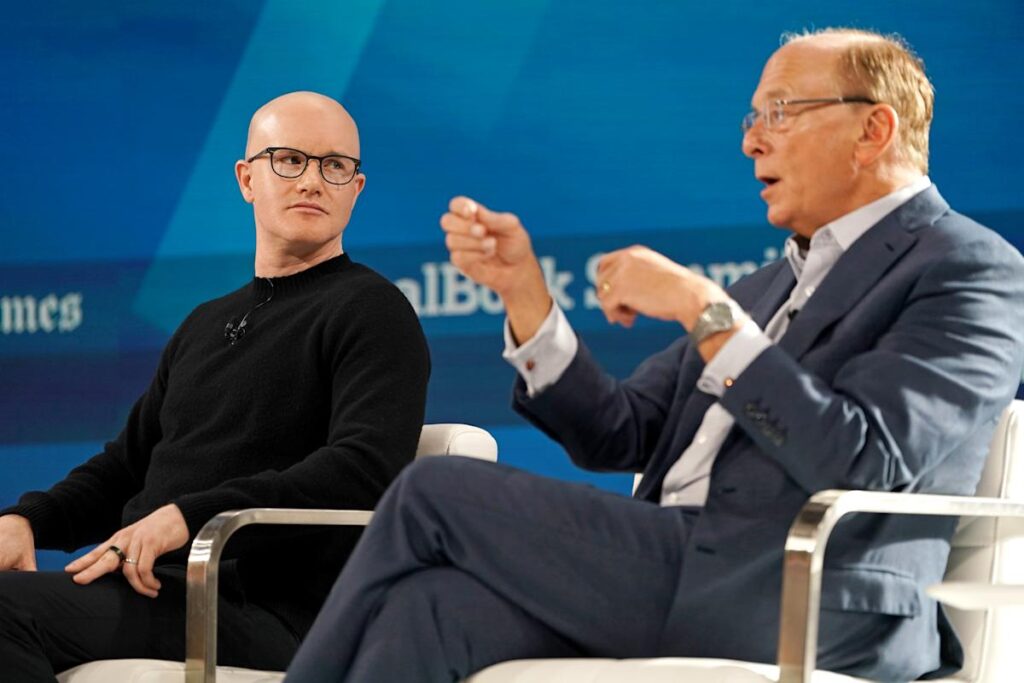
BlackRock’s chairman and CEO, Larry Fink, has notably softened his previous skepticism towards cryptocurrencies as his company emerges as a significant player in the digital asset investment landscape. Speaking at the New York Times DealBook conference on November 8, 2023, Fink acknowledged that his perspective on crypto has undergone a transformation. “My thought process has evolved,” he stated, reflecting on his earlier skepticism regarding the potential of digital currencies.
Fink’s comments come in light of BlackRock’s success with the iShares Bitcoin Trust ETF (IBIT), which launched at the beginning of 2024. Within a short span, this ETF has risen to become the largest US-listed bitcoin ETF, accumulating over $70 billion in assets. This rapid growth has positioned it as the world’s fastest-growing ETF and a key asset for BlackRock, marking it as the company’s most profitable product to date.
During the conference, Fink addressed his past remarks in which he referred to cryptocurrencies as “an index for money laundering” and “thieves.” He reiterated that despite his evolving stance, bitcoin and the broader crypto market continue to experience significant volatility. “Bitcoin is still heavily influenced by leveraged players,” Fink remarked, acknowledging that this factor contributes to the unpredictable nature of the asset.
The cryptocurrency market witnessed a notable downturn on October 10, 2023, highlighting the ongoing challenges investors face. Fink pointed out that such volatility is a common characteristic of the market, underscoring the risks associated with investing in digital currencies.
Tokenization as a Game-Changer
Beyond his evolving views on cryptocurrencies, Fink identified tokenization as a major opportunity for transforming the traditional finance sector. Earlier in the week, he and Rob Goldstein, BlackRock’s Chief Operating Officer, outlined their vision for a financial ecosystem where various assets, including stocks, bonds, real estate, and infrastructure, could exist on blockchain platforms. This perspective was shared in an article published in The Economist.
“The whole idea is to just reduce huge friction costs, making investing easier and simpler,” Fink explained. He believes that this shift could create a more fluid investment process, enhancing accessibility and efficiency in financial transactions.
However, the path to deeper engagement with cryptocurrency investments is contingent upon regulatory developments. BlackRock and other financial institutions are awaiting a vote in the US Senate on the Clarity Act, legislation designed to establish a framework for the oversight of certain tokenized assets. This act aims to solidify the regulatory landscape for cryptocurrencies, building upon policy advancements made during the previous administration.
During the conference, Brian Armstrong, CEO of Coinbase, expressed optimism about the potential for the Senate to vote on the Clarity Act within a few months. He stated, “And then I think we’ll have the foundation to really have solutions to this issue be built in the US, and we’ll see a little bit less of this kind of leverage or high-risk activity happening.”
As BlackRock continues to navigate this evolving landscape, Fink’s shift in attitude towards cryptocurrencies reflects a broader trend within the financial sector, where traditional institutions are increasingly recognizing the potential of digital assets. This transformation not only signals a potential shift in investment strategies but also highlights the ongoing dialogue between regulatory bodies and the innovative forces driving the future of finance.