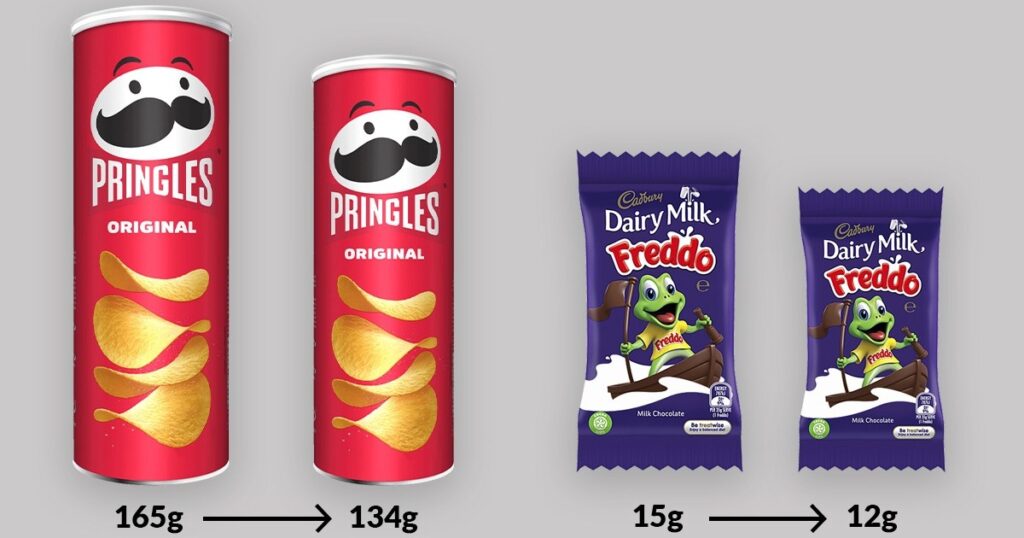
Many consumers are experiencing a subtle but impactful change in their grocery bills as manufacturers engage in a practice known as “shrinkflation.” This term refers to the reduction of product sizes while maintaining the same price, leaving shoppers feeling as if they are paying more for less.
According to the U.S. Department of Labor, this trend has become increasingly prevalent across various sectors, particularly in the food and beverage industry. As of March 2023, numerous everyday items, from snacks to cleaning supplies, have seen their quantities reduced without any corresponding decrease in retail prices.
Understanding Shrinkflation and Its Impact
Shrinkflation is not merely a passing trend; it has roots in broader economic conditions, including inflation and supply chain disruptions. Manufacturers are faced with rising production costs, and rather than increasing prices outright, many companies choose to shrink their products. This strategy allows them to maintain sales volume while minimizing customer backlash.
For example, a popular cereal brand recently reduced its box size from 500 grams to 450 grams, while keeping the price unchanged at $4.99. This adjustment means that consumers are effectively paying more per gram, yet many remain unaware of the change.
Economic analysts have pointed out that this practice can have a significant cumulative effect on household budgets. Over time, consumers may find themselves spending more on groceries without realizing it, as the overall cost of familiar products increases.
The Global Reach of Shrinkflation
The phenomenon of shrinkflation is not confined to any single country. Reports indicate that consumers in the United Kingdom, Australia, and other English-speaking nations are also feeling the effects. In the UK, a recent study highlighted that over 60% of consumers noted smaller packaging in their weekly shopping trips, with many expressing frustration at not receiving the same value they once did.
Brands across the globe are responding to consumer feedback. Some companies have begun to clearly label changes in product size on packaging, while others emphasize quality improvements to justify price points. Nevertheless, the effectiveness of these strategies remains to be seen as public awareness of shrinkflation grows.
In conclusion, as manufacturers navigate the complexities of economic pressures, shrinkflation represents an important shift in how consumers engage with the market. Awareness and vigilance are essential for shoppers who wish to manage their grocery spending effectively in this evolving landscape.