




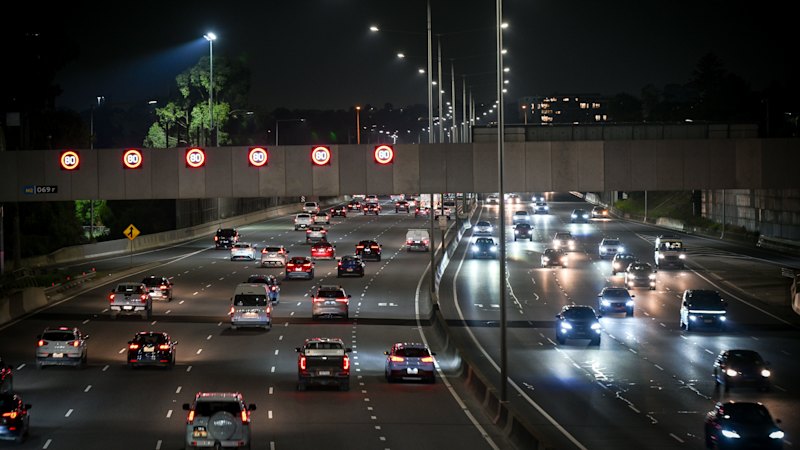
Melbourne motorists are set to continue facing substantial “admin fees” charged by road-toll operator Transurban, despite the recent decision in New South Wales to abolish similar charges. The fees in Victoria can reach up to ten times the original toll amount, adding financial strain to many residents already grappling with debt.
Transurban, which oversees the $45 billion CityLink network, issues millions of toll invoices annually. If drivers use CityLink without a valid Linkt pass and do not pay within three days, they receive a toll invoice that includes a hefty $16.13 admin fee. This fee doubles to $31.49 if the payment is not made within 17 days. The situation raises concerns among advocates who argue that these fees contribute to a cycle of escalating debt for vulnerable motorists.
Changes in New South Wales vs. Victoria
In contrast, Transurban has committed to eliminating admin fees in New South Wales by mid-2026. This decision follows a comprehensive state government review that recommended significantly lower fees, reducing them to $1.10 for first notices and $2.20 for second notices. In the last financial year, Transurban sent out 46 million toll notices in NSW, generating admin fees totaling $618 million.
While Transurban has not disclosed the exact amount of admin fees collected from Melbourne motorists, the figures are likely comparable. The toll roads in New South Wales handle approximately 25 percent more traffic than CityLink, yet they charge lower admin fees. Last year, motorists in Melbourne paid $987 million in CityLink tolls, and this amount is expected to rise following the opening of the $10.2 billion West Gate Tunnel on December 14, 2023.
Jo Parkin, a senior financial counsellor at Uniting, highlighted the detrimental impact of admin fees on financially stressed individuals. She noted that a small unpaid toll, such as $3.27, could escalate into a criminal debt of up to $450 if the situation is not addressed, leading to increased barriers for those trying to pay their tolls promptly.
Calls for Reform and Fairness
Legal experts and advocates are calling for broader reforms to ensure fair access to toll roads. Shifrah Blustein, managing lawyer at Inner Melbourne Community Legal, described the admin fees as “unjustifiable and totally disproportionate” to the costs involved in issuing notices. She emphasized that while removing these fees would be a positive step, further action is needed to prevent Transurban from profiting excessively at the expense of struggling Victorians.
Blustein added that tolls are essential services, yet unlike public transport or utility bills, there are no concessional rates available for low-income individuals. She urged the government to collaborate with toll operators to introduce fairer options.
Parkin echoed these concerns, stating that approximately 60 percent of her clients dealing with fine debts owe money to Transurban. Although the company claims to have an accessible hardship program, her experiences suggest that it falls short of assisting those in need effectively.
A spokesperson for Transurban pointed out that the company is removing admin fees in New South Wales as part of a broader reform initiative led by the Minns government. They stated that the admin fees help cover the costs of identifying vehicle owners and issuing notices, and emphasized the availability of digital solutions for payment management.
The recent NSW toll road review, conducted by former ACCC chair Allan Fels, also recommended that Transurban move towards electronic invoicing rather than traditional mail and consolidate invoices for multiple trips to reduce administrative burdens on motorists.
As of January 1, 2024, the maximum CityLink toll for a single car trip will increase from $12.25 to $12.38. Additionally, a 24-hour pass covering both the West Gate Tunnel and CityLink will cost $38.52 for cars and $70.03 for utes and vans. The West Gate Tunnel is expected to see increased usage as it serves as an alternative route to the West Gate Bridge, which will undergo maintenance starting Friday night, reducing lane capacity and potentially causing delays for motorists.
The ongoing situation highlights the need for a balanced approach to toll road management that considers the financial realities faced by many drivers in Melbourne.