The Nasdaq 100 index is poised to approach its October high following a significant upside breakout, driven by robust earnings reports from major US technology firms. Futures tied to the index rose modestly as the market digested positive results from Meta Platforms, which reported better-than-expected earnings. Conversely, European equities faced pressure due to a sharp decline in shares of SAP, which fell over 15% after disappointing growth figures.
Market sentiment remains generally optimistic despite ongoing geopolitical concerns, particularly related to tensions in Iran. The US dollar has steadied following comments from Scott Bessent, the Secretary of the Treasury, who stated that the US is “absolutely not” intervening in the USD/JPY currency pair. This stability in the dollar comes as investors await weekly jobless claims data, which could influence future trading decisions.
In the commodities market, concerns about currency debasement have prompted a rally in precious metals. Silver has surged to over $120 per ounce for the first time, while gold approached $5,600, and copper experienced a notable increase of 6%. This uptick supports a bullish sentiment as miners in Europe outperformed other sectors, with energy stocks also benefiting from rising oil prices. West Texas Intermediate (WTI) crude climbed to approximately $65.00 per barrel, while Brent crude neared $70.00, driven by escalating geopolitical risks stemming from Iran.
Technical Outlook for Nasdaq 100
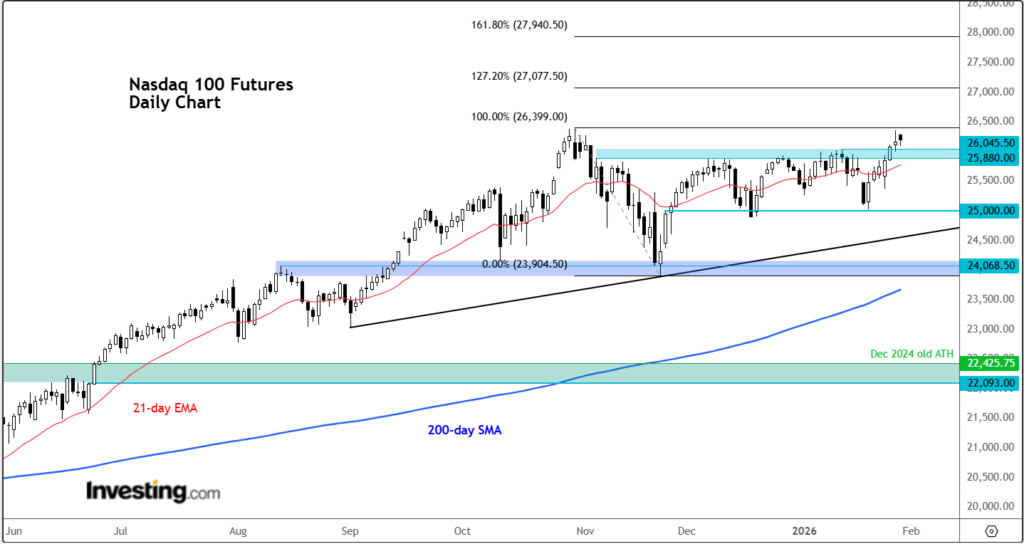
The technical analysis of the Nasdaq 100 futures presents a positive landscape, with the index breaking out of a multi-week consolidation phase. This week, it surpassed the previous resistance level between 25,880 and 26,045, a significant area that had capped rallies since the market’s peak in October. Previous attempts to breach this resistance in November and December were unsuccessful, making this breakout a noteworthy development.
The crucial factor now is whether the Nasdaq can maintain its position above this former resistance. If it does, a rally towards fresh record levels is likely. However, should the index revert below this support area, investor sentiment may shift, leading to a potential correction. The next major support is positioned around the 25,000 level, which was tested during the previous consolidation period. In contrast, the October record high stands at 26,399, and a break above this threshold would lead to further upward momentum.
Geopolitical Tensions and Market Reactions
Rising tensions in Iran have heightened geopolitical risks, contributing to a cautious market environment. The US dollar index is currently facing downward pressure, potentially marking its worst month since April. Historically, investors have viewed the dollar as a safe haven; however, the current climate has shifted preferences towards tangible assets like precious metals.
In a significant development, US President Donald Trump warned that Iran must pursue a nuclear deal or face the prospect of military action. This statement has raised concerns about potential disruptions to oil supplies from the Middle East, a region crucial for global energy markets. Any military action could threaten shipping channels, particularly through the Strait of Hormuz, where a substantial portion of the world’s oil supply is transported.
Company performance also plays a pivotal role in market dynamics. Following its announcement of plans to invest up to $135 billion this year, Meta‘s shares rose over 7% in pre-market trading. The company’s optimistic sales outlook has resonated well with investors. Conversely, Microsoft experienced a 5% drop in pre-market trading after revealing increased spending plans amid signs of slower growth in its cloud business. The sharp decline in SAP’s shares highlights the volatility in the tech sector, emphasizing the importance of earnings reports in shaping market sentiment.
As the global markets navigate these complex dynamics, investors remain vigilant, weighing the impacts of geopolitical tensions, currency fluctuations, and corporate earnings on their strategies. The coming days will be critical as economic indicators and earnings reports continue to shape the trading landscape.