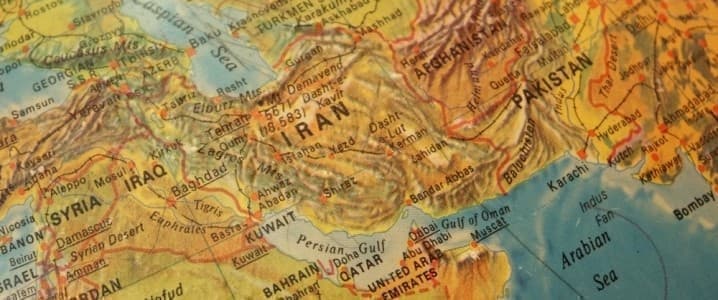
The oil market is experiencing an unprecedented disruption, with the International Energy Agency (IEA) estimating that at least 10 million barrels per day (bpd) of supply has already been shut in. This situation has resulted in the largest supply shock the industry has ever faced, causing significant concern for global energy prices and availability.
Refineries throughout the Gulf region are scaling back operations due to an inability to export products, leading to tightening markets for diesel, jet fuel, and liquefied petroleum gas (LPG). In response to the ongoing crisis, governments have initiated a historic release of 400 million barrels from strategic reserves. However, these reserves will be delivered slowly, failing to alleviate immediate pressures on the market.
Mixed Signals from Tehran
Iran’s leadership is contributing to the uncertainty surrounding the situation. Iranian diplomats have publicly stated that the country does not intend to close the Strait of Hormuz, a critical waterway for oil transport. Conversely, the newly appointed Supreme Leader has hinted that the strait could be used as leverage against the United States and its allies. This contradictory messaging has created a perception that the strait is effectively blocked, further compounding the strain on the global oil market. Until safe passage for tankers is assured, the industry will continue to face significant challenges.
The leadership landscape in Iran is also shifting dramatically following the death of Ayatollah Ali Khamenei. His passing marks the end of an era where he served as a central figure mediating among various clerical factions, security forces, and political groups. In the wake of his death, Iran is now navigating a complex power structure with overlapping authorities that have yet to establish a unified direction.
President Masoud Pezeshkian has suggested that Tehran might consider reducing its military actions against Gulf states, contingent upon those nations refraining from using their airspace for U.S. strikes. This statement reflects the increasing contradictions and uncertainties within Iran’s political framework.
As the situation unfolds, the global oil market remains under immense pressure. The interplay of reduced supply, geopolitical tensions, and shifting leadership dynamics in Iran will likely continue to influence oil prices and availability. Stakeholders across the energy sector are closely monitoring developments, acknowledging the profound implications for both short-term operations and long-term strategies.