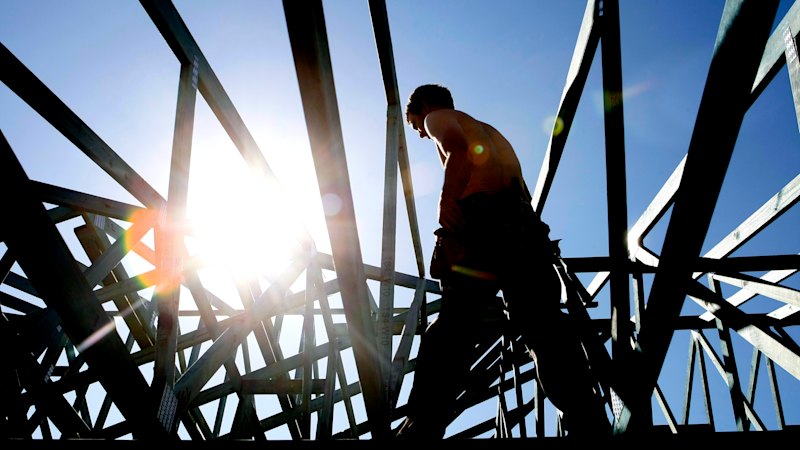
The average mortgage in Australia has reached an unprecedented level, nearing $750,000 as demand from investors, first-time buyers, and existing homeowners continues to escalate. This surge has prompted the Reserve Bank of Australia (RBA) to advocate for a significant increase in housing construction to alleviate the pressure in the property market.
Data from the Australian Bureau of Statistics reveals that the average new mortgage in New South Wales now stands at a record $873,000, while Queensland’s average has surged by $101,000 over the past year to reach $736,000. For the first time, the average mortgage exceeds $500,000 in every state and territory, with the national average hitting $736,000, marking almost a 50 percent increase in just five years.
Investor activity has also reached new heights, with a record 60,445 loans issued in the last quarter of 2025. The total value of these mortgages soared by nearly a third over the past year, culminating in a staggering $43 billion. Additionally, loans for existing owner-occupiers increased by 4.8 percent in the final quarter of 2025, reflecting a year-over-year rise of 7.4 percent.
The federal government’s recent extension of the 5 percent deposit scheme for first-time buyers has further fueled this growth. In the last quarter, approximately 32,000 first-time buyers secured mortgages, the highest number since early 2022 when interest rates were at a historic low of 0.1 percent. Last year, the number of loans taken out by first-time buyers increased by 9.1 percent, while the value of those loans surged by 15 percent.
JPMorgan economist Tom Ryan noted that the rise in first-time buyer activity suggests that the average mortgage for these buyers increased by 8.5 percent over the past three months, one of the largest increases recorded. He attributed this to the expanded deposit scheme, which enables buyers to secure larger loans with smaller down payments.
The increase in mortgage sizes occurred prior to the RBA’s interest rate hike in February and the introduction of new lending restrictions for highly leveraged home buyers. These measures are expected to temper the rapid rise in housing prices, which have compelled many Australians to take on substantial mortgages.
During a recent address, RBA Deputy Governor Andrew Hauser dismissed claims that interest rates significantly influence property price movements. He stated that, compared to international benchmarks, Australia has built a considerable number of homes but emphasized the urgent need for even more construction.
In contrast, the slowest increases in mortgage sizes were noted in the Australian Capital Territory, where the average rose by just 1.4 percent to $659,000, and in Victoria, which saw a 6.6 percent increase to $677,000. Notably, these regions are leading the country in new housing approvals.
The Chief Executive of Commonwealth Bank, Matt Comyn, recently announced a half-year profit of $5.4 billion and anticipates one more rate rise this year. He suggested that while households may feel the strain of increased rates, the overall impact on the property market will be limited.
Hauser indicated that the RBA will take necessary actions to control inflation, which is currently fueled by stronger-than-expected business spending and household expenditures. He remarked that the Australian economy is performing reasonably well, but there is a pressing need to enhance productivity.
The opposition Coalition has criticized the federal government for its spending policies, claiming they contributed to the RBA’s decision to raise interest rates. They have called for Prime Minister Anthony Albanese to apologize to mortgage holders facing increased financial burdens. In response, Treasury Secretary Jenny Wilkinson clarified that government spending was lower than anticipated in the latter half of last year, countering claims that fiscal policy was a primary driver of inflation.
As the Australian property market continues to grapple with record mortgage levels, the RBA’s call for more housing construction may be crucial in stabilizing prices and providing relief to prospective homeowners. The situation remains dynamic, with ongoing discussions about government policies and economic conditions shaping the landscape of the housing market.