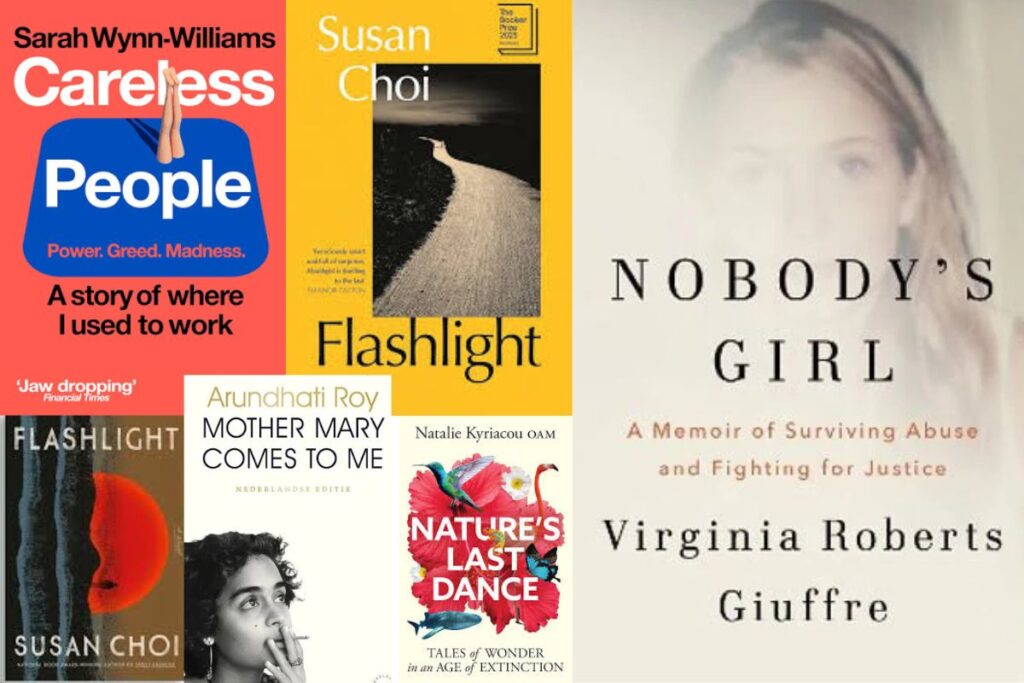
In 2025, the literary landscape was profoundly enriched by the works of women authors, showcasing an impressive array of fiction and non-fiction that has captivated readers worldwide. Notable among these releases is Virginia Roberts Giuffre‘s memoir, Nobody’s Girl, which shares her courageous journey of survival and justice against high-profile abusers. Other significant contributions include Careless People by Sarah Wynn-Williams, providing a critical look at the inner workings of influential corporations, including her experiences with Meta.
This year, a diverse collection of literature has emerged, reflecting various themes such as identity, resilience, and societal critique. Here are some of the standout books that have made a mark.
Fiction Highlights
Flashlight by Susan Choi is a poignant exploration of a father’s mysterious disappearance during a seaside walk in Japan, a narrative that reverberates through time, reshaping his family’s lives. Shortlisted for the Booker Prize, this novel artfully delves into memory and unresolved love.
In The Loneliness of Sonica and Sunny, Kiran Desai weaves an expansive love story between two Indian immigrants, whose serendipitous meeting on a train sets off a chain of events that spans continents and decades. This novel also received a Booker Prize nomination for its blend of romance and social insight.
The Theory of Everything by Yumna Kassab challenges conventional narrative forms, merging fiction, essay, and manifesto. This genre-defying work interrogates contemporary life and ideas, presenting a fragmented yet intellectually sharp perspective on power and gender.
Another notable work is We Do Not Part by Han Kang, translated by Paige Aniyah Morris. This haunting narrative follows a woman’s journey from Seoul to Jeju Island, revealing buried histories and exploring themes of deep friendship and memory.
In the thriller genre, Lyrebird by Jane Caro presents a gripping tale about a lyrebird’s mimicry of a woman’s screams, reigniting an old cold case. This taut narrative combines elements of mystery with social commentary on injustice.
Chosen Family by Madeleine Gray offers an intimate portrayal of two outsiders navigating love and identity over eighteen years, emphasizing the importance of chosen family in shaping personal growth.
Newcomer Phoebe Greenwood makes her debut with Vulture, which follows a young journalist covering the Gaza conflict in 2012. The novel provides a unique perspective on the challenges of storytelling in a complex environment.
Non-Fiction Insights
In the realm of non-fiction, Mother Mary Comes to Me by Arundhati Roy offers a lyrical reflection on her mother’s impact on her life and writing, exploring themes of love, loss, and rebellion.
Nature’s Last Dance by Natalie Kyriacou vividly chronicles the battles for conservation in an age of extinction, highlighting the urgency of protecting the natural world while celebrating its wonders.
The Right Hand by Phoebe Saintilan-Stocks provides an insightful look into the roles of chiefs of staff in shaping political decisions, revealing the pressures and loyalties that define power dynamics at the highest levels.
Cheng Lei: A Memoir of Freedom recounts the harrowing experience of journalist Cheng Lei, who spent three years imprisoned in Beijing. Her story sheds light on resilience amid brutal conditions.
In Careless People, Sarah Wynn-Williams shares her insider perspective on the culture at Meta, detailing her interactions with key figures like Mark Zuckerberg and Sheryl Sandberg. This revealing account highlights ethical dilemmas within the tech giant.
Unfinished Revolution: The Feminist Fightback by Virginia Haussegger reflects on the feminist movement in Australia, assessing its progress over the past fifty years and warning against rising anti-feminist sentiments globally.
How to End a Story: Collected Diaries 1978 to 1998 by Helen Garner presents a candid look at two decades of personal reflections, exploring themes of loss, creativity, and resilience.
Finally, Empire of AI by Karen Hao offers a critical analysis of the artificial intelligence landscape, examining its rapid growth and the implications for society.
These selections from 2025 not only highlight the depth and diversity of women’s voices in literature but also reflect significant societal themes and personal narratives. As readers continue to seek out these powerful stories, the impact of women authors remains undeniable in shaping contemporary discourse.