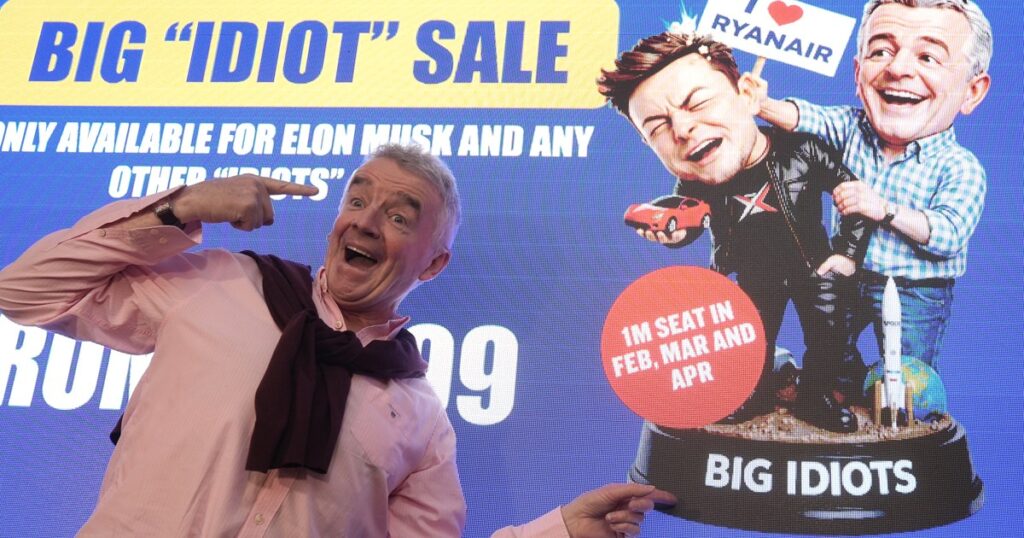
A public spat between Elon Musk and the CEO of Ryanair, Europe’s largest airline, has turned into an unexpected marketing opportunity for the airline. The conflict erupted on social media, drawing attention to both Musk’s controversial statements and Ryanair’s clever response, which has resonated widely with the online audience.
The dispute began when Musk, the owner of Twitter, criticized the airline’s service in a post that quickly gained traction. In reaction, Michael O’Leary, Ryanair’s outspoken CEO, issued a witty retort, referring to Musk as a “big idiot.” This playful jab sparked a flurry of online engagement, with users rallying around both figures in a battle of wits that showcased the personalities involved.
Ryanair’s Strategic Response
Ryanair has seized this opportunity to amplify its brand presence. The airline’s social media team has been skillfully crafting posts that capitalize on the viral nature of the incident. By aligning itself with Musk’s high-profile persona, Ryanair aims to attract attention to its budget-friendly fares and services.
In recent days, the airline’s promotional content has included humorous memes and direct references to the Twitter dispute, effectively engaging a wide audience. The approach has resulted in a marked increase in interactions across various platforms, including Twitter and Instagram. Ryanair’s marketing strategy highlights a growing trend where companies leverage social media controversies to boost brand visibility.
The timing of this incident is particularly crucial as the aviation industry continues to recover from the impacts of the COVID-19 pandemic. According to the International Air Transport Association, the global aviation market is projected to return to pre-pandemic levels by the end of 2024. In this context, Ryanair’s ability to attract attention could translate into increased ticket sales and customer loyalty in a competitive market.
Public Reactions and Industry Implications
The reactions to the exchange have been mixed, with some praising Ryanair’s boldness while others criticize the airline for engaging in petty disputes. The incident has sparked discussions about the role of social media in shaping public perception of corporations. Some analysts suggest that this could set a precedent for how brands interact with high-profile individuals online.
As the aviation sector navigates its recovery, the ability to connect with consumers through relatable and engaging content becomes increasingly important. Ryanair’s strategy not only aims to draw in new customers, but also seeks to reinforce its position as a leading player in budget travel across Europe.
As the situation develops, it will be interesting to see how both Musk and Ryanair capitalize further on this unexpected online drama. For Ryanair, this could be a pivotal moment in enhancing its brand identity and customer engagement as it prepares for a busy travel season.