




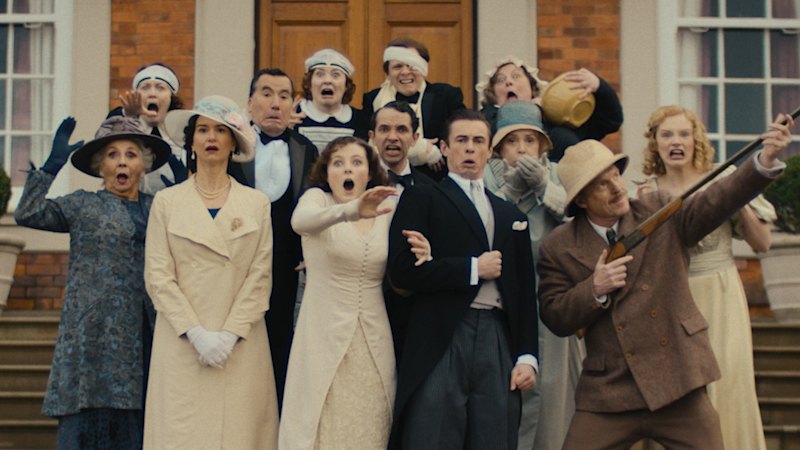
The new comedy film, Fackham Hall, attempts to blend elements of British period drama with slapstick humor reminiscent of classic American parodies. Released in cinemas on February 18, 2026, the film has garnered mixed reviews, with critics noting its lack of consistent laughs despite some clever moments.
At the heart of the story is a romance between the lowly hero, Eric Noone, portrayed by Ben Radcliffe, and Rose Davenport, played by Thomasin McKenzie. Their relationship flourishes amid the lavish backdrop of Fackham Hall, described as “the most lavish manor house in all of Shropcestershire.” The film’s humor draws heavily from popular culture, parodying both Downton Abbey and the broader genre of British period dramas. The title itself hints at the condescending attitude of the gentry towards their social inferiors.
The comedic tone of Fackham Hall is heavily influenced by the style of the Naked Gun films. The script, credited to a team that includes stand-up comic Jimmy Carr, aims for a blend of absurdity and wit, but often falls short. The film offers a few memorable lines, such as the exchange about literature, “When we read, we meet unknown friends,” which showcases its attempt at highbrow humor within a lowbrow context.
While the film touches on familiar themes of class and social dynamics, it does not delve deeply into commentary on more serious issues such as colonialism or the British Empire. Instead, it opts for a lighter approach, even if it includes some of the off-color humor associated with Carr. His cameo as a vicar, complete with a Hitler moustache, exemplifies the film’s playful irreverence.
The film’s pacing is brisk, with a rapid-fire delivery of jokes that keeps the audience smirking. Despite this, the overall hit rate for the humor is low, with critics estimating that only about one in twenty gags lands effectively. Certain visual elements, reminiscent of classic comedies, could have enriched the experience. While director Jim O’Hanlon incorporates some background humor, such as a car on fire and a Trainspotting poster, many of the visual settings, like the dull landscape paintings in Fackham Hall, fail to engage the viewer.
In summary, while Fackham Hall offers a playful homage to British period dramas and American comedies, it ultimately struggles to deliver a cohesive and engaging narrative. The film may appeal to those looking for light entertainment, but it falls short of the comedic heights achieved by its predecessors. Critics suggest that a more thorough exploration of its themes could have elevated the film from a mere parody to a meaningful commentary on societal structures.