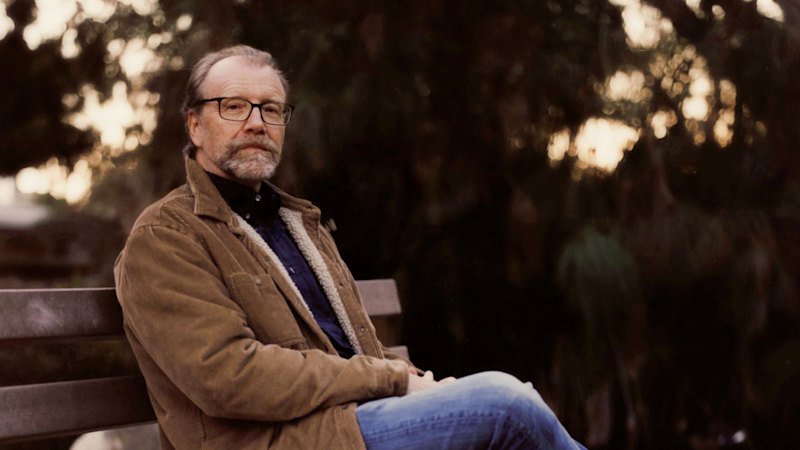
Acclaimed author George Saunders returns to the literary scene with his latest novel, Vigil, marking his first full-length fiction work in nearly a decade. The book delves into the psyche of K.J. Boone, a billionaire oil tycoon, as he confronts his impending death and the moral implications of his life’s work, particularly regarding climate change.
Vigil is set during the final hours of Boone’s life, who is depicted as “a tiny, crimped fellow in an immense mahogany bed.” The narrative is guided by Jill “Doll” Blaine, a spirit who has previously comforted others in their final moments. Boone’s character embodies the conflict of defiance against the devastation his oil empire has wrought, resisting the reckoning that other spirits seek.
In a recent video interview from his home in California, Saunders reflected on his early career in the oil industry. After graduating from the Colorado School of Mines with a degree in geophysical engineering, he spent time working in seismic prospecting across Asia. His experiences, particularly a moment in Singapore witnessing women laboring at a hotel construction site, profoundly impacted his perspective as both a writer and a human being.
“What I saw made me question the world’s structure,” he explained. “I started reading more, and it opened the gate for all the literature that followed.” This shift in perspective eventually led him to embrace a more progressive viewpoint, shaping the themes found in his work.
Saunders is celebrated for his deep empathy towards marginalized individuals, which is evident in Vigil. The novel addresses broader concerns such as corporate greed and environmental degradation, echoing themes from his previous works, including the Booker Prize-winning Lincoln in the Bardo.
This latest work engages with profound questions about redemption and accountability. Boone’s struggle highlights the moral complexities faced by individuals in positions of power. “Part of the mental gymnastics was to say, ‘What if I had stayed in the oil business and become an executive? Is there a connection between me and K.J. Boone?’” Saunders mused, considering how easily one could slip into complicity with systemic issues.
The novel serves as a theological exploration of grace and accountability in a secular world. It challenges readers to contemplate whether someone who has caused significant harm can ever find absolution. The chaotic and unpredictable nature of the afterlife depicted in Vigil stands in contrast to the more structured afterlife of his previous novel, creating a compelling narrative framework that keeps readers engaged.
Saunders draws inspiration from literary giants such as Leo Tolstoy and Charles Dickens, weaving elements of humor and strangeness throughout the text. His fascination with death—stemming from childhood experiences of worrying about his grandparents—permeates the story, inviting readers to reflect on mortality and the legacies we leave behind.
The creative process for Vigil was influenced by recent global climate events. As he observed devastating weather patterns, Saunders contemplated the mindset of those who remain oblivious to the consequences of their actions due to denial or privilege. He noted, “I usually wait for the idea to come back two or three times… it’s the idea of someone who has done something quite reprehensible being given a chance at redemption.”
Throughout his career, Saunders has navigated the complexities of portraying flawed characters. He acknowledges the delicate balance between understanding their perspectives and holding them accountable for their actions, particularly in the current socio-political climate in the United States.
“I don’t think it hurts anyone to examine a terrible person thoughtfully through fiction,” he stated. “But there’s a distortion field when narrating from inside the head of someone like a dictator. A skilled depiction may lead readers to empathize with them, which raises ethical questions.”
With Vigil, Saunders continues to challenge readers, inviting them to grapple with difficult moral questions. He retains a playful approach to his writing, often leaving unsettling and unexplained images in his narratives, trusting that they will find their place within the larger story.
As for future projects, Saunders hinted at the possibility of a third novel in this thematic sequence, suggesting he is open to what inspiration may come next. Currently, Vigil is available through Bloomsbury, ready to engage readers in a thought-provoking exploration of morality, accountability, and the human experience.