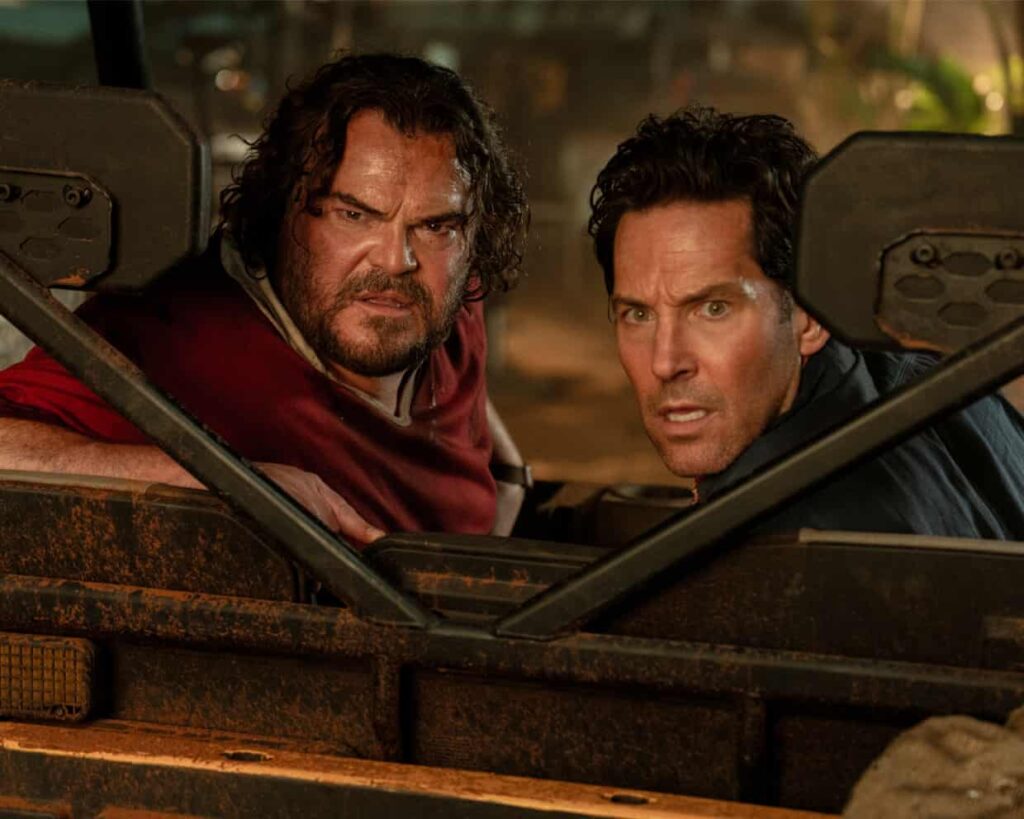
The reboot of the 1997 film Anaconda opens in cinemas on December 25, 2023, in the United States and December 26, 2023, in the United Kingdom and Australia. Directed by Tom Gormican, this meta-comedy remake features Jack Black and Paul Rudd in leading roles, bringing a playful and self-referential twist to the original creature feature.
The early scenes of Anaconda might raise eyebrows among viewers wary of comedies that prioritize emotional depth over humor. The film begins with a lackluster horror-movie cold open, revealing Gormican’s struggles to create tension or effectively introduce its creature. However, as the plot unfolds, the film shifts focus toward the comedic journey of its characters, particularly aspiring filmmaker Doug, played by Black, who is stuck in a wedding videography job in his hometown. In contrast, his childhood friend Griff, portrayed by Rudd, is barely surviving as an actor in Los Angeles, highlighting the challenges of pursuing creative dreams.
During Doug’s birthday celebration, Griff reveals that he has acquired the rights to remake Anaconda, an idea that excites Doug despite his responsibilities. This sets the stage for them to recruit friends like Kenny (Steve Zahn) and Claire (Thandiwe Newton) to join their ambitious project. Their adventure takes them to the Amazon, where they navigate encounters with eccentric locals, including a snake handler and a mysterious boat captain played by Daniela Melchior.
While Black and Rudd have previously shared the screen, their dynamic as co-stars creates a refreshing energy. The film’s comedic moments, particularly during brainstorming sessions and preparations for their snake movie, allow the actors to shine as they explore themes of aspiration and friendship. Rudd’s subtle comedic timing, exemplified in his portrayal of Griff’s nervousness, complements Black’s more animated performance, which emerges when discussing the nature of their film.
Despite these strengths, Anaconda does not fully escape the pitfalls of self-awareness that plagued Gormican’s earlier work, The Unbearable Weight of Massive Talent. The film occasionally confuses cleverness with mere self-referentiality, leading to missed opportunities for deeper comedic exploration. While moments of genuine humor arise, the surrounding narrative struggles to maintain momentum, particularly as the filmmakers confront a larger, more menacing snake.
Melchior’s character, meant to add intrigue, often appears inconsistently within the story, complicating her relationships with other cast members. This disjointedness detracts from the film’s overall coherence, as her character fluctuates between being integral to the plot and seemingly irrelevant.
Technically, Anaconda benefits from improved visual effects compared to its predecessor, though it sacrifices the charm of animatronics that gave the original film a unique appeal. The newly designed creature, while larger and more menacing, lacks the tactile quality that could have elevated the film’s suspenseful moments.
Despite these challenges, Black and Rudd’s performances anchor the film, making it an enjoyable experience that leans more towards comedy than horror. Anaconda may not achieve the heights of iconic comedies like Bowfinger, but it captures a nostalgic spirit while addressing the trend of Hollywood reboots. Gormican’s effort to infuse a lighthearted studio comedy into the franchise discussion resonates with audiences, making Anaconda a noteworthy entry in the genre.
As the film arrives in theaters, audiences can expect a blend of humor, camaraderie, and a cheeky nod to the absurdities of the film industry.