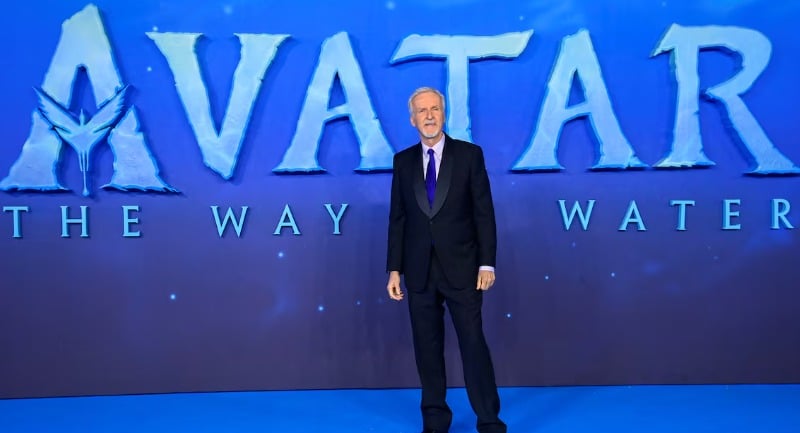
A renewed legal battle has emerged for filmmaker James Cameron and Walt Disney Co. concerning the Avatar franchise. A federal lawsuit filed on October 30, 2023, in the US District Court for the Central District of California alleges that the 2022 film, Avatar: The Way of Water, infringed on the copyright of a story written by 3D animator Eric Ryder. This lawsuit intensifies just days before the release of the highly anticipated third film, Avatar: Fire and Ash, scheduled to hit cinemas on November 3, 2023.
Ryder’s complaint claims that Cameron and Disney appropriated significant elements from his science fiction narrative, titled KRZ. This marks a new chapter in Ryder’s ongoing fight, as he previously sued over the original Avatar film released in 2009. At that time, a California state court ruled against Ryder, determining that Cameron had developed his film independently prior to Ryder’s submission of KRZ to Lightstorm Entertainment. In this latest lawsuit, Ryder asserts that the alleged copying is both new and specific to The Way of Water.
According to the lawsuit, Ryder’s legal team stated, “This action is not an attempt to relitigate prior claims. It challenges new acts of copying that occur for the first time in Avatar 2.” The complaint detailed how Cameron and Disney had attempted to secure the rights to Ryder’s work after successfully dismissing his earlier claims of fraud and breach of contract. Ryder argues that further elements of his narrative have been incorporated into the sequel, including character structures, themes, and essential plot devices.
The lawsuit highlights several similarities between KRZ and the Avatar universe. These include “anthropomorphic beings, a vast oceanic setting, and a sinister, Earth-based corporation engaging in environmentally harmful mining operations on the moon of a gas giant planet called Europa.” Notably, Ryder points to a critical plot device in The Way of Water involving the harvesting of an animal-based substance that, when refined, can extend human life.
“While this animal-based, life-extending substance is just one of many examples of infringing content in Avatar 2, its use as a foundational plot device is central to Defendants’ appropriation,” the lawsuit asserts. Ryder is seeking at least US$500 million in damages and a court order to prevent the release of Fire and Ash.
As of now, representatives for Disney and Lightstorm Entertainment have not responded to requests for comment regarding the lawsuit. Meanwhile, Ryder’s attorney, Daniel Saunders, has expressed strong sentiments about the case, describing the alleged misappropriation of Ryder’s creative work as “blatant and egregious,” adding that it “cries out for compensation.”
The timing of this legal dispute is particularly sensitive for Disney, as the Avatar franchise remains one of the studio’s most lucrative properties. The second film grossed over US$2.3 billion globally and played a significant role in the recovery of cinema attendance following pandemic-related declines. In Australia, the franchise has consistently ranked among the highest-grossing releases of all time, further emphasizing the stakes involved in this legal confrontation.
As the release date approaches for Avatar: Fire and Ash, the outcome of this lawsuit could have significant implications for both the film’s debut and the future of the Avatar franchise.