

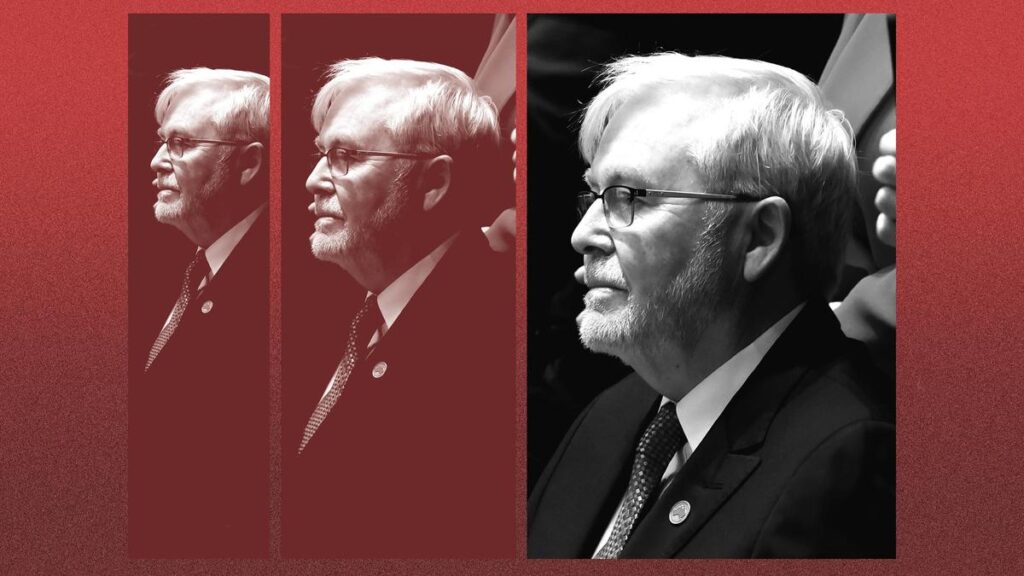
As Kevin Rudd prepares to vacate the Australian ambassador’s residence in Washington DC, he transitions back to his role as head of the Asia Society in New York. His tenure as Australia’s ambassador to the United States has drawn considerable reflection, primarily centered around a singular theme: the situation could have been significantly worse.
Many analysts anticipated that Donald Trump, should he return to the presidency, would jeopardize Mr Rudd’s position. Known for his grudges, President Trump had not forgotten Rudd’s pointed critiques, which included labels such as “the most destructive president in history” and “traitor to the West.” Despite this backdrop, Rudd persevered, even enduring a notably uncomfortable meeting at the White House, where Trump openly expressed his disdain, saying, “I don’t like you either, and I probably never will.”
Challenges and Outcomes
Despite the apparent animosity, Rudd’s ability to navigate the complexities of US-Australia relations proved more resilient than many had feared. While Australia’s exports were subjected to Trump’s “liberation day” 10 percent baseline tariff, the country managed to maintain a foothold in the US market. The tariffs, categorized as “least-worst,” inadvertently provided some Australian exporters with a competitive edge.
The timing of Rudd’s departure raises questions. With Trump having publicly chastised him, one might wonder why he did not remain until the end of Trump’s term. Anthony Albanese, Australia’s Prime Minister, indicated that Rudd’s decision to return to his prior role was entirely voluntary. Yet, the lack of effort from Albanese to persuade Rudd to stay suggests a recognition that a fresh face might better serve Australia’s interests in Washington.
Looking Ahead
As Rudd departs, speculation arises about his successor. Former Labor frontbenchers Joel Fitzgibbon, Stephen Conroy, and Greg Combet have been identified as potential candidates. However, Conroy’s previous comments labelling Trump as “moronically stupid” could complicate his candidacy.
Whoever assumes the role will need to exhibit considerable diplomatic skill, as well as charm. A solid understanding of American political dynamics will be essential, especially given the unique challenges presented by the current administration.
With Rudd stepping away from the constraints of diplomatic protocol, observers can anticipate a more candid expression of his views regarding the vital US-Australia relationship. As he embarks on this new chapter, the impact of his ambassadorship will continue to be a topic of discussion in political circles.
The editorial responsibility for this commentary rests with Christopher Dore, Editor-in-Chief.