


The inaugural Melbourne Art Print Fair in February 2023 drew art enthusiasts who eagerly lined up each morning before the gallery opened. This overwhelming response has prompted organisers to launch a second edition, scheduled for February 6-8, 2024, at Linden New Art. The fair will feature nine print studios from across Australia, including new participants like BSG Editions, Viridian Press, and Troppo Print Studio.
Kirsty Grant, a former curator at the National Gallery of Victoria (NGV), believes the success of the first fair highlighted a strong public interest in printmaking. “We absolutely did it on the smell of an oily rag, but people love it when something new and worthwhile happens,” she said. The upcoming event will include a print prize and various workshops, such as a large format letterpress class conducted by the Firestation Print Studio. Additionally, an exhibition featuring etchings by renowned artist Fred Williams will be showcased in an upstairs gallery.
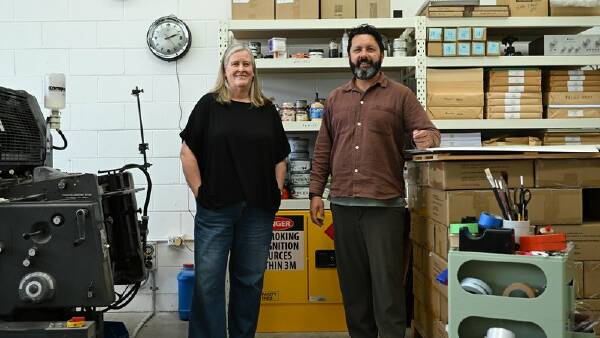
One of the fair’s founders, artist and printmaker Trent Walter, operates Negative Press from an industrial warehouse in the Melbourne suburb of Brunswick. His studio is equipped with screen printing tables, etching presses, and offset lithography equipment. Walter collaborates with artists to produce limited edition prints and books. Among his projects is a two-colour screen print by Kamilaroi artist Reko Rennie, which features the message “Remember Me.”
The fair aims to promote new artwork by living Australian artists, moving beyond the traditional secondary market for existing works. Walter pointed out that while public interest in fine art printmaking has waned since the 1960s, when the Australian Print Council was established, there remains a desire among artists from various disciplines to engage with specialist printmakers. Despite a decline in mainstream gallery focus on printmaking, Grant and her colleagues are keen to revive appreciation for this art form.
“Major galleries have moved away from modest disciplines like printmaking, focusing instead on attention-grabbing installations,” Grant noted. She believes there is a gap that needs to be filled, allowing for a renewed focus on appreciating printmaking created by contemporary artists.
The distinction between industrial printing and fine art printmaking is crucial. Industrial printing often involves thousands of reproductions, while fine art printmaking produces a limited number of impressions directly from an original artist-created image, known as a matrix. Many iconic images, including Andy Warhol’s soup cans and Edvard Munch’s The Scream, originate from printmaking techniques.
Walter’s expertise allows Negative Press to explore various printing methods. He emphasizes that the concept of mastery in printmaking is context-dependent. During a recent visit to the remote Anangu Pitjantjatjara Yankunytjatjara (APY) Lands in South Australia, Walter worked with the Mimili community, where artists innovatively adapted local resources to create prints. They utilized high-pressure hoses for screenprint designs and fashioned woodblock matrixes using angle grinders. In a creative twist, the Mimili Maku men’s group drove a Toyota Landcruiser over their carvings, employing the vehicle’s tyres to make large-scale print impressions on paper. This inventive method, dubbed the “Troopie Press,” reflects the community’s resourcefulness and commitment to art.
The Melbourne Art Print Fair seeks to cultivate a culture of print collecting in Australia. “We’re trying to encourage people to learn and understand what original prints are and help develop a culture of collecting prints,” Grant explained. While some collectors already value prints as treasured works of art, the fair aims to broaden this appreciation.
As anticipation builds for the upcoming fair, organisers hope to see lines of eager visitors once again outside the gallery. The event promises to celebrate the vibrant landscape of Australian printmaking and foster deeper connections between artists and the public.