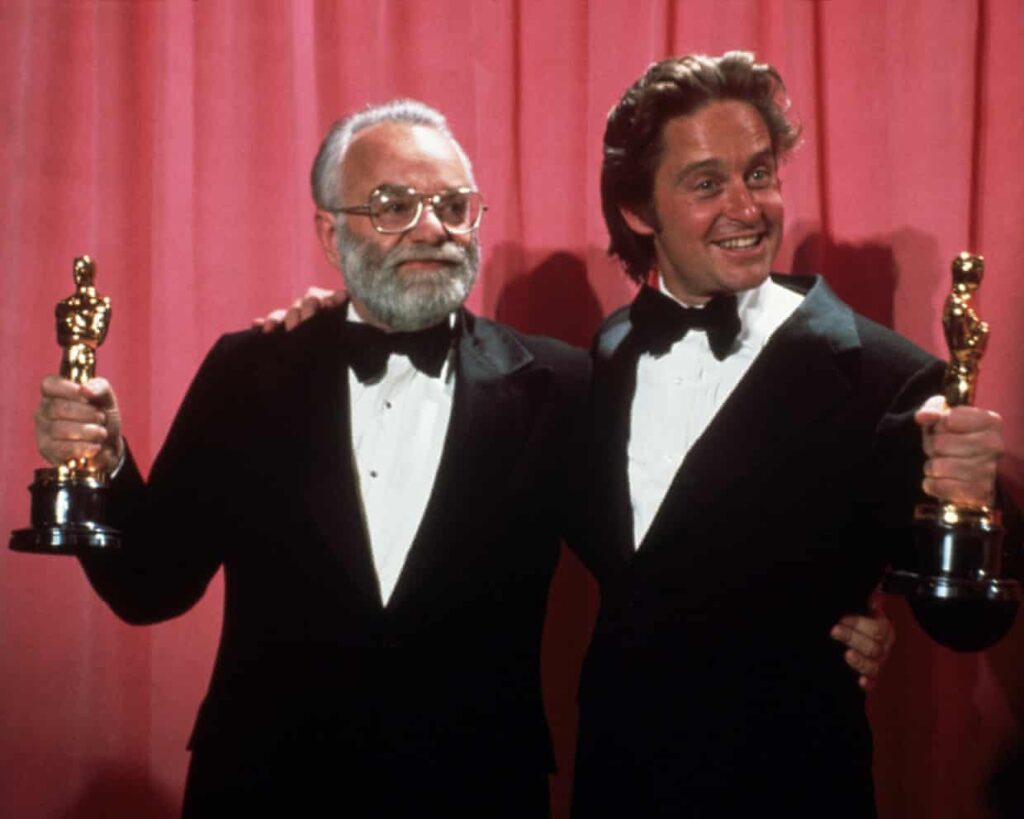
Michael Douglas recently reflected on the impact of the classic film One Flew Over the Cuckoo’s Nest, which marks its 50th anniversary this year. The film, a powerful critique of institutional authority, remains relevant as it resonates with contemporary societal issues. Douglas, who was just 31 when he took on producing duties, expressed how the themes of individuality versus conformity echo today’s political climate.
In a recent interview conducted via Zoom from Santa Barbara, California, Douglas noted, “It’s about as classic a story as we’ll ever have…with what’s going on in our country politically, about man versus the machine and individuality versus the corporate world.” He elaborated on how these themes extend beyond the United States, mentioning that “autocratism continues around the world.”
The film features Nurse Ratched, played by Louise Fletcher, who embodies oppressive authority in an Oregon psychiatric hospital. She clashes with Randle McMurphy, portrayed by Jack Nicholson, a rebellious character who fakes insanity to evade prison labor. Their struggle symbolizes a broader fight against systemic control.
Douglas’s father, Kirk Douglas, originally acquired the rights to Ken Kesey’s novel and played McMurphy in a 1963 Broadway adaptation. After years of attempting to bring a film version to life, Kirk decided to sell the rights. However, Michael Douglas seized the opportunity to produce the film. “I never thought about producing but I said let me run with it,” he recalled, adding that he gave half of his producing fee to his father, who ultimately benefited significantly from the film’s success.
Kirk Douglas’s disappointment at not being able to play the role was softened when he finally saw the film and praised both his son’s work and Nicholson’s performance. Michael reflected that Kirk “looked at me with a new eye,” which was a significant moment in their relationship.
Strong partnerships were essential in bringing the film to fruition. Douglas’s producing partner, Saul Zaentz, initially approached Kesey to write the screenplay, but they ultimately parted ways. The project gained momentum with screenwriter Lawrence Hauben and director Milos Forman, who brought a distinct vision to the film. Forman, despite facing personal challenges at the time, meticulously analyzed the script, convincing Douglas of his suitability for the project.
The casting process was another pivotal element. While waiting for Nicholson to complete another film, they discovered Danny DeVito, a longtime friend of Douglas, who joined the cast. Finding the actor to portray Chief Bromden proved serendipitous when Douglas encountered Will Sampson, a rodeo announcer and used car dealer, on a flight. Douglas recalled, “That was probably the most euphoric moment: how are we gonna find this guy, this character, and there he was.”
The film’s production took place in an active psychiatric hospital in Oregon during January, presenting unique challenges. “Why are we in Oregon in January? It gets dark at 3:30 in the afternoon,” Douglas remarked. The team’s commitment to authenticity led them to hire many hospital patients as crew members, fostering a genuine atmosphere on set.
Actor Brad Dourif, who portrayed Billy Bibbit, spoke about the immersive experience, highlighting the importance of realism in their performances. He noted how Milos Forman insisted on natural portrayals rather than exaggerated depictions of mental illness. Dourif also shared that the character’s stutter symbolized the way societal pressures can silence individuals.
Despite facing rejection from major studios during its development, One Flew Over the Cuckoo’s Nest went on to achieve critical acclaim, winning the “big five” Academy Awards for best film, director, actor, actress, and screenplay. Even filmmaker Steven Spielberg acknowledged its merit, stating he would have voted for it over his own film, Jaws.
Dourif reflected on Nicholson’s pivotal role in the film, stating, “He was owed an Oscar… He brought everybody up.” Nicholson’s spirited performances, including playful antics on set, contributed significantly to the film’s dynamic atmosphere. Dourif described him as embodying a rebellious spirit that resonated with the film’s themes.
The film’s climactic ending remains iconic, as Chief Bromden makes a heart-wrenching decision to end McMurphy’s suffering after he is lobotomized. This moment encapsulates the film’s exploration of freedom and individuality. Douglas praised the film’s cohesive elements, including the score by Jack Nitzsche, which heightened the emotional impact of the story.
Reflecting on the film’s legacy, Douglas expressed pride in his role as producer and the lessons he learned throughout the process. “It was one of those pictures where we’re firing on all cylinders,” he said. As the film celebrates its 50th anniversary, its themes continue to resonate, making it a timeless classic in cinematic history.