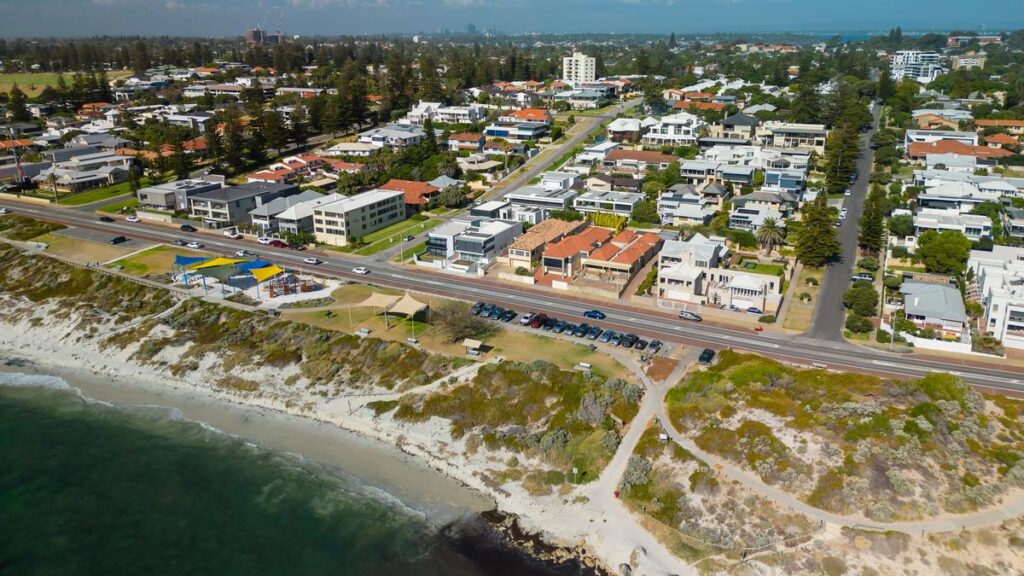
Aerial view of contemporary houses in the coastal suburb of Cottesloe in Perth, Australia
A recent forecast by property firm Rea Group predicts that property prices in Perth will experience growth of between 7% and 10% by 2026. This projection places Perth among the top-performing capital cities in Australia, alongside Brisbane. While this growth remains robust, it marks a decline from the 15.5% price increase witnessed in 2025, which was the highest in the nation, and down from a peak of 17.3% in 2024.
The anticipated rise in property values will add between $65,000 and $93,000 to the median dwelling price in Perth, currently standing at $930,000. This news poses challenges for first-time home buyers already grappling with affordability issues.
Drivers Behind Property Growth
According to Anne Flaherty, senior economist at Rea Group, the ongoing housing shortage and high levels of migration are crucial factors contributing to this predicted growth. The shortage stems from construction delays during the COVID-19 pandemic, which significantly reduced the pace of building over the past few years.
In November, listings were reported to be 21.8% lower year-on-year, further exacerbating the supply issue. Flaherty emphasizes, “There is still a really, really long way to go before the market corrects the current undersupply of homes in Perth.” Despite this, she notes that construction activity has largely returned to normal levels, suggesting that the housing shortage could be addressed by the end of the decade.
Impact of Interest Rates on Market Dynamics
Looking ahead to 2026, Flaherty also points out that the absence of further interest rate cuts—and the potential for rate increases—may help to temper growth in property prices. “After such a large increase in home prices in recent years, affordability has deteriorated and is set to gradually curb the rate of growth,” she stated. The report suggests that while Perth is expected to continue outperforming other capitals, the pace of growth will slow compared to the exceptional rates recorded in previous years.
In a related finding, a report from the Real Estate Institute indicates a 0.5% improvement in housing affordability over the September quarter. However, this improvement is overshadowed by a 0.6% decline over the year, with families spending an average of 40.5%% of their household income on mortgage repayments. This level of expenditure places many families under significant housing stress, highlighting the ongoing challenges faced by potential buyers in a rapidly changing market.
As the property landscape evolves, the combination of limited supply and shifting interest rates will undoubtedly shape the future of Perth’s housing market in the years to come.