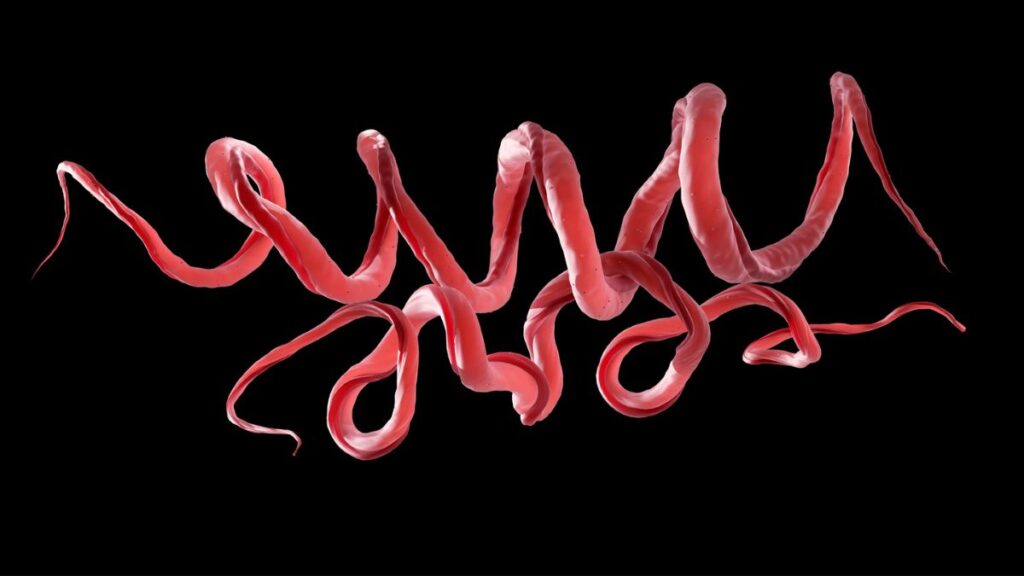
A recent study has uncovered ancient DNA from a skeleton in Colombia, revealing that the origins of syphilis trace back approximately 5,500 years. This discovery significantly alters the timeline of treponemal diseases, suggesting that they were present in the Americas long before European outbreaks were documented. The research, led by evolutionary genomics expert Davide Bozzi, identifies a strain of the bacterium Treponema pallidum, known as TE1-3, which diverged from other subspecies responsible for syphilis and related diseases.
The TE1-3 strain, although no longer in circulation, belongs to an ancient lineage that split from other strains around 13,700 years ago. This timeframe predates the rise of agricultural societies in the Americas, indicating that infectious diseases could have emerged among hunter-gatherer populations. The findings suggest that the historical narrative linking syphilis directly to the arrival of Christopher Columbus in the Americas is far more complex than previously thought.
Implications of the Discovery
Bozzi and his team’s research pushes back the known history of syphilis and similar diseases by nearly 3,000 years, as it provides genetic evidence of treponemal diseases existing in the Americas. The initial outbreaks of syphilis in Europe coincided with Columbus’s return from the New World in the late 15th century, leading to a persistent association between the two events fueled by historical prejudices.
The study raises critical questions about how these diseases may have spread. While the TE1-3 strain’s exact transmission method remains unclear, its genome contains virulence genes akin to those found in modern strains, indicating it was already adapted for human infection. This information suggests that the bacterium’s transmission may not have initially been solely sexual, as is common with syphilis today.
As researchers continue to analyze ancient DNA, they are beginning to redefine the narrative surrounding the origins and evolution of treponemal diseases. Increased evidence suggests that these diseases existed in the Americas independently of European contact.
Broader Perspectives on Disease Origins
Some researchers argue that the presence of treponemal diseases in Europe predates Columbus’s voyages, implying that strains related to T. pallidum existed on both continents before their eventual connection. This view challenges the simplistic binary of “Old World” versus “New World” origins for diseases.
In a related commentary, anthropologists Molly Zuckerman of Mississippi State University and Lydia Bailey from the US National Museum of Natural History emphasize the importance of understanding the ecological and social factors that influence pathogen evolution. They argue that viewing disease origins through geographic lenses limits our comprehension of their complex histories.
The findings from this research, published in the journal Science, highlight the need to reconsider established narratives about disease emergence and transmission. With ongoing advancements in genomic research, the understanding of how ancient pathogens interacted with human populations continues to evolve, offering deeper insights into the history of diseases like syphilis.
As research progresses, it becomes increasingly clear that the past holds many secrets about the origins of diseases that continue to affect humanity today.