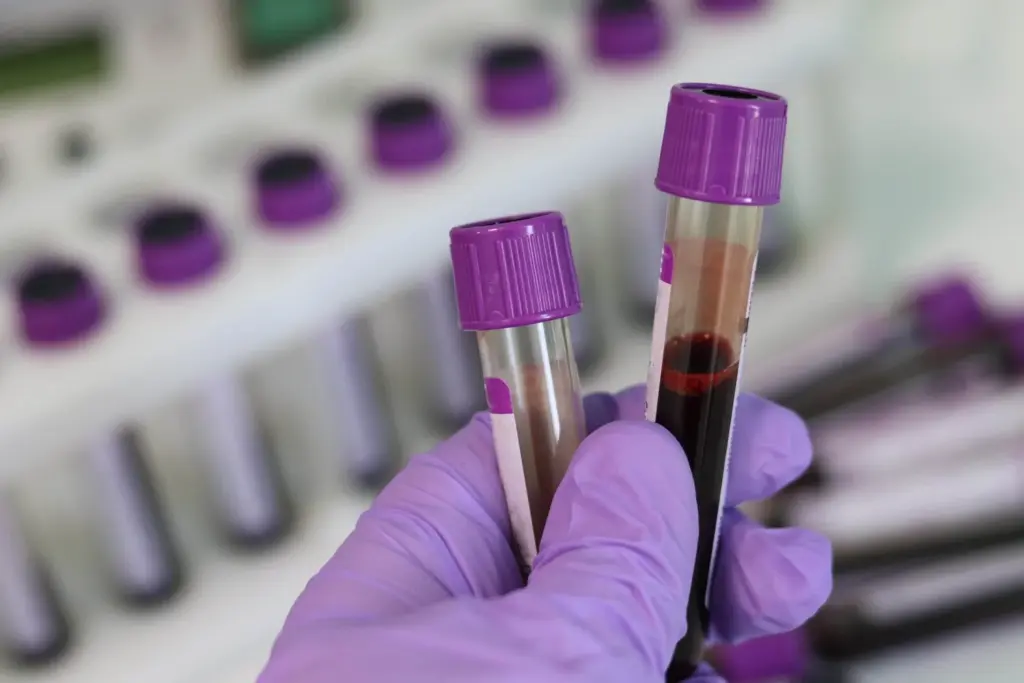
A new study reveals that a simple blood test can detect cancer in patients presenting non-specific symptoms like fatigue, pain, or weight loss. Conducted by researchers from Karolinska Institutet, Danderyd Hospital, and other institutions, the findings were published in Nature Communications on December 29, 2025. This breakthrough offers potential for earlier cancer detection, which is often challenging when symptoms do not clearly indicate a specific disease.
Patients frequently face difficulties in obtaining a diagnosis when presenting vague symptoms. The research team, which included experts from Örebro University, KTH Royal Institute of Technology, and SciLifeLab at Uppsala University, aimed to discover whether proteins in the blood could provide early indicators of cancer. The study analyzed blood samples from nearly 700 patients referred to the Diagnostic Centre at Danderyd Hospital and Örebro University Hospital in Sweden.
Using a technique called proteomics, the researchers measured the levels of 1,463 different proteins in the plasma of the patients. They successfully identified a unique combination of proteins, termed a “protein signature,” which correlated with a cancer diagnosis.
“The study shows the potential of large-scale proteomics for extracting clinically relevant information from small amounts of blood,” said Mikael Åberg, associate professor at Uppsala University and head of SciLifeLab Affinity Proteomics Uppsala, where the analyses were conducted. This research marks a significant step toward utilizing blood tests as a diagnostic tool in clinical practice.
The team developed a model capable of distinguishing between cancer patients and those suffering from other conditions such as inflammatory, autoimmune, or infectious diseases. “A particular strength of the study is that the control group consisted largely of patients with other serious conditions that can cause symptoms similar to cancer,” noted Charlotte Thålin, senior physician at Danderyd Hospital and principal investigator for the study. This aspect of the research reflects real-world clinical challenges when assessing patients with non-specific symptoms.
While the researchers emphasize that this blood test should not replace imaging techniques or biopsies, they suggest it could assist in determining which patients require more extensive investigations. “The method could help identify which patients should be prioritized for further diagnostics, for example, with PET-CT, while avoiding unnecessary investigations in patients without cancer,” explained Fredrika Wannberg, a resident at Danderyd Hospital and doctoral student at Karolinska Institutet.
Further studies are necessary before the method can be routinely used in clinical settings. The next phase will involve testing the blood test in primary care environments, where the incidence of cancer is typically lower than in specialized care.
Funding for this research was provided by the Swedish Research Council, the Knut and Alice Wallenberg Foundation, and the Jochnick Foundation. The researchers declare no conflicts of interest related to the study.
The full study, titled “Plasma protein profiling predicts cancer in patients with non-specific symptoms,” includes contributions from various authors and is available online in Nature Communications.