




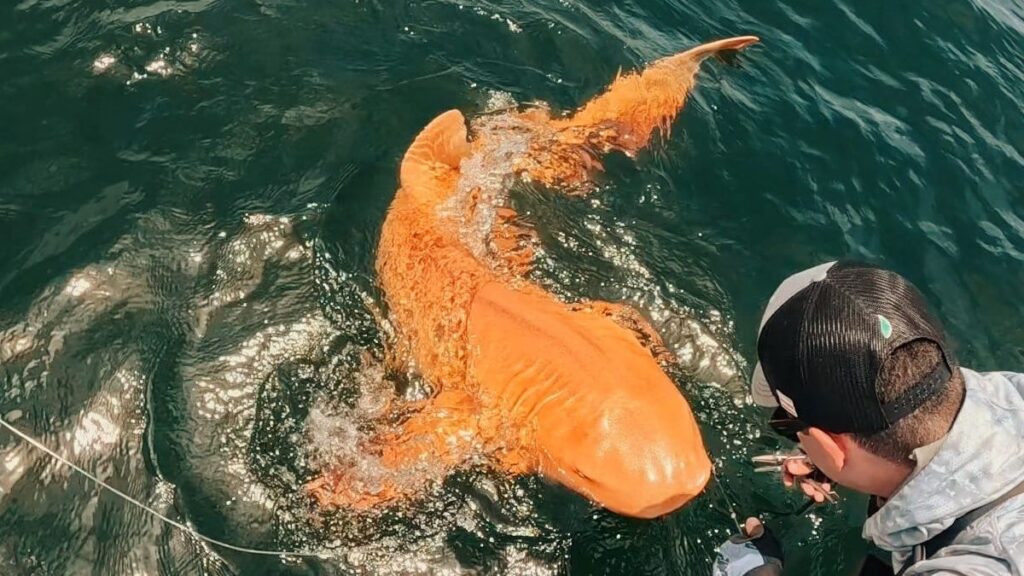
Advancements in scientific research have unveiled several intriguing findings this week, ranging from breakthroughs in anti-cancer compounds to a unique golden shark discovered off the coast of Central America. These developments not only enhance our understanding of health and biology but also raise important questions about environmental and genetic factors.
Understanding the Role of Mosquitoes in DNA Research
A recent study led by biologist Sebastian Botero-Cañola has confirmed that mosquitoes can carry significant amounts of animal DNA, identifying the genetic material of 86 species within their blood meals. This discovery lends credibility to the fictional premise of the film *Jurassic Park*, which suggested that ancient DNA could be extracted from mosquitoes trapped in amber. The research indicates that capturing mosquitoes during their peak activity can yield DNA data comparable to direct animal surveys, opening new avenues for ecological studies.
Potential Anti-Cancer Breakthrough from Fungi
In a significant scientific achievement, researchers from MIT and Harvard University have synthesized a fungal compound with promising anti-cancer properties after a span of 55 years. Chemist Mohammad Movassaghi expressed excitement over the advancements, stating, “Now we have the technology where we can not only access them for the first time but also make many designed variants, which can enable further detailed studies.” This milestone could lead to new strategies in cancer treatment.
Unique Shark Raises Questions About Genetic Variability
A striking golden shark, diagnosed with a rare pigment condition known as albino-xanthochromism, has captured the attention of researchers. Located in the northern Caribbean waters of Costa Rica, this shark’s unusual coloration raises questions about potential genetic trends and environmental influences in the region. Researchers are investigating whether this phenomenon is an isolated case or indicative of broader genetic adaptations among local shark populations.
Another innovative study from the University of Minnesota suggests that disrupting the communication signals of oral bacteria could significantly reduce the risk of gum disease and tooth decay. Biochemist Mikael Elias highlighted the potential impact, stating, “By disrupting the chemical signals bacteria use to communicate, one could manipulate the plaque community to remain or return to its health-associated stage.” This research could lead to new preventative measures for dental health.
Inspired by filter-feeding fish, German scientists have developed a new filter designed to eliminate 99% of microplastics from laundry wastewater. This innovative solution allows microplastic particles to be collected in a separate compartment, which can be emptied after every few dozen washes, similar to the lint filters used in dryers. This breakthrough aims to address the growing concern over microplastic pollution in water systems.
As these studies unfold, they not only contribute to scientific knowledge but also pose essential questions about health, environmental sustainability, and the interconnectedness of species. The implications of this research extend far beyond the laboratory, potentially influencing health practices and ecological policies worldwide.