Recent scientific developments have unveiled intriguing insights into health and astronomy. Researchers have concluded that beverage choices may impact osteoporosis risk in older women, while an interstellar comet made its closest approach to Earth. Additionally, astronomers have tracked a runaway supermassive black hole, and new studies reveal advancements in cancer treatments and dementia risk prediction.
Impact of Beverage Choices on Bone Health
A study from Flinders University has revealed that choices between tea and coffee could significantly influence osteoporosis risk among older women. The research indicates that moderate tea consumption may enhance bone strength, while high coffee intake could have the opposite effect. According to Enwu Liu, an epidemiologist at the university, “Our results don’t mean you need to give up coffee or start drinking tea by the gallon. But they do suggest that moderate tea consumption could be one simple way to support bone health, and that very high coffee intake might not be ideal.”
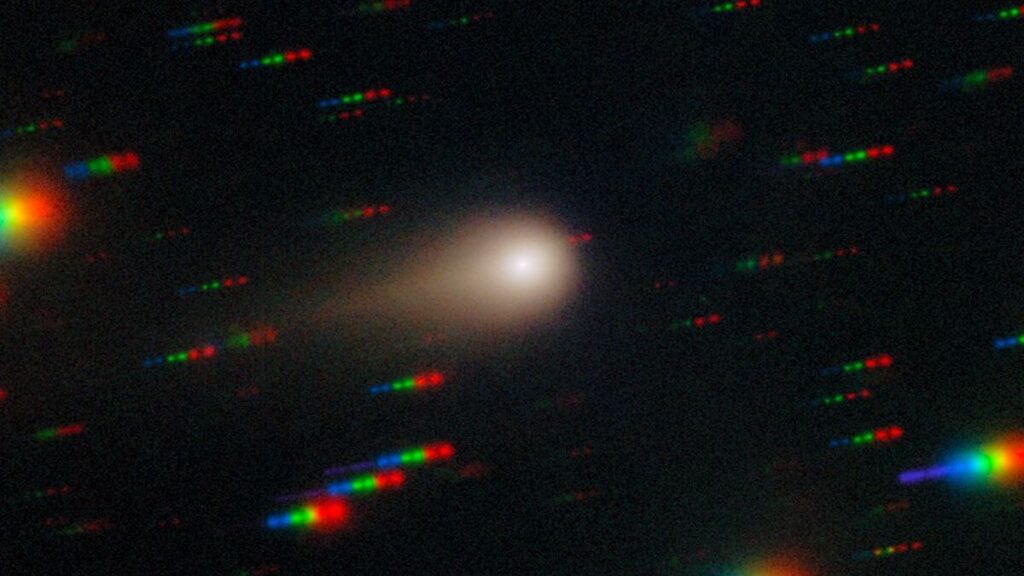
3I/ATLAS Comet’s Close Encounter
Interstellar comet 3I/ATLAS made its closest pass to Earth on December 19, 2023, coming within approximately 270 million kilometers (168 million miles). While this distance is nearly twice that of Earth’s 150 million-kilometer distance from the Sun, it provided an exceptional opportunity for astronomers to observe the comet before it departs the Solar System.
Breakthrough in Brain Cancer Treatment
In the field of oncology, researchers have identified that two simple supplements—resveratrol and copper—show promise in combating a lethal form of brain cancer. Indraneel Mittra, a cancer surgeon and public health researcher, explained that “the cell-free chromatin particles, fragments of DNA released by dying cancer cells, inflame the surviving cancer cells.” The supplements work to eliminate these particles, potentially subduing the cancer’s aggressive nature.
Dementia Risk Linked to Specific Depression Symptoms
A study conducted in the UK has pinpointed six specific symptoms of depression in middle-aged individuals that correlate with an increased risk of dementia later in life. Philipp Frank, an epidemiological psychologist, emphasized that “this symptom-level approach gives us a much clearer picture of who may be more vulnerable decades before dementia develops.” This research could lead to more targeted interventions for at-risk populations.
Runaway Supermassive Black Hole Confirmed
Astronomers utilizing the James Webb Space Telescope (JWST) have confirmed the existence of the first known runaway supermassive black hole. This black hole is traveling through space at an astonishing velocity of 954 kilometers (593 miles) per second. The findings highlight the immense gravitational forces that can propel such massive objects through the cosmos.
Enhancing Lifespan Through Mitochondrial Protein
Research from Japan has discovered that increasing levels of a mitochondrial protein known as COX7RP can extend lifespan and slow aging in mice. Male mice engineered to produce additional COX7RP exhibited a 6.6 percent increase in average lifespan, along with improvements in healthspan, indicating they lived healthier for a longer period. This research may pave the way for future studies on aging and longevity.
These developments in health and astronomy not only contribute to our understanding of physical phenomena but also hold potential implications for public health and future research directions. Each discovery emphasizes the interconnectedness of various scientific fields and their relevance to everyday life.