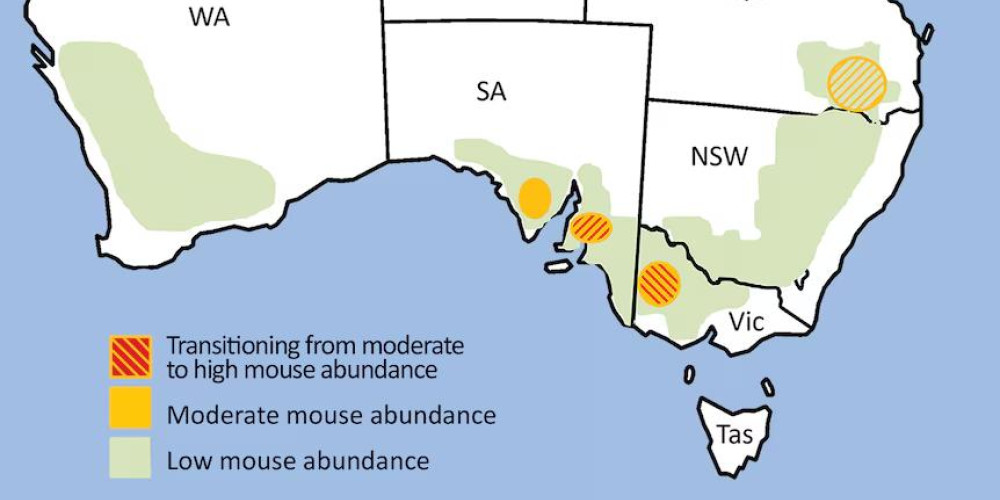
Farmers in the Wimmera region of Australia are preparing for a potential surge in mouse populations, driven by favorable conditions for the pests. According to recent warnings from the Grains Research and Development Corporation and the CSIRO, there are alarming signs of increasing mouse activity, with burrow densities reported at up to 125 per hectare in East Wimmera.
Historical accounts reveal that Wimmera has faced severe mouse plagues over the years, with notable outbreaks occurring in 1899, 1917, 1932, and 1947. While some tales may have been exaggerated, the impact on agriculture has been profound. Reports from the past highlighted extreme conditions where horses succumbed to diseases linked to contaminated hay, leading to significant agricultural disruptions.
Recent assessments indicate that current weather patterns, including windy conditions, are contributing to a favorable environment for mice. Steve Henry, a research officer at CSIRO, noted that windy weather could lead to grain losses in fields, further increasing food availability for mice. He emphasized the importance of vigilance, stating, “When you’re seeing a few mice, it probably means they’re in numbers where you really need to be concerned.”
Farmers are urged to take proactive measures to manage their properties, including sealing entry points, maintaining cleanliness, and monitoring for signs of infestations. The risks associated with mouse exposure are significant, as they can transmit a range of diseases, including leptospirosis and various gastrointestinal infections.
Advancements in medical diagnostics have improved disease detection, allowing for faster and more accurate identification of issues related to mouse populations. Nonetheless, the challenge of antimicrobial resistance remains a pressing concern for farmers dealing with bacterial infections linked to rodents.
Minyip farmer Ryan Milgate shared insights on the cyclical nature of mouse populations, highlighting that recent weather patterns echo those of previous years that led to plagues. While local conditions remain manageable, he maintains a watchful eye on emerging trends. “In the last, say, 10 years, we’ve probably had three really bad ones,” he said, underscoring the need for strategic planning during harvest.
Milgate pointed out that one key lesson learned is to minimize grain loss during harvesting, which can inadvertently provide additional food sources for mice. He noted the evolution of monitoring practices, stating, “We’re generally a lot more aware of what’s actually happening in the paddock before we have a problem.”
The use of technology has also transformed mouse management strategies. Milgate mentioned the effectiveness of thermal rifle scopes, which allow farmers to detect mice in low visibility conditions. This innovation has simplified monitoring efforts and enabled timely interventions.
Networking among farmers has become increasingly crucial. Milgate explained that sharing observations and experiences through social media platforms has facilitated quicker responses to rising mouse populations. “Farmers talk a lot, and they say, ‘Actually, you know, I saw a lot of mice in my paddock,'” he said, emphasizing the communal approach to tackling the issue.
Research into long-term solutions continues, with CSIRO exploring how background food sources contribute to mouse populations. Henry noted that understanding the role of stubble in sustaining these populations is vital. “The less background food you’ve got, the better chance a mouse has of discovering that bait and getting a lethal dose,” he stated, highlighting the importance of effective bait management.
As Wimmera farmers navigate the complexities of managing mouse populations, the lessons learned from history, coupled with modern advancements in technology and research, are shaping more effective responses. The proactive strategies adopted today reflect a growing understanding of the challenges posed by these resilient pests, ensuring that farmers are better equipped to protect their crops and livelihoods.