




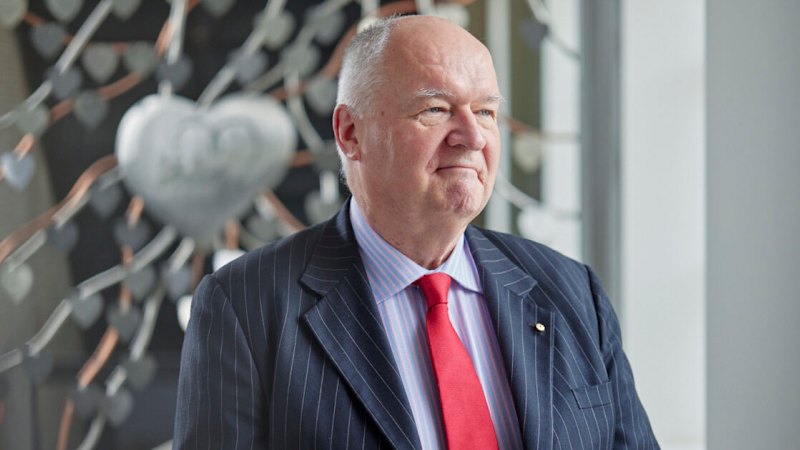
The state of medical research in Australia is facing significant challenges, according to Professor Andrew Coats, the scientific director and chief executive of the Heart Research Institute. He has expressed grave concerns about the diminishing success rates for government-funded research grants, which are jeopardizing the careers of aspiring scientists and stifling innovation in the field. With approximately $5 billion from the Medical Research Future Fund remaining unspent, Coats describes the situation as a crisis that could have dire consequences for the future of medical research.
During his tenure as director, Coats has witnessed firsthand the impact of these funding issues. He stated, “In the four years I’ve been scientific director, I’ve seen a number of people give up their careers, and a significant element in all those cases has been lack of security in the job and future due to grant success rates.” The success rate for recent rounds of grants has dropped to a staggering one in ten, leading to widespread job insecurity among researchers who have invested years into their careers.
The National Health and Medical Research Council reported that last year, 92 percent of medical researchers who applied for their annual “ideas grants” were unsuccessful. Alarmingly, even those with outstanding applications faced rejection. This situation has created an environment where talented researchers are reconsidering their career paths due to uncertain funding prospects.
Coats highlighted the troubling statistics surrounding the Medical Research Future Fund, which currently holds nearly $25 billion. Originally intended to disburse $1 billion annually once it reached a baseline of $20 billion, the fund is now releasing only $650 million each year. “We are putting structural barriers in front of the true potential of Australian research,” he stated.
As a seasoned professional with over 45 years in the field, Coats acknowledges that he is nearing the end of his career, but he feels a sense of responsibility to warn new entrants about the challenges they may face. “If any bright person comes along saying they want a career in medical research, I would be derelict in my duty not to warn them it’s a terrible career path,” he said.
The application process for major grants is particularly burdensome. Coats explained that it typically requires three months of preparation, all for a chance at success that resembles a lottery. This inefficiency wastes valuable resources and talent. “It means hundreds of talented researchers turn their back on a career in medical research,” he remarked.
Coats also addressed the broader implications of the funding crisis: “The public doesn’t hear those stories; they don’t see young researchers whose ambitions are dashed.” He believes that it is crucial to confront these issues directly. “Maybe we need to stop being so polite and start calling it out for what it is: this is a tragedy.”
In light of these concerns, there is growing pressure on the government to increase disbursements from the Medical Research Future Fund. Federal crossbench MPs, universities, and various stakeholders in the research sector are advocating for adjustments to the current funding strategy. Costings commissioned by independent MP Monique Ryan indicate that annual disbursements could potentially increase to $1.4 billion, more than double the current amount, without compromising the fund’s longevity.
Coats emphasized the need for a reevaluation of funding distributions: “It’s hard to see why you would build up a future fund, say it should reach $20 billion, and then release less than the sustainable portion you could distribute while maintaining it.”
In response to inquiries about the funding situation, Health Minister Mark Butler noted that the health and medical research budget has grown significantly over the past 15 years. He acknowledged the calls from the sector for larger disbursements and stated that the government is reviewing a report received last year that outlines various recommendations.
As Australia navigates these challenging waters, the future of medical research hangs in the balance. The consensus among experts is clear: urgent action is needed to ensure that Australia remains a leader in medical innovation and that talented researchers are not lost to a system that currently limits their potential.