



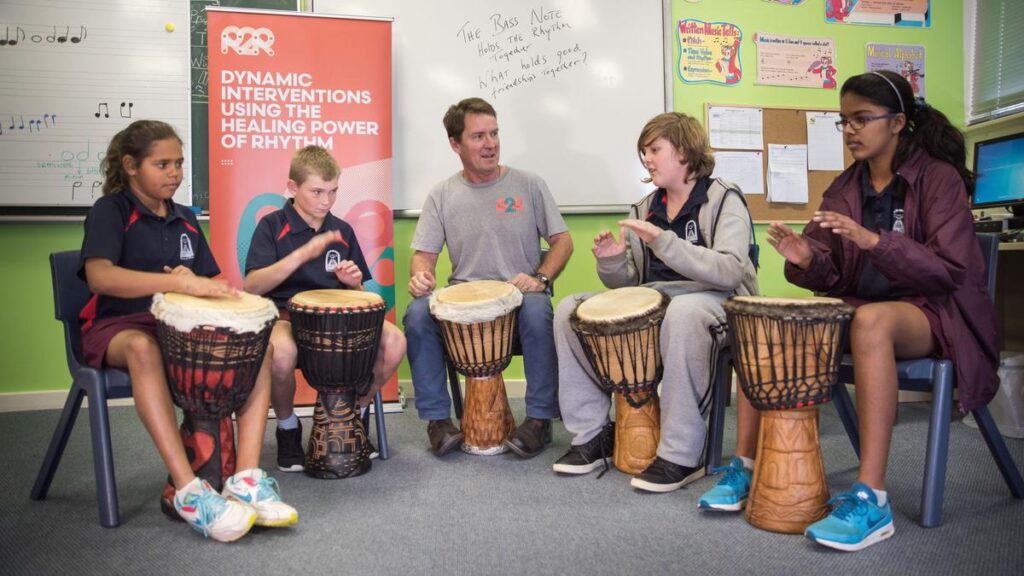
Music serves as a powerful tool for building connections and facilitating difficult conversations, according to Simon Faulkner, director of Rhythm 2 Recovery. This innovative musical therapy program integrates drumming and percussion with traditional therapy sessions, enabling participants to express their emotions through music rather than words.
During a recent discussion, Faulkner explained the approach of Rhythm 2 Recovery. “We play music together, and then through that, we can open up pathways for conversations about deeper things that people might be struggling with,” he stated. This method offers an alternative way for individuals to discuss their feelings, improve communication, forge healthy relationships, and learn cooperative skills.
Faulkner emphasized the importance of creating a safe environment for these conversations. “It’s the music that breaks down that first barrier, and music and percussion have been used for centuries to do this.” He referenced the profound connection to rhythm found in Indigenous cultures, particularly among Aboriginal peoples, who have long recognized the healing properties of music. “If you go back in time, just about every Indigenous culture around the world used drumming in their healing practices,” he noted.
Research increasingly supports the notion that rhythm significantly impacts the primal brain and influences stress responses. Faulkner pointed out that many individuals instinctively use rhythm in stressful situations, whether by controlling their breathing or tapping beats. “It’s a control our brain gravitates towards,” he said.
Upcoming Training for Professionals
Training in the use of rhythm and percussion in therapy will take place in Albany on February 26 and 27, 2024. Faulkner encourages therapists, youth workers, counsellors, and education professionals to enroll in this two-day program, which aims to equip them with skills to incorporate music into their practices.
“This training is relevant to a wide range of people who might be resistant to discussing their emotions directly,” Faulkner explained. He highlighted that men and teenagers often feel self-conscious about speaking with therapists. The drums provide a cathartic outlet, allowing individuals to release feelings that are difficult to articulate. “People can play at any level, and our focus is on helping them connect,” he added.
Faulkner also noted the strong correlation between musical harmony and social harmony, reinforcing the program’s potential to foster better interpersonal relationships. “We’re excited to bring our training to Albany for the first time and see it used by health practitioners in the community,” he said.
The Rhythm 2 Recovery program represents a significant step forward in therapeutic practices, leveraging the universal language of music to enhance emotional healing and connection.