




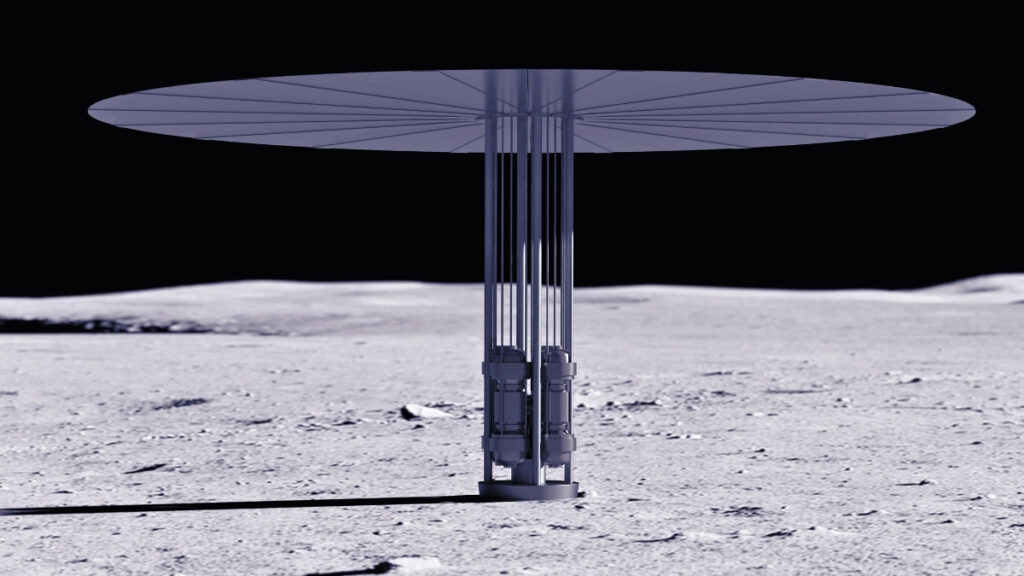
NASA and the US Department of Energy (DOE) are advancing their collaborative project to develop a nuclear fission reactor for the Moon’s surface, aiming for completion by 2030. The announcement from NASA emphasizes the goal of creating a reliable power source to support sustained lunar missions, reducing the need for frequent fuel resupply from Earth.
Jared Isaacman, NASA’s Administrator, stated, “This agreement enables closer collaboration between NASA and the Department of Energy to deliver the capabilities necessary to usher in the Golden Age of space exploration and discovery.” This partnership seeks to harness nuclear technology to facilitate long-term human and robotic exploration of the Moon.
Technical Challenges of Lunar Nuclear Power
Developing a nuclear reactor on the Moon poses unique challenges. The Moon’s harsh environment complicates reactor design, particularly in managing heat waste. On Earth, cooling systems utilize water to disperse excess heat, but lunar conditions differ significantly. The Moon’s near-vacuum atmosphere means traditional methods, such as cooling towers, are ineffective.
Engineers are exploring alternatives like solid-state conduction and liquid metal coolants, but these options introduce additional complexities. Furthermore, lunar dust, which is abrasive and electrostatically charged, presents a risk to sensitive machinery. Any equipment sent to the Moon must be engineered to withstand this damaging environment, ensuring longevity and minimal maintenance.
Radiation shielding is another crucial consideration. The reactor must provide sufficient protection for astronauts working in close proximity, underscoring the need for a robust design capable of withstanding the Moon’s conditions.
Progress and Future Prospects
Scientists have been addressing these challenges for several years, and NASA, along with the DOE, is building on prior research rather than starting from scratch. Current plans involve the development of a reactor capable of producing at least 40 kilowatts of power, sufficient to sustain approximately 30 households continuously for a decade.
While the initial design phase has concluded, translating concepts into operational hardware is a gradual process. Factors such as funding, regulatory approvals, and engineering intricacies will influence the timeline for deployment.
The potential of a lunar fission reactor represents a significant step for space exploration. Although this recent announcement indicates substantial progress, it also highlights that the realization of this ambitious project remains a long-term objective rather than an immediate undertaking.