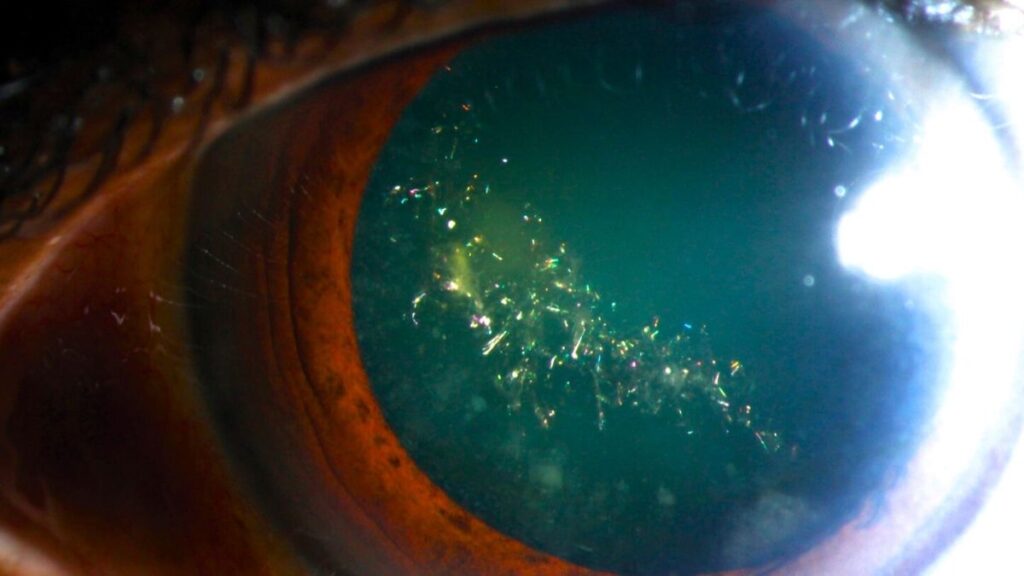
A rare eye condition known as Christmas tree cataracts produces a striking visual effect reminiscent of festive decorations. This age-related disorder, which can astonish optometrists, manifests as glistening, multicolored crystals suspended in the lens of the eye when illuminated.
Understanding Christmas Tree Cataracts
The phenomenon occurs due to the accumulation of calcium in the lens, leading to the breakdown of crystallin proteins. This breakdown results in an excess of cystine, an amino acid that crystallizes into needle-like shards. When light passes through these crystals, it refracts, creating a dazzling array of colors—such as pink, green, blue, red, and gold—depending on the angle of illumination.
A case study describes the effect as “a spectacular array of polychromatic needle-shaped crystals,” likening it to colored lights adorning a Christmas tree. While this condition does not typically influence a patient’s visual acuity, it can be associated with myotonic dystrophy, a genetic disorder that leads to muscular dystrophy.
Link to Myotonic Dystrophy
Research indicates that nearly all patients with myotonic dystrophy type 1 exhibit Christmas tree cataracts, suggesting that the presence of these cataracts could serve as an early indicator of the degenerative disease. This discovery underscores the potential for optometrists to play a crucial role in the early detection of myotonic dystrophy through routine eye examinations.
Christmas tree cataracts exemplify the intricate relationship between eye health and broader genetic conditions. As awareness of this rare condition grows, it could lead to more effective screening methods and better patient outcomes for those affected by myotonic dystrophy.
In summary, while Christmas tree cataracts may evoke festive imagery, they also highlight significant medical implications, merging the realms of eye care and genetic disorders.