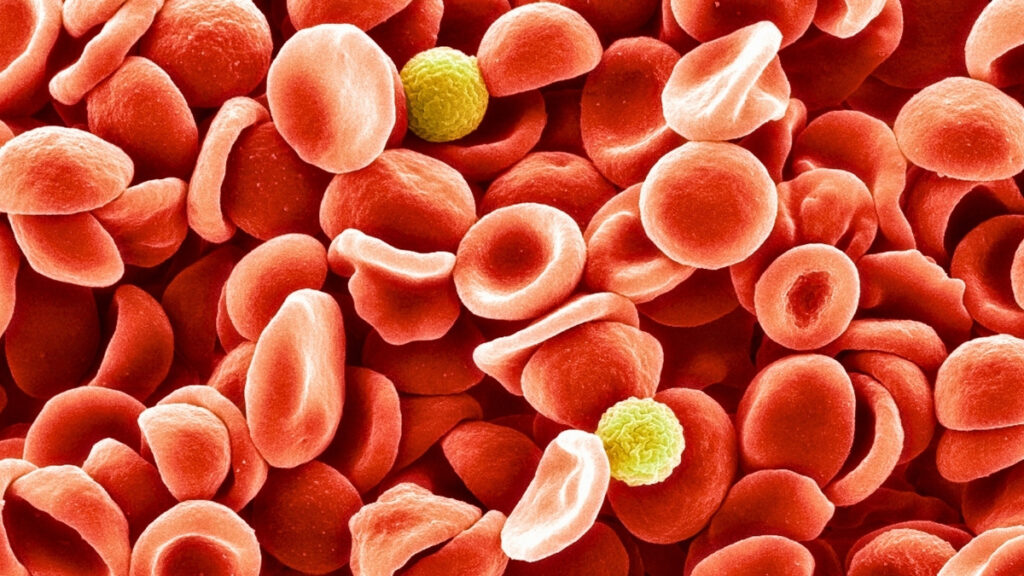
A groundbreaking discovery in hematology has emerged following a fifty-year investigation into a unique blood sample. Researchers from the UK and Israel have identified a new blood group system after studying a pregnant woman’s sample from 1972, which lacked a surface molecule present on all other known red blood cells. The findings were published in the journal Blood in 2024.
The absence of the AnWj antigen from the 1972 patient’s blood led the research team to conduct extensive studies over nearly two decades. Dr. Louise Tilley, a hematologist with the UK National Health Service, described the achievement as the culmination of a long team effort. “It represents a huge achievement, and the culmination of a long team effort, to finally establish this new blood group system and be able to offer the best care to rare, but important, patients,” she stated.
The discovery highlights the complexity of human blood group systems, which include well-known classifications like the ABO system and the Rh factor. In addition to these, numerous other blood groups exist, defined by an array of proteins and sugars on the surface of red blood cells. The newly identified blood group, named the MAL blood group, is extremely rare, with research indicating that over 99.9 percent of the global population carries the AnWj antigen.
When both copies of a person’s MAL gene are mutated, they develop an AnWj-negative blood type, similar to that of the 1972 patient. This research not only identifies the genetic basis behind the MAL blood group but also suggests that some blood disorders may suppress the antigen’s expression.
Dr. Tim Satchwell, a cell biologist from the University of the West of England, explained the challenges faced during the research. “MAL is a very small protein with some interesting properties which made it difficult to identify and meant we needed to pursue multiple lines of investigation to accumulate the proof we needed to establish this blood group system,” he said.
To confirm their findings, the research team conducted experiments where they inserted the normal MAL gene into blood cells that were AnWj-negative. This process successfully delivered the AnWj antigen to those cells, showcasing the functionality of the MAL protein. Researchers found that the AnWj antigen does not appear in newborns but develops shortly after birth.
The study revealed that all AnWj-negative patients shared the same mutation, but no associated cell abnormalities or diseases were identified. The implications of this research are significant; with the genetic markers of the MAL mutation now known, patients can be tested to determine whether their negative MAL blood type results from an inherited condition or suppression due to an underlying medical issue.
Understanding these rare blood group variations is crucial, as they can have severe consequences for affected patients. As Dr. Tilley emphasized, “the more of them we can understand, the more lives can be saved.” This discovery not only adds to the body of knowledge surrounding human blood types but also paves the way for improved patient care in the future.