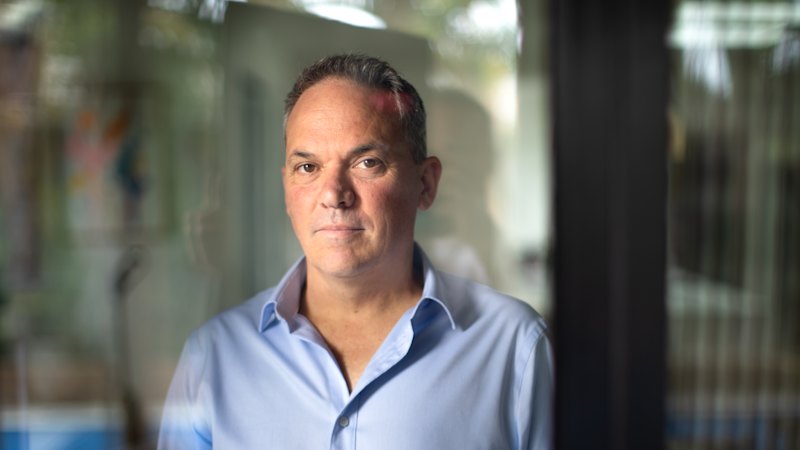
Mark Norris, a 52-year-old resident of Melbourne, has been living with glioblastoma, a form of brain cancer that is notorious for its aggressive nature. After a shocking diagnosis earlier this year, Norris underwent surgery to remove a large tumour, only to be confronted with the reality of limited treatment options and the knowledge that the cancer is likely to return.
In January, Norris experienced a sudden loss of spatial awareness, prompting his wife to rush him to the hospital. An MRI revealed a tumour the size of two mandarins pressing against his brain. “They basically put me into surgery within hours, and … I wasn’t expected to survive the operation,” Norris remarked. Despite the odds, he survived the surgery and subsequently completed six months of intensive radiation and chemotherapy.
Now, medical professionals have informed him that there are no further options available, leading to a grim outlook. “To have no options and to know that it’s going to come back… it just destroys your family,” he shared. His story reflects the struggles faced by many glioblastoma patients, who often endure a cycle of treatment followed by recurrence.
Breakthrough Research on Glioblastoma
Recent research from the University of Sydney has shed light on the genetic mechanisms that allow glioblastoma to evade treatment. Published in the journal Nature Communications, the study identified a small population of drug-resistant “persister cells” that survive chemotherapy. These cells remain dormant during treatment but can proliferate once it ends, leading to cancer recurrence.
The study revealed that the growth of these persister cells is supported by a fertility gene known as PRDM9. Typically, this gene regulates changes in chromosomes, but glioblastoma cells can hijack it to obtain cholesterol, which is essential for their survival. The researchers found that disabling this gene immediately after chemotherapy significantly reduced the number of persister cells in laboratory models.
Professor Lenka Munoz, the lead author of the study, stated, “When you turn off that fertility gene… they basically do not have a supply of cholesterol, and they die.” This discovery marks the first time the role of PRDM9 in glioblastoma recurrence has been identified, opening pathways for potential new treatments.
Future Directions and Patient Advocacy
While human trials are still several years away, the research team is collaborating with Australian company Syntara to test new drug options in animal models. Current treatment methods for glioblastoma have seen little change over the past few decades, with a median survival rate hovering around 15 months.
In Australia, various experimental treatments are being trialed, including immunotherapy options that have shown promise. Notably, former joint Australian of the Year Richard Scolyer is among those receiving these cutting-edge therapies after his own diagnosis in 2023.
Mark Norris, who is involved in fundraising efforts alongside Scolyer with the organization Tour de Cure, is determined to use his experience to advocate for better treatment options. “I’m not going to be here to run it through [to find a cure],” he said. “So I hope people hear the message and drive that message forward.”
As research continues to evolve, patients like Norris remain hopeful for advancements that could change the trajectory of glioblastoma treatment and improve survival rates. The fight against this formidable disease is ongoing, and the recent discoveries provide a glimmer of hope for those affected and their families.