

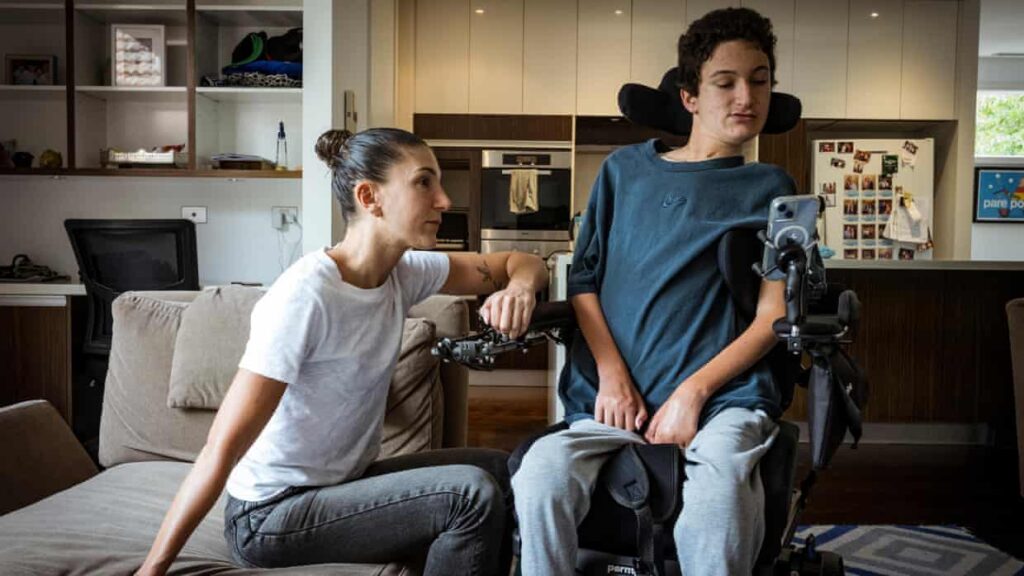
When Ezra Sholl, a 15-year-old living with quadriplegia, learned about Australia’s recent social media ban, he expressed concerns about the impact it would have on his daily life. Diagnosed with Hodgkin’s lymphoma at age 12, Ezra has since relied heavily on social media to connect with friends and others who share similar experiences. He believes the ban will increase feelings of isolation for himself and many others in similar situations.
Ezra’s journey began when he woke up from a medically induced coma, facing a life-changing diagnosis. As a teenager dealing with the challenges of quadriplegia, he has found solace in online interactions. Social media platforms have become essential for him, allowing him to forge connections with people worldwide. “Social media has helped me feel less alone,” Ezra shared in a recent video.
Social Media as a Lifeline
For Ezra, social media serves as a vital link to the outside world. His ability to interact with peers who understand his struggles is crucial for his emotional well-being. He frequently engages in discussions related to his interests, including gaming and disability advocacy. “It’s like having a community where I can share my thoughts and experiences,” he stated, emphasizing how these platforms have enriched his life.
The Australian government’s decision to enforce a ban on specific social media applications has raised serious concerns among individuals with disabilities, like Ezra. Critics argue that such restrictions could exacerbate feelings of loneliness and disconnection, particularly for those who rely on these platforms for social interaction. The potential loss of access is daunting, as many users have built their networks around shared experiences and interests.
Voices of Concern
Ezra is not alone in his worries. Advocacy groups and disability organizations have voiced their apprehensions regarding the social media ban. They argue that cutting off these platforms might lead to increased isolation among disabled individuals, hindering their ability to communicate and support one another. According to the Australian Federation of Disability Organizations, social media is a fundamental tool for fostering inclusion and community among people with disabilities.
As Australia moves forward with its social media restrictions, it is crucial to consider the voices of those who will be most affected. Ezra’s experience underscores the importance of accessible communication channels for all individuals, especially those facing significant challenges.
The conversation surrounding the social media ban in Australia continues to evolve, with advocates pushing for policies that promote inclusivity rather than exclusion. For individuals like Ezra, the hope is that decision-makers will recognize the profound impact of social media on their lives and take steps to ensure that these vital connections remain intact.