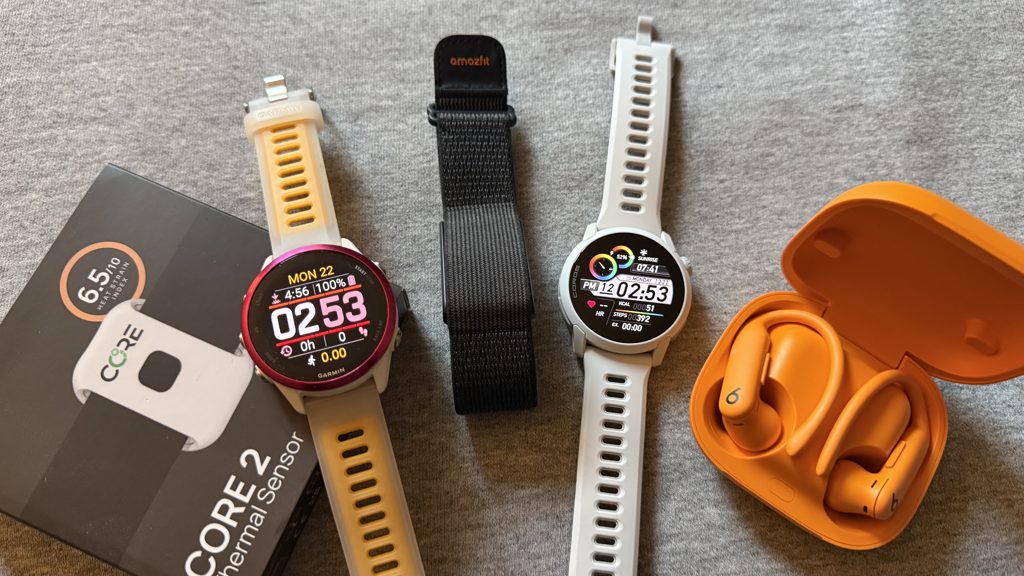
The fitness technology landscape of 2025 showcased remarkable innovation, with several devices emerging as frontrunners in performance and accuracy. Among them, the Garmin Forerunner 570 impressed with its heart rate monitoring capabilities, while the Amazfit Helio Strap stood out as a worthy competitor to the established Whoop fitness tracker. However, not all devices performed as expected, with the Powerbeats Pro 2 falling short of its ambitious goals.
Leading the Pack: Garmin’s Forerunner 570
The most accurate fitness device of the year is undoubtedly the Garmin Forerunner 570. This running watch features an upgraded heart rate sensor that surpassed expectations and set a new standard for wrist-based monitoring. Unlike previous models, the Forerunner 570’s Elevate version 5 sensor provided data that often matched the readings from a traditional chest strap, considered the gold standard in heart rate monitoring.
In testing, the Forerunner 570’s heart rate graph frequently mirrored that of the chest strap, leading to an impressive level of precision. The close alignment between the two data sets raised questions about potential mix-ups, but further analysis confirmed the accuracy of the 570. The model’s ability to deliver reliable heart rate data positions it as a top choice for serious athletes and casual runners alike.
Innovative Solutions: Core 2 Thermal Sensor and Coros Pace 4
Addressing a common challenge for runners, the Core 2 Thermal Sensor emerged as the coolest concept that truly works. Designed to help athletes adapt to high temperatures, this device clips onto a heart rate chest strap and measures both skin and core body temperature. By providing real-time feedback on heat adaptation, the Core 2 sensor enabled users to optimize their training and avoid the risks associated with overheating.
While the Core 2 sensor proved effective, its reliance on a chest strap for data limited its usability for some users. However, those who committed to using it experienced significant improvements in their summer training sessions.
Meanwhile, the Coros Pace 4 established itself as the best overall fitness watch of 2025. With its affordability and new features, including an AMOLED screen and enhanced battery life, the Pace 4 outperformed competitors in both functionality and value. Notably, the integration of voice training logs and media controls added convenience to the user experience, making it a compelling option for budget-conscious athletes.
The update from December 2025 further solidified the Pace 4’s reputation by introducing features that had long been absent in Coros products, enhancing its competitiveness against more expensive brands.
Emerging Competitors and Notable Disappointments
As fitness tracking technology evolves, the Amazfit Helio Strap emerged as the best alternative to the Whoop. Priced at just $99, this screenless fitness tracker offered reliable performance comparable to more expensive models. While Garmin and Polar also released devices aimed at competing with Whoop, the Amazfit Helio Strap distinguished itself with its affordability and effective functionality.
Conversely, the Powerbeats Pro 2 faced criticism for its heart rate sensor, which struggled to provide accurate readings. The device’s reliance on individual ear shape for optimal performance led to inconsistent results, leaving many users dissatisfied. Despite improvements introduced through a software update, the heart rate feature remained unreliable for a significant number of users, raising concerns about its practicality.
In summary, 2025 presented a mixed bag of fitness devices that pushed the boundaries of technology. The Garmin Forerunner 570 and Coros Pace 4 set new benchmarks for accuracy and user experience, while the Core 2 Thermal Sensor provided innovative solutions for heat management. Despite some setbacks, the year underscored the continuous evolution of fitness technology, with consumers benefitting from a wider range of choices than ever before.