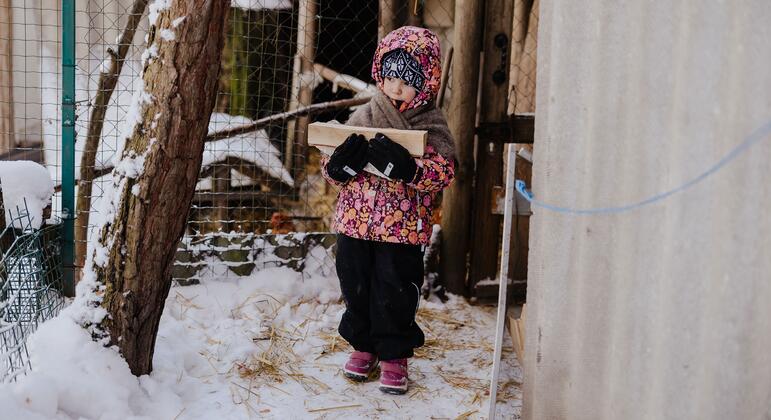
As Ukraine approaches the fifth year of the full-scale Russian invasion on February 24, 2025, conditions for civilians continue to deteriorate. According to the United Nations Human Rights Monitoring Mission in Ukraine (HRMMU), harm to civilians has “demonstrably worsened.” The ongoing energy attacks, combined with freezing temperatures, have created significant barriers for displaced families hoping to return home.
Danielle Bell, Head of the HRMMU, reported that civilian casualties have increased sharply. In 2025, the total number of civilian casualties was 31 percent higher than in 2024 and 70 percent higher than in 2023. Since the conflict began, over 15,000 civilians have been killed. The first months of 2026 indicate that this alarming trend is likely to continue.
Violations of Human Rights Persist
The HRMMU’s latest report highlights serious violations of international humanitarian law, with many attributed to Russian authorities. These include widespread torture and ill-treatment of Ukrainian prisoners of war and civilian detainees, alongside reports of sexual violence and executions. The documentation shows a concerning rise in the executions of captured Ukrainian soldiers during the final months of 2025.
Bell emphasized the lack of accountability for these violations, stating, “Victims must have a right to a remedy: access to justice, reparation for the harm they have suffered, and to learn the truth in regard to these violations.” The continued impunity for such acts raises serious humanitarian concerns.
Energy Strikes Fuel Ongoing Displacement Crisis
Ongoing attacks on energy infrastructure exacerbate an already critical situation for millions living in Ukraine. As temperatures plummet to -20°C, the living conditions for displaced individuals have become increasingly dire. Although approximately 4.4 million refugees have returned since the war began, these gains have been disrupted in recent months, with 3.7 million people still displaced within the country, according to the International Organization for Migration (IOM).
The IOM has reported that unmet needs exceed 90 percent in some frontline regions, forcing over 300,000 returnees to consider leaving their current locations in the upcoming months. Amy Pope, Director-General of IOM, noted, “After four years of war, resilience alone cannot sustain families through yet another winter of blackouts and freezing temperatures.”
Without adequate assistance, the ongoing energy disruptions threaten to trigger further displacement and undermine the progress made in returning refugees. To counter this, the IOM has been working since 2022 to provide a large-scale nationwide response, assisting up to 6.9 million people in Ukraine directly and indirectly, along with millions more in neighboring countries.
Pope urged the international community to intensify efforts in winterization, housing repairs, and support for livelihoods and mental health services, particularly in areas with high return rates. The need for a coordinated response has never been more critical as the humanitarian crisis deepens.