




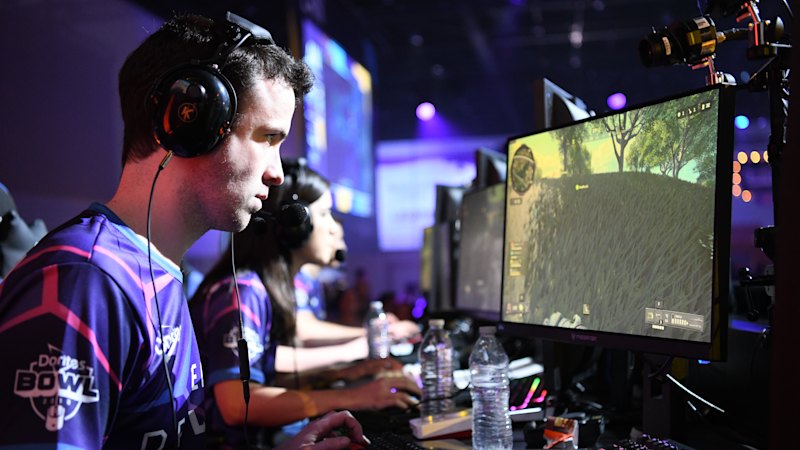
Emerging research indicates that playing video games can offer cognitive benefits, challenging the longstanding belief that they may harm mental health. Video games, particularly action genres, may enhance various cognitive skills, suggesting a potential role in slowing brain aging.
According to Aaron Seitz, a professor of psychology and director of the Brain Game Centre for Mental Fitness and Wellbeing at Northeastern University, engaging in video games allows individuals to practice complex skills in simulated environments. This is in stark contrast to traditional brain training games, which typically focus on simpler tasks.
Studies highlight that video games can foster improvements in cognitive abilities. For instance, research led by C. Shawn Green, a psychologist at the University of Wisconsin at Madison, suggests that action video games can boost various skills, including visual attention and learning capabilities. In comparison, conventional brain training exercises tend to enhance a narrower range of skills that are directly linked to the specific tasks being practiced.
While the cognitive benefits of video gaming are noteworthy, experts urge moderation. Carlos Coronel, a research fellow at Trinity College Dublin and Adolfo Ibanez University in Santiago, Chile, cautions against excessive gaming. He emphasizes the importance of balance in activities that promote cognitive engagement, such as education, puzzles, and social interaction.
Research published in the journal NeuroImage in 2024 examined brain connectivity in 31 avid players of the strategy game StarCraft II. The findings revealed that these players exhibited heightened efficiency in processing information, with increased connectivity in brain regions critical for visual attention and executive function compared to non-players.
Further evidence was presented in a 2025 study in Nature Communications, which indicated that experienced video gamers might have brains that appear approximately four years younger than those of non-gamers. Coronel notes that engaging in creative hobbies, including video games, could contribute to the preservation of neural connections that deteriorate with age.
Interestingly, even limited gaming can yield positive outcomes. Coronel’s research indicated that when 24 non-gamers participated in just 30 hours of StarCraft II over three to four weeks, their cognitive performance improved compared to players engaged in a slower-paced card game, Hearthstone.
The key to enhancing cognitive skills lies in challenging oneself, according to Green. However, the definition of cognitive load varies among individuals. Many brain training games suffer from the “curse of specificity,” offering benefits that do not translate well to broader cognitive domains. Notably, a classic study demonstrated that skilled chess players could recall significantly more chess pieces arranged in a game scenario than novices, but this advantage dissipated when pieces were randomized.
Action video games, particularly first- and third-person shooters, may offer unique advantages. Research suggests that these games help players improve their vision, spatial task performance, and control of visual attention. Green and his colleagues have noted that the enhanced attention skills gained from action gaming can facilitate learning in other areas.
In one experiment published in the journal Communications Biology, participants played either an action video game or a slower simulation game for a total of 45 hours over three months. Those who played action games demonstrated quicker learning and improvement on cognitive tests unrelated to the games.
Despite promising results, experts maintain a cautious perspective. Some cognitive assessments require rapid responses to visual stimuli, which may not generalize to everyday tasks that involve slower processing. Seitz acknowledges the need for more comprehensive data to determine which gaming interventions are most effective for individuals with varying needs.
The type of video game played significantly impacts outcomes. Green likens this to dietary choices; just as one would consider the type of food consumed, the nature of the game matters. He advises players to focus on engaging content rather than excessive playtime. Gaming disorder, as recognized by the World Health Organization, underscores the importance of moderation.
Research indicates that short gaming sessions of approximately 30 minutes to an hour tend to offer the most benefits. Green suggests encouraging older adults, including his parents, to explore new games online, despite their initial frustrations with learning new mechanics. The challenge of mastering new skills is crucial for maintaining cognitive health.
Popular action games include the Call of Duty series, Halo, and Quake, while alternatives with less intense violence include Overwatch and the Splatoon series.
Ultimately, integrating a variety of activities into one’s life is essential for cognitive enhancement. Coronel stresses the importance of creative pursuits alongside physical activity, adequate sleep, and social interaction. “A healthy brain should include all of them,” he concludes, emphasizing that no single activity will serve as a panacea for cognitive improvement.