




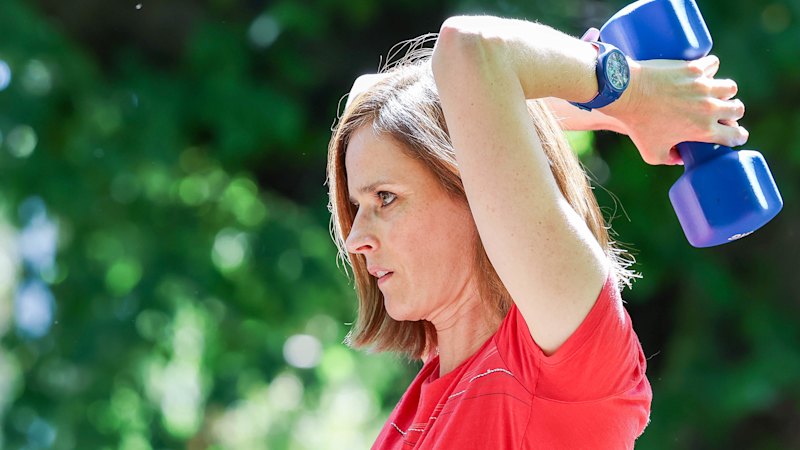
Research led by Severine Lamon, a molecular biologist at Deakin University, underscores the critical need for women over 40 to engage in weightlifting to counteract significant muscle loss. Her team’s findings reveal that as women transition through menopause, their muscle mass can decline sharply unless they actively resist this process through strength training.
The decline in muscle mass often begins in women during their early 40s, coinciding with a decrease in sex hormones such as oestrogen and progesterone. Lamon’s recent research, published in The Journal of Physiology, shows that unlike men, whose muscle degradation occurs gradually, women experience a steep decline that makes recovery much more challenging. This phenomenon necessitates a proactive approach to resistance training during midlife.
Critical Findings on Muscle Health in Women
The research team at Deakin University meticulously analyzed women’s muscle health across their adult lifespan, from ages 18 to 80. They aimed to understand the impact of hormonal changes on muscle composition and function, identifying a critical window of opportunity for muscle preservation between the early 40s and the conclusion of menopause. Lamon notes that the biological differences between men and women, including variations in more than 3000 genes, contribute to the distinct patterns of muscle aging observed.
Lamon emphasizes that midlife women must “speed up, not slow down” when it comes to resistance training. “The best way to build muscle mass is by pushing against external loads,” she explains. Having adapted her own fitness routine to include weightlifting sessions twice a week, Lamon encourages women to start lifting weights as soon as possible, but reassures them that it is never too late to begin.
Success Stories Highlighting the Benefits of Weights
Women like Wendy Glen, 63, have experienced remarkable transformations through weightlifting. Glen reports improved performance in running events since incorporating strength training into her routine, achieving faster times than she did at age 50 and even completing her first marathon at 60. She attributes her success to guidance from an exercise physiologist who tailored a regimen to enhance her running capabilities, including a variety of resistance exercises.
Exercise physiologist Dr Ashlee Hendy also highlights the growing recognition of resistance training’s importance for women. While there has been a noticeable shift towards women feeling more empowered in weightlifting spaces, some still find the gym environment intimidating. Hendy, an elite athlete with a background in rock climbing, acknowledges that many women are now embracing heavier weights rather than just lighter options.
“I’ve definitely seen a shift towards women lifting heavier weights,” Hendy states. Despite the challenges, the positive impacts of resistance training on women’s health are becoming more widely acknowledged as research continues to evolve.
Lamon’s findings offer a crucial public health message: engaging in any form of exercise, even walking, can help maintain muscle mass. Yet, the focus on resistance training becomes more pronounced as women reach midlife. The research suggests that enduring muscle health is essential not only for physical function but also for overall quality of life, as musculoskeletal deterioration can lead to increased health risks.
As awareness of the importance of strength training grows, the message is clear: women over 40 should take proactive steps to safeguard their muscle health through weightlifting and other forms of resistance training.