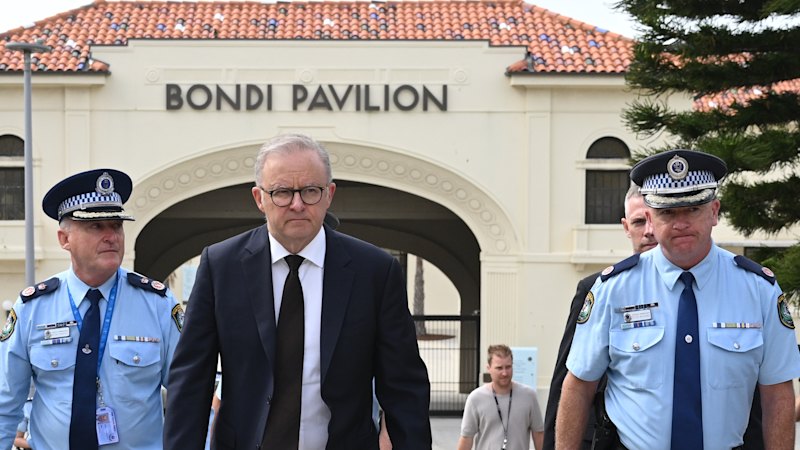
In recent weeks, Australian Prime Minister Anthony Albanese has faced mounting criticism for his delayed response to a surge in antisemitic attacks across the country. This scrutiny intensified following a tragic incident at Bondi Beach, where a violent assault connected to extremist ideologies left 15 people dead, including a child. The backlash highlights a perceived failure in leadership during a time of escalating tensions.
On October 9, 2023, the day after a deadly attack by Hamas in Israel that resulted in the deaths of over 1,200 civilians, the New South Wales (NSW) government illuminated the Sydney Opera House in blue and white, symbolizing solidarity with the Jewish community. However, the memorial event was overshadowed by a pro-Palestine demonstration that deterred many from attending. Videos from the evening captured alarming chants and the throwing of flares toward the iconic structure, prompting questions about the government’s response to antisemitism.
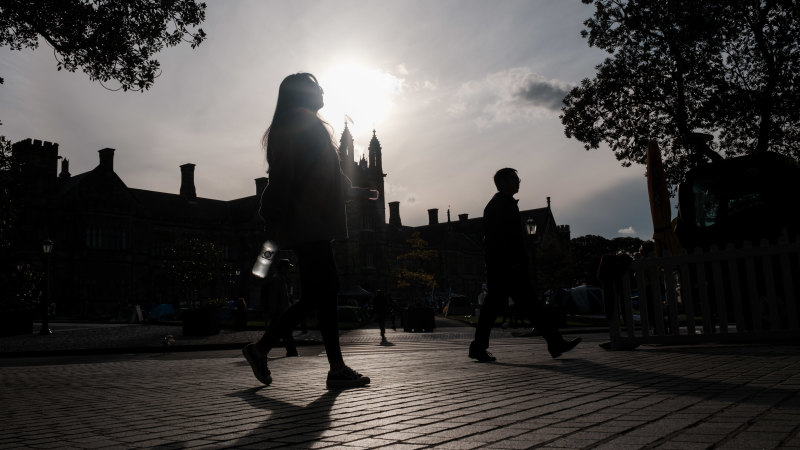
The prime minister’s handling of the situation has been criticized as reactionary. As antisemitism became more pronounced on university campuses, Albanese sought a politically palatable response rather than confronting the issue directly. Reports revealed that protest groups had been infiltrated by Hizb ut-Tahrir, an extremist organization, yet the government focused on reviewing antisemitic incidents rather than taking decisive action.
Over the past two years, Australia’s Jewish community has faced numerous threats, including arson attacks on synagogues and vandalism of Jewish-owned businesses. In response, Albanese appointed an envoy to investigate antisemitism rather than addressing existing reports and incidents. This inaction was particularly evident when a large protest against the Gaza conflict was marred by extremist elements waving flags associated with the Taliban and al-Qaeda.
Despite acknowledging public concerns about the situation in Gaza, Albanese’s statements often lacked a critical focus on the ideological underpinnings of the violence. For instance, after the Bondi Beach attack, which was celebrated by ISIS, the prime minister’s immediate emphasis was on gun law reforms rather than addressing the radical motivations behind the perpetrators’ actions.
The prime minister’s reluctance to confront radical Islamism directly has raised eyebrows. Leaders from organizations like the National Imams Council distanced themselves from the issue, asserting that ISIS does not represent Islam. Nevertheless, reports indicate that the Iranian regime has been involved in funding antisemitic activities within Australia, complicating the narrative further.
As the fallout from the Bondi Beach tragedy continues, the Executive Council of Australian Jewry (ECAJ) has stepped in to address the rise of hate speech and antisemitic rhetoric. Legal actions taken by the ECAJ against hate preacher Wissam Haddad underscore the challenges faced by the Jewish community amid rising threats. Haddad, linked to extremist ideologies, has been allowed to continue his sermons, which have included derogatory remarks about Jews.
Despite the evident urgency of the situation, critics argue that Albanese’s government has avoided accountability, with many suggesting that the Prime Minister’s leadership has been marked by hesitation. Ahmed al Ahmed, a hero from the Bondi incident who bravely intervened during the attack, serves as a poignant reminder that individual actions can transcend religious affiliations.
The Prime Minister must recognize this pivotal moment to distinguish between the broader religious community and those who engage in violence in the name of radical ideologies. Australians across the spectrum understand that an attack on any peace-loving minority is an assault on the entire nation. As the Prime Minister navigates this complex landscape, the call for a more proactive and clear stance against rising antisemitism has never been more urgent.