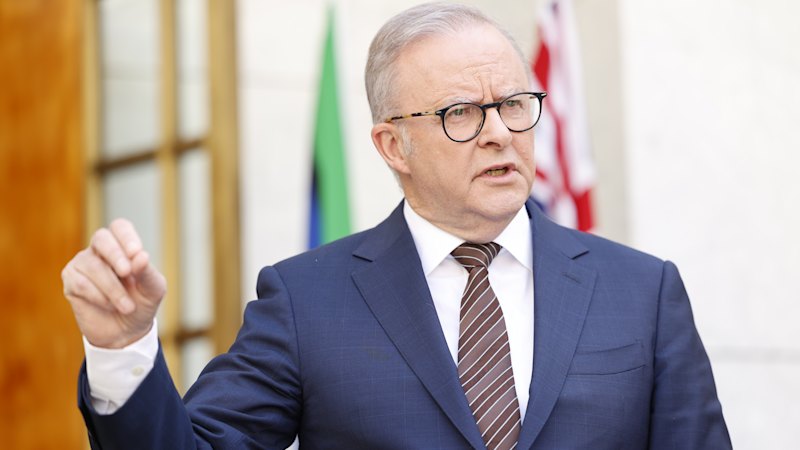
Anthony Albanese, the Prime Minister of Australia, is experiencing significant political challenges as the year comes to a close. Once perceived as politically invulnerable in November 2023, when discussions centered on internal conflicts within the Coalition, the political landscape has shifted dramatically, leaving Albanese under increasing scrutiny.
The Australian Labor Party, under Albanese’s leadership, has found itself grappling with a series of issues that have eroded public confidence. Recent polling indicates a decline in approval ratings, with many voters expressing concerns about the government’s handling of various critical topics, including economic management and healthcare. This shift is particularly notable in the lead-up to the next federal election, which could occur as early as May 2024.
Shifting Political Dynamics
In November 2023, Albanese’s government was largely seen as stable, buoyed by a strong parliamentary majority. However, as 2023 draws to a close, cracks in that façade are becoming increasingly apparent. The Australian Labor Party has faced backlash on several fronts, notably regarding its economic policies and responses to rising living costs, which have left many Australians feeling financially squeezed.
Recent surveys show that Albanese’s approval rating has dropped to around 42%, a significant decline from earlier in the year. Analysts attribute this downturn to a combination of factors, including rising inflation rates and concerns over public services. The opposition parties have seized the moment, intensifying their criticisms and questioning the government’s effectiveness.
Economic Pressures and Public Sentiment
As inflation continues to impact everyday life, Australian households are feeling the strain. The cost of living has surged, with essential goods and services becoming increasingly expensive. According to the Australian Bureau of Statistics, the annual inflation rate reached 5.1% in October 2023, a figure that has alarmed many citizens.
In this context, Albanese’s government is under pressure to deliver concrete solutions. The Prime Minister has acknowledged these challenges, emphasizing the need for a balanced approach to economic management. His administration is exploring various strategies, including potential tax relief measures aimed at alleviating financial burdens on families.
Despite these efforts, the government faces skepticism. Many voters feel that the measures proposed thus far have been insufficient. Albanese’s ability to regain public trust will be crucial as the political environment evolves and the prospect of an election looms.
In summary, as the year concludes, Anthony Albanese finds himself navigating a complex political landscape. Once viewed as a strong leader, he must now address growing discontent among voters while countering the Coalition’s resurgence. The coming months will be critical in determining the future direction of his government and the Australian Labor Party as they prepare for the challenges ahead.