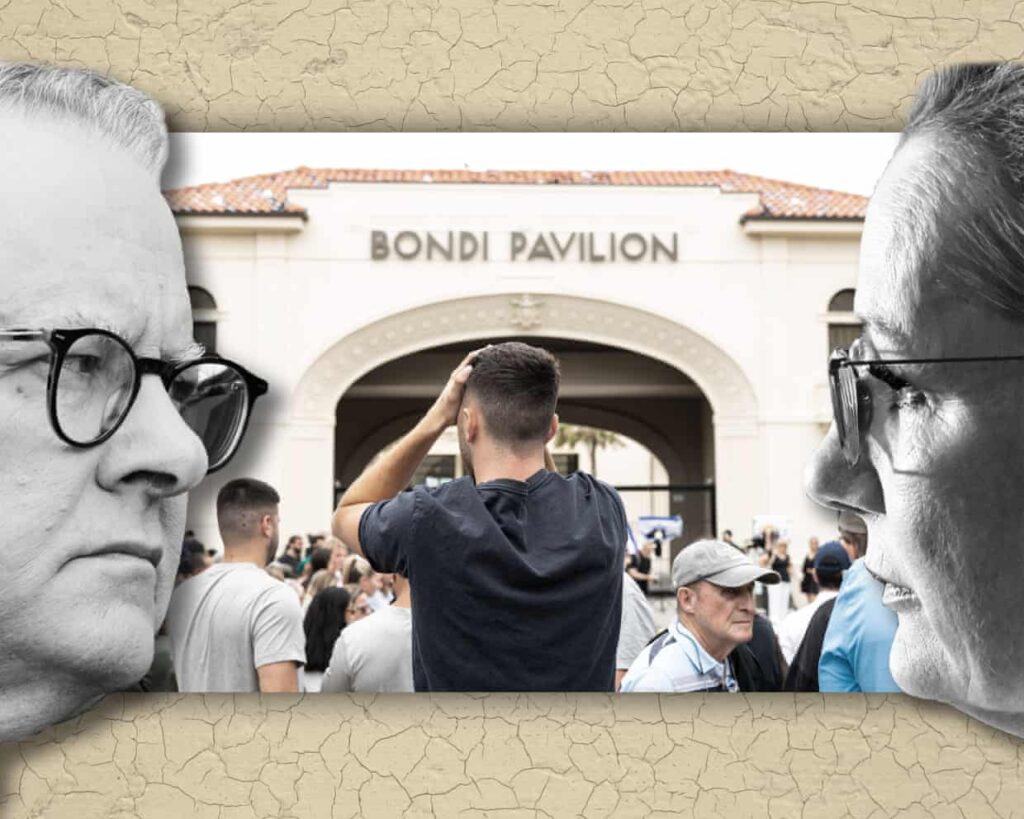
The aftermath of the recent terrorist attack in Bondi has placed substantial pressure on Australian Prime Minister Anthony Albanese, who is now confronting his most significant leadership challenge since taking office. Nine days following the attack that claimed 15 lives, calls for a federal royal commission have intensified, prompting Albanese to defend his government’s response.
During a press conference on Tuesday at Parliament House, Albanese emphasized that previous governments, including the Howard and Abbott administrations, did not initiate royal commissions following similar incidents, such as the Port Arthur massacre and the Lindt Cafe siege. He pointed out that New South Wales would conduct its own state-based royal commission, which his government would support. A comprehensive review led by Dennis Richardson into federal intelligence and law enforcement agencies is expected to conclude by April.
Despite a strong electoral victory earlier this year, Labor is now grappling with declining poll numbers, indicating a drop in Albanese’s popularity to its lowest level since the May election. This decline was underscored at a commemoration vigil on Sunday, where the prime minister was met with boos from attendees.
Criticism of Albanese’s rejection of a national royal commission has come from various quarters, including prominent Jewish Australians such as former treasurer Josh Frydenberg. The media, along with the opposition, has also voiced discontent over the government’s response. Former High Court Chief Justice Robert French has openly criticized the decision to pursue a review instead of a more thorough investigation.
Alex Ryvchin, co-chief executive of the Executive Council of Australian Jewry, stated that only a royal commission could provide the comprehensive understanding of the Bondi tragedy that is urgently needed. He expressed frustration over the government’s reluctance to take the lead in calling for such an inquiry, describing the situation as “deeply insulting.”
Political historian Chris Wallace highlighted that the incident has significantly impacted Albanese’s leadership. She noted that the government received the Segal report—which includes recommendations on antisemitism—back in July, yet it has taken five months with no action from the government. Wallace characterized this delay as a “performance failure” that cannot be overlooked.
Responses to the crisis often define political legacies. The determination shown by former Prime Minister John Howard to strengthen gun laws after the Port Arthur massacre is a prime example of how such responses can shape future perceptions of leadership. Conversely, Scott Morrison‘s controversial vacation during the 2020 bushfire crisis remains a point of contention in public memory.
Pollster Tony Barry from Redbridge noted that it is premature to assess the long-term political implications of the Bondi tragedy. However, he highlighted a growing perception among voters that Albanese appears “weak” in the face of national security concerns. Poll results from the Sydney Morning Herald and The Age indicated that nearly half of voters expressed dissatisfaction with the government’s response, even as perceptions of the opposition leader, Sussan Ley, also declined.
Barry remarked, “Albanese’s biggest challenge is he still suffers from that weakness frame.” He anticipates that national security will emerge as a more prominent issue in upcoming polls.
Wallace added that voters may also hold the Liberal and National parties accountable for their responses. She indicated that dignified support for the government in addressing systemic failures would resonate better with the public than partisan attacks.
Ley intensified her criticisms of Albanese and Minister for Foreign Affairs Penny Wong, accusing them of lacking genuine emotional engagement with the tragedy. She stated, “I make no apology for my passion on that occasion.”
Albanese has sought to promote unity rather than division, expressing regret over the politicization of the attack. Some members of the Labor Party have also voiced their frustrations, with Mike Freelander and Ed Husic calling for a royal commission. Observers within the party have noted that Albanese has not engaged sufficiently with the Jewish community over the past two years, with some members feeling that the government has failed to take decisive action.
Messages of support from constituents have surfaced, suggesting that some voters believe the situation is not entirely Albanese’s fault. “I don’t recall John Howard being blamed for Port Arthur or Tony Abbott for Lindt Cafe, yet apparently when two madmen kill 15 people, it’s Albo’s fault,” one message stated.
Former adviser Dean Sherr emphasized the importance of rebuilding trust within the Jewish community, which has felt increasingly isolated amid rising antisemitism. He noted that the Bondi attack has exacerbated these feelings, and community leaders are looking for leadership that shows understanding and support.
As Albanese prepares for the summer break, he faces a complex and evolving political landscape. His decisions in the coming months will be crucial in determining the trajectory of his leadership and the Labor Party’s future.