Australians are currently facing significant civic challenges as the nation grapples with the implications of what experts describe as a model of “managed fragmentation.” Since the events of September 11, 2001, successive governments have prioritized demographic expansion and diversity without fostering integration or shared civic responsibilities. This approach has led to a society increasingly marked by divisions and unresolved tensions.
A cohesive society relies on common civic norms, expecting newcomers to adopt a shared moral and legal framework. In contrast, Australia has emphasized differences while diminishing the expectation of assimilation. Language management and bureaucratic measures have taken precedence, attempting to suppress tensions that arise from these disparities.
The consequences of this approach are evident in the public’s response to ideological violence. When such incidents occur, the state often refrains from addressing them candidly. The reluctance to name the ideology behind violent acts creates a disconnect, allowing parallel moral frameworks to develop without integration. This avoidance highlights a broader failure of the system itself.
For instance, remarks by the Prime Minister characterizing Islamist violence as a “radical perversion” of a belief system do not clarify the issue but rather evade it. This pattern of softening language and diffusing responsibility has become familiar. Statements regarding belief quickly shift to reassurance, and when that reassurance falters, focus diverts elsewhere, often leading to greater internal scrutiny.
The implications of this pattern are already visible. Public events have been quietly cancelled, and traditional celebrations such as Christmas and New Year’s Eve are diminished, not due to direct threats but rather the pervasive sense of uncertainty. This shift in perspective treats normal public life as a potential liability rather than a societal good worth defending.
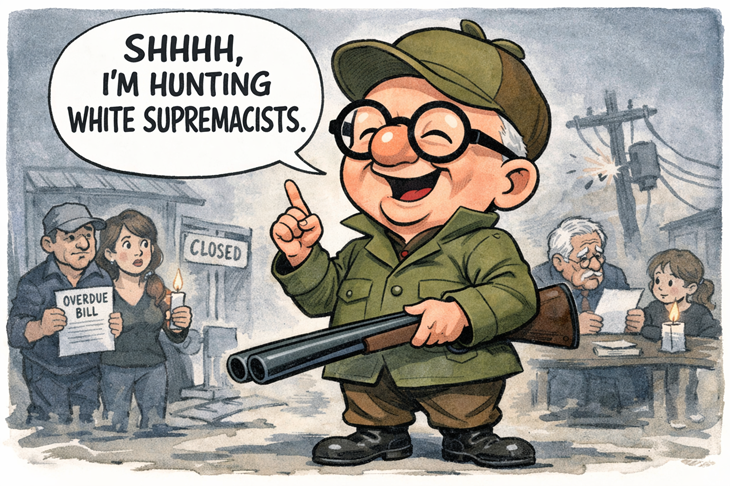
Alongside this retreat from public life, officials have adopted a vocabulary of enforcement. Ministers have announced crackdowns on “hate,” “antisemitism,” and “harmful speech,” yet they often provide vague definitions. Online platforms face intervention without clear intent or due process, creating a landscape where perceived threats to authority are prioritized over the protection of civil liberties.
The inversion of responsibility becomes evident when those in power punish speech while sanitizing ideologies that incite violence. The managerial class in Australia, similar to that in the UK, often resorts to labeling dissenters as extremists instead of addressing the underlying issues of ideological violence. Senior figures in media, such as those at the ABC, have also mischaracterized Islamic terror attacks, falsely asserting they have “nothing to do with religion.”
Labor Party member Andrew Leigh recently announced plans to tighten laws against online hate and antisemitism, emphasizing the need for action. However, this raises concerns among citizens about the implications for free speech. The definition of “hate speech” risks becoming arbitrary, shaped by those in power to suppress dissenting narratives and obscure uncomfortable truths.
Australia currently lacks mechanisms for direct democratic correction, such as recall elections or binding petitions. This leaves citizens with the vital tool of persistent dissent. Engaging with representatives and public broadcasters, despite often receiving evasive responses, becomes essential. Silence is not an option; it can be interpreted as consent to a system that prioritizes comfort over clarity.
The state must not be allowed to assume that Australians accept censorship for the sake of safety or ambiguity in place of transparency. A society that fails to identify its threats risks redefining its citizens as the very threats themselves.
This is not a time for complacency or reassurance; it is a moment for clarity and the reaffirmation of a shared civic framework. The call for action is urgent, and Australia must address these challenges now to foster a more integrated and cohesive society moving forward.