



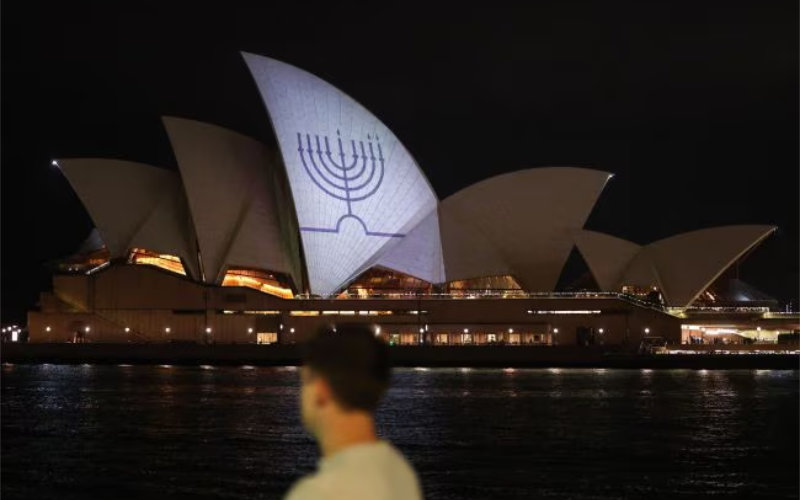
On a recent Thursday evening at the Sydney Opera House, a significant display of national mourning unfolded. Political leaders, including state premiers and the Prime Minister, gathered to express condolences following the tragic deaths of fifteen individuals. This public display, complete with solemn faces and religious symbols, illustrated a profound national grief. Yet, it also highlighted an ongoing discourse about the selective nature of empathy in Australia, particularly concerning Aboriginal Australians.
In the aftermath of the tragedy, which captivated the nation, vigils and ceremonies proliferated across Australia. Gatherings at Bondi Beach, lowered flags, and illuminated monuments marked a month-long period of mourning. While the deaths were undeniably tragic, the response has raised questions about the underlying motives behind this collective grief. According to Andrew Brown, a Sydney businessman and former Deputy Mayor of Mosman, a rigid hierarchy of grief exists, determining whose suffering receives public acknowledgment.
Approximately ninety thousand Jewish Australians received uninterrupted national mourning. In stark contrast, an estimated seven hundred fifty thousand to eight hundred thousand Aboriginal Australians experience public dismissal of their grief, particularly on January 26, which they observe as a day of mourning rather than celebration. When Aboriginal Australians assert that this date symbolizes invasion and cultural destruction, they are often met with hostility and accusations of divisiveness.
The media, particularly outlets like News Corp Australia, plays a significant role in shaping the narrative surrounding grief. Jewish mourning is frequently portrayed as a moral obligation, while Aboriginal mourning is framed as an affront to national unity. The question arises: why do Aboriginal flags not fly at half-mast on January 26? Why do leaders not don Aboriginal symbols in recognition of historical injustices?
This disparity extends beyond symbolism to issues of power and representation. Aboriginal Australians are the custodians of the continent, with a history spanning seventy to eighty thousand years. In recent years, they expressed a desire for a Voice to Parliament through the Uluru Statement from the Heart, seeking a permanent advisory body to represent their interests in governance. This request, deemed modest by democratic standards, was overwhelmingly rejected in a national referendum.
In a notable contradiction, the Australian government appointed a special envoy for Jewish Australians without public consultation, allowing that individual to shape policy across various sectors. This swift response starkly contrasts the protracted debates surrounding Aboriginal representation, where their voices remain optional rather than essential.
The implications of this selective empathy extend into broader societal contexts. Many individuals within the Jewish community openly identify with Israel, and Australia has demonstrated a willingness to engage in national mourning for foreign nations. Yet, Aboriginal Australians find their own history and sufferings frequently overlooked. This situation leads to feelings of exclusion and frustration among Aboriginal communities, who witness a stark contrast in the treatment of their grief compared to that of others.
The visible absence of recognition for Aboriginal suffering highlights a critical issue of moral cowardice masked as compassion. As political leaders publicly mourn tragedies abroad, they neglect to offer similar acknowledgment to their own First Nations. The ongoing debate around racism in Australia continues to be diluted, while urgent actions are taken to address other forms of discrimination.
Australia’s challenge lies not in a lack of empathy but in the honesty of its application. Until the nation addresses this hierarchy of grief and applies the same standards of recognition to Aboriginal Australians as it does to other communities, discussions of unity will ring hollow. Many Australians recognize this disparity, yet systemic change remains elusive.
As the nation grapples with these complex issues, it becomes evident that a true reckoning with grief—one that encompasses all Australians—remains a work in progress. The path towards genuine understanding and reconciliation will require a concerted effort to dismantle the barriers that separate communities and to embrace a more inclusive narrative of national mourning.