



On March 1, 2023, the National Archives of Australia (NAA) released significant records from the Australian Cabinet and its National Security Committee pertaining to the year 2005. These documents illustrate pivotal decisions made during the tenure of Prime Minister John Howard, a time that witnessed substantial changes in industrial relations, national security, and climate policy.
The October 2004 election positioned the Howard government with a formidable majority in the House of Representatives. By July 2005, the government also gained control of the Senate, an unusual achievement that allowed for ambitious legislative reforms without the necessity of negotiating with crossbench senators. This legislative freedom notably facilitated the introduction of the controversial industrial relations reform known as WorkChoices.
WorkChoices Reform and Its Impact
In March 2005, the Cabinet approved plans for WorkChoices, a reform package aimed at fostering a more direct employer-employee relationship. The initiative proposed to unify separate state and federal industrial relations systems into a national framework. Set to take effect on March 27, 2006, WorkChoices eliminated unfair dismissal protections for smaller companies and replaced the “no disadvantage test” with a streamlined safety net of five conditions that could be negotiated away.
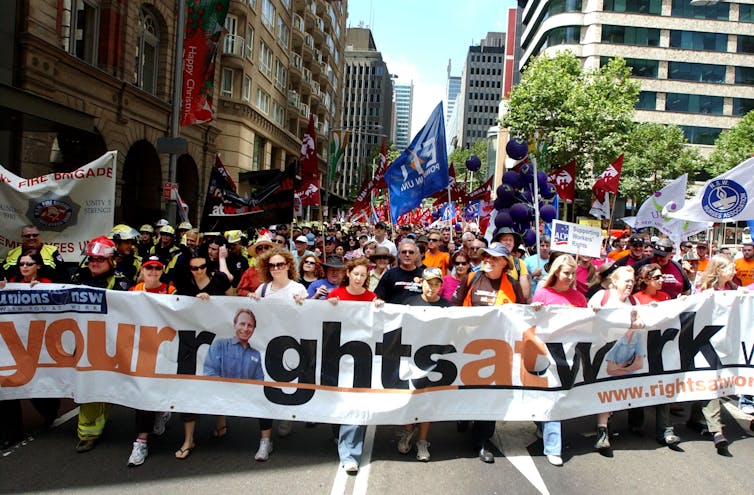
These changes significantly curtailed the power of trade unions, limiting workers’ rights to strike and enabling them to negotiate without collective representation. The Australian Council of Trade Unions (ACTU) strongly opposed these reforms, launching the “Your Rights at Work” campaign, which played a crucial role in the Howard government’s defeat in the 2007 federal election.
National Security and Foreign Relations
While industrial relations reform dominated discussions, 2005 was also marked by critical security and regional issues. In the wake of the devastating Indian Ocean tsunami in December 2004, which resulted in approximately 290,000 fatalities, Australia pledged $1 billion in aid for reconstruction efforts, primarily focused on Sumatra. This humanitarian response aimed to mend strained relations with Indonesia following East Timor’s independence.
In February 2005, Cabinet agreed to enhance military cooperation with Indonesia to combat terrorism and people smuggling. Additionally, Australia’s commitment to Afghanistan expanded as Defence Minister Robert Hill proposed deploying a Special Forces Task Group to support US-led operations. This decision resulted in a continuous Australian military presence in Afghanistan until 2021, involving around 3,000 personnel over 20 rotations.
In Iraq, the situation escalated, particularly highlighted by the kidnapping of Australian engineer Douglas Wood in May 2005. Prime Minister Howard firmly stated that Australia would not withdraw its troops or pay ransom. Wood was ultimately rescued six weeks later, but the growing unpopularity of the Iraq War presented ongoing challenges for the Howard government.
Domestically, the Cabinet maintained oversight of regional commitments, including efforts to strengthen governance in the Solomon Islands and address political instability in Fiji.
Climate Change Initiatives
The Cabinet discussions also touched on the pressing issue of climate change. In 2005, Foreign Minister Alexander Downer and Environment Minister Ian Campbell warned of the severe consequences of climate change for Australia and underscored the need for international cooperation. Their advocacy contributed to Howard’s proposal of an emissions trading scheme ahead of the 2007 election, although this initiative did not resolve the ongoing debate surrounding Australia’s climate policy.
The impact of the WorkChoices reforms lingered long after their implementation, contributing to the Howard government’s electoral defeat in 2007, not only in the federal election but also in Howard’s own constituency of Bennelong.
The release of these Cabinet papers provides invaluable insight into a transformative year for Australia, revealing the complexities of governance and the interwoven nature of domestic and international policy challenges. David Lee, a member of Australians for War Power Reform, reflects on the enduring implications of these decisions, emphasizing their lasting influence on Australian political life.