



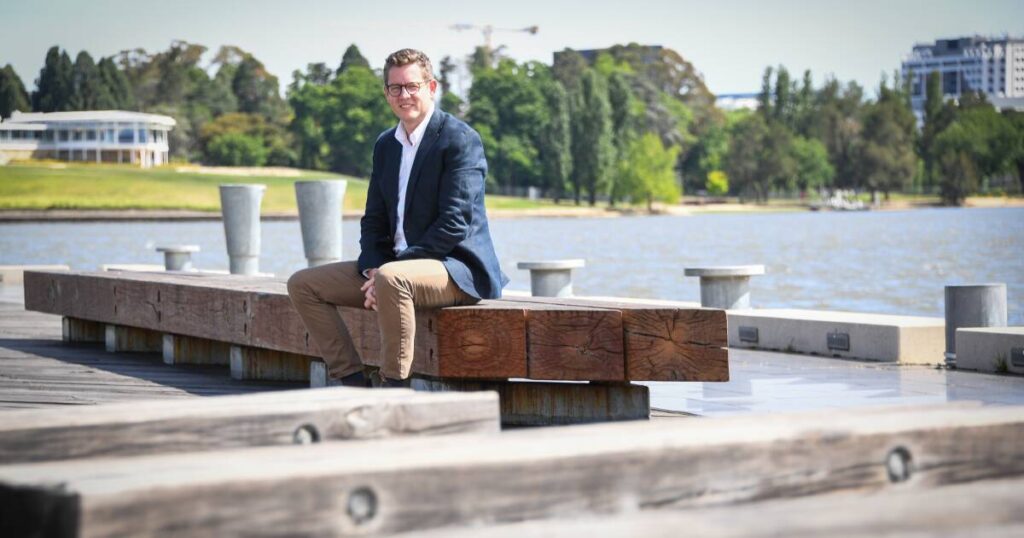
The division within the Coalition has prompted frustration for the Canberra Liberals’ Senate candidate, Nick Tyrrell, as he aims to reclaim a seat in the federal Parliament. Tyrrell expressed his dissatisfaction with the party’s focus on internal conflicts instead of addressing pressing voter concerns. “I’m sick to death of us talking about ourselves instead of what matters to voters,” he told The Canberra Times. He highlighted the urgent need for “sensible solutions to real problems like cost of living pressures,” criticizing the recent actions of the Nationals that he believes only benefit their political opponents, including Anthony Albanese and Pauline Hanson.
Tyrrell, who sold his business and increased his social media engagement after being preselected in November 2022, aims to win back the Australian Capital Territory (ACT) Senate seat previously held by former Liberal senator Zed Seselja. In the last federal election, Seselja lost his position to independent candidate David Pocock, a significant shift that underscores the challenges facing the Canberra Liberals.
The latest split within the Coalition follows the party’s ongoing struggle to regain the confidence of ACT voters. In recent polling, the Canberra Liberals saw a slight increase of 3.78 percent in support, though their candidate Jacob Vadakkedathu received only 17.76 percent of the primary vote in the last election.
Following the Nationals’ departure from the Coalition for the second time in nine months, Opposition Leader Sussan Ley now faces potential challenges to her leadership. Ley emphasized that maintaining shadow cabinet solidarity “is not optional,” asserting that it is “the foundation of serious opposition and credible government.”
In response to the turmoil, Nationals leader David Littleproud defended his position amid accusations of failing to communicate effectively within the shadow cabinet regarding a contentious hate speech bill. He asserted that no agreement had been reached to support the legislation voted on in a recent session, despite the apparent discord.
Former Nationals deputy prime minister Barnaby Joyce criticized Littleproud’s leadership, stating, “You don’t blow the whole show up so that Australia as a nation doesn’t have a competent opposition.” Joyce described the current situation as “chaotic,” arguing that it undermines the essential role of parliamentary opposition.
One Nation, a political party gaining traction in the ACT, launched a local branch this year and intends to field candidates in every ACT seat during the upcoming federal election. Meanwhile, Nationals leader in the Senate Bridget McKenzie dismissed claims that Littleproud faced pressure to alter his stance due to One Nation’s rising popularity, insisting that the discussions leading up to the vote had not included the actual bill that was passed.
Deputy Nationals leader Kevin Hogan echoed McKenzie’s sentiments, affirming that Littleproud was transparent about the decision-making process. The recent exodus of Nationals members from the Coalition frontbench followed Ley’s announcement that several members would be removed from her shadow cabinet due to their dissent.
Political strategist Kos Samaras commented on the broader implications of the Coalition’s internal strife, noting that conservative politics in Australia is experiencing a significant crisis. He likened the situation to a glass breaking on the floor, emphasizing the fragmentation within the Coalition and the emergence of populist movements like One Nation.
Samaras articulated that the moderate conservatism that once unified the Liberal Party is increasingly aligning with independent and teal candidates, further complicating the political landscape as Australia approaches future elections.