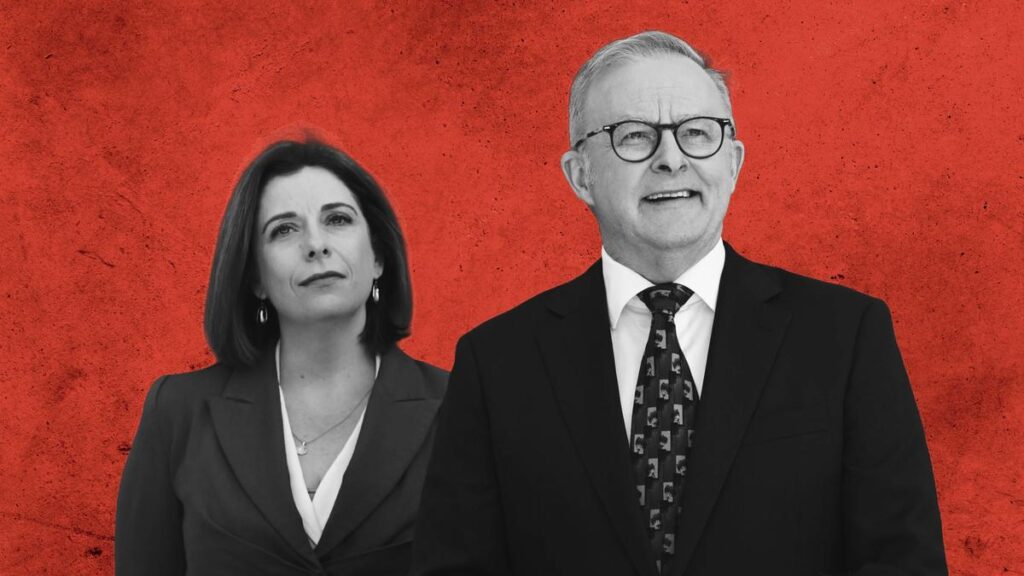
Anthony Albanese has been forced to defend Anika Wells and her travel spending during an under 16s social media ban victory lap.
High-profile politicians in Canberra are under scrutiny for their extensive use of taxpayer-funded travel entitlements. Anika Wells, Australia’s Communications Minister, has recently come under fire for her significant expenses, which include a notable claim of $1,200 to keep a Comcar driver waiting for nearly ten hours during the 2022 NRL grand final. Critics argue that such expenditures illustrate a troubling culture of entitlement among the political elite.
The situation is compounded by the fact that Prime Minister Anthony Albanese himself incurred a travel bill of $28,229 for what was described as “family reunion” travel in the last financial year. This has led to questions about the moral authority of Albanese to critique Wells’ spending habits, as he risks allegations of hypocrisy should he choose to reprimand her.
Wells, like many politicians before her, has opted to navigate this controversy by not admitting fault and referring her claims to the Independent Parliamentary Expenses Authority. This agency is likely to rule that her expenses were within the established guidelines, regardless of how disconnected they may seem to the average Australian taxpayer.
The broader issue at stake is not merely the legality of such expenses but the perception of how public funds are utilized. Spending taxpayer money in a seemingly frivolous manner, such as avoiding an Uber ride, can alienate constituents who are grappling with their own financial challenges. Last financial year, federal politicians collectively spent an astonishing $1.1 million to transport family members across the country.
While it is acknowledged that the demands of political life can place significant strain on family relationships, the justification for such lavish spending often seems disconnected from the realities faced by ordinary Australians. The intent of family reunion travel entitlements is to allow ministers to balance their professional and personal lives, yet the system relies heavily on the discretion of individual MPs.
As household budgets tighten in response to rising living costs, including expected interest rate hikes from the Reserve Bank of Australia (RBA), the public is urged to make sacrifices for the nation’s economic stability. Many Australians question why their elected representatives do not exhibit the same level of financial restraint.
Ultimately, the ongoing debate about entitlement culture in Canberra highlights a growing disconnect between politicians and the citizens they serve. As more Australians brace for financial difficulties, the expectation is that politicians will also adopt a more conscientious approach to their spending habits. The call for accountability and transparency in the use of taxpayer funds is louder than ever, emphasizing the need for a political culture that aligns more closely with the values and experiences of everyday Australians.