




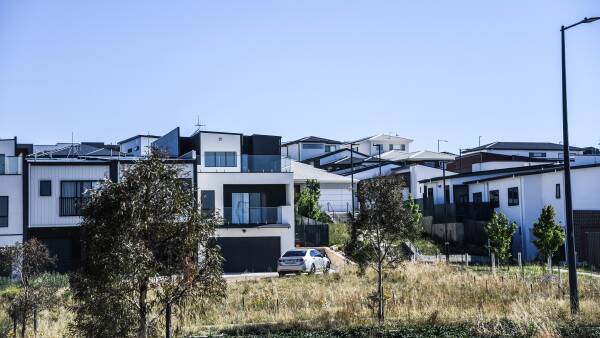
Public trust in the ACT government has declined significantly, with a recent study revealing a 10 percent drop in confidence regarding housing policies over just three months. The research conducted by the public policy think tank Amplify indicates that residents of Canberra are particularly dissatisfied, with 72 percent expressing unhappiness about the cost of new homes.
The report highlights that 56 percent of Canberrans are also dissatisfied with the quality of new housing. These sentiments reflect growing frustration among the population concerning the effectiveness of the territory’s housing policies. Less than half of respondents feel secure about their housing situation in the coming year, and nearly 40 percent have reported making sacrifices to maintain their current housing arrangements.
Georgina Harrisson, chief executive of Amplify, emphasized the paradoxical situation in the ACT. Despite being on track to deliver 21,140 homes over the next five years—equivalent to 98 percent of its population-adjusted housing target—the government’s declining trust suggests a disconnect between housing availability and affordability. “It is the closest in the country to meeting its housing target, yet trust has fallen faster than anywhere else,” Harrisson stated. “This tells us people care about affordability, quality and whether new housing genuinely improves their prospects.”
The data indicates that the government’s efforts to address housing issues may not be resonating with the community. According to Harrisson, the ACT government must enhance its engagement with citizens regarding housing initiatives. “Governments can still rebuild confidence and earn back trust—but only by delivering on their promises with real transparency and pace,” she noted.
Increasing the speed of home construction and reducing costs are critical factors in addressing the concerns raised by Canberrans. Harrisson pointed out the widespread disillusionment among residents, stating, “Too many Canberrans have all but lost confidence in the prospect of them or their kids ever owning their own home, and this needs to be a central focus for all governments in upcoming budgets.”
This trend of dissatisfaction with housing policies is not unique to the ACT. Across Australia, trust in the federal government regarding housing has fallen by 8 percent in the same period. Nationally, 67 percent of Australians express dissatisfaction with federal housing actions. Amplify’s research, which surveyed over 4,000 people across the country, revealed that an overwhelming 86 percent of Australians support increasing housing supply to tackle the sector’s challenges. Additionally, around 90 percent advocate for government action to address the “excessive cost of building new homes.”
In a recent update, Planning Minister Chris Steel highlighted the ACT’s strong performance in new dwelling completions, stating that the territory outperformed all other Australian jurisdictions in the first year of the national housing accord. The ACT government has committed to enabling 30,000 new dwellings by 2030, with 25,947 homes already factored into its housing supply and land release program.
Steel’s update, presented to the Legislative Assembly, also indicated that the private sector is expected to contribute approximately 9,500 new homes on land owned by private developers by 2030. As government-owned land becomes scarcer, Steel emphasized the importance of government intervention in facilitating housing through direct investments in public, community, and affordable housing, as well as planning and zoning reforms.
The urgency surrounding housing in Canberra and across Australia highlights the need for action that addresses both the immediate concerns of citizens and the long-term vision for sustainable housing solutions. As Canberrans continue to voice their frustrations, the pressure on the ACT government to respond effectively is mounting.