



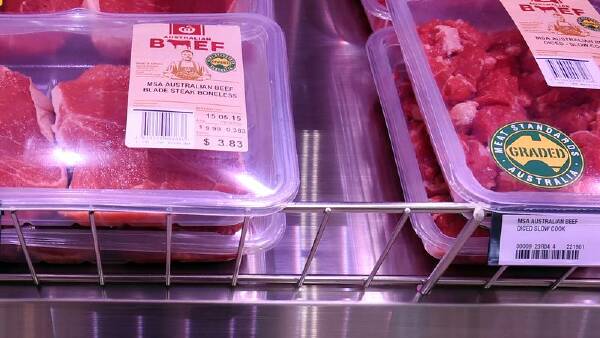
China’s recent decision to impose a hefty 55 percent tariff on beef imports from several countries, including Australia, is expected to have a devastating impact on the Australian beef sector. This move could potentially cost the industry over $1 billion annually. The tariffs will apply when shipments exceed specific quotas, leading to significant concerns among Australian beef exporters.
The new tariffs are aimed at protecting local farmers and producers in China, which has allocated 205,000 tonnes of its total 2.7 million tonnes quota for beef imports in 2026 to Australia. While other nations are also subject to similar quotas, many lobby groups and opposition members argue that this action violates the 2015 Free Trade Agreement between Australia and China.
Trade Minister Don Farrell has raised the issue with his Chinese counterparts, asserting that Australian beef poses no threat to the Chinese market. “We have made it clear to China that Australian beef is not a risk to their beef sector, and that we expect our status as a valued free trade agreement partner to be respected,” he stated. Farrell emphasized Australia’s extensive network of trade agreements, which covers nearly 80 percent of the globe.
Agriculture Minister Julie Collins echoed these concerns, indicating that Prime Minister Anthony Albanese‘s government is collaborating closely with industry stakeholders to assess the full impact of the tariffs. “We will always stand up for our farmers and producers, and for our proud beef industry,” she said.
Both Cattle Australia and the Australian Meat Industry Council have estimated that this tariff could slash Australia’s beef exports to China by approximately one-third compared to 2025, translating to a potential loss exceeding $1 billion in trade revenue.
The ramifications of these tariffs are already being felt within the industry. Simon Stahl, chief executive officer of Casino Food Company, noted that the Chinese market constitutes about 25 percent of his business, amounting to around $100 million per year. He expressed doubts that Chinese importers would absorb the cost once the quota is met, forcing exporters to seek alternative markets like the United States, which may not yield favorable prices. “That’s not going to be good for anyone,” Stahl told ABC TV.
In light of the tariffs, Stahl called on the federal government to assist local producers by reducing the costs associated with industry-funded inspection services. “Whilst the tariffs may be a little bit out of their control, I would argue the free trade agreement should take care of that. There are other things that are in government’s control,” he said.
Opposition Leader Sussan Ley urged Prime Minister Albanese to leverage his strong relationship with President Xi Jinping to negotiate an exemption from the tariffs. The situation remains fluid, with the Australian government actively seeking solutions to mitigate the impact on the domestic beef industry.
As the situation develops, the Australian beef sector faces an uncertain future, grappling with the challenges posed by these new tariffs and the potential loss of a vital export market.