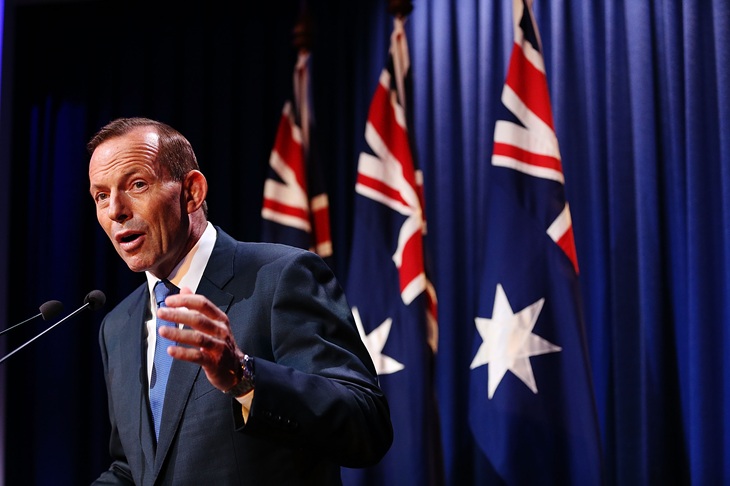
CANBERRA, AUSTRALIA - FEBRUARY 23: Prime Minister Tony Abbott during his speech on National Security at the Australian Federal Police headquarters on February 23, 2015 in Canberra, Australia. Tony Abbott announces changes to anti-terror laws based on the recommendations of a counter-terrorism review commissioned in August. (Photo by Stefan Postles/Getty Images)
The Australian Liberal Party is grappling with a leadership vacuum as it navigates the political landscape following the tenure of Sussan Ley. As the party anticipates a new leader, conversations are heating up around potential candidates, including Andrew Hastie, Timothy Taylor, and Senators Matt Canavan, Alex Antic, Jane Prentice, and Michaelia Cash. With the political machine remaining inactive during the holiday season, many are speculating on who might step forward as a serious contender.
There is a palpable sense of nostalgia within the conservative movement. Some party members are looking back to former Prime Minister Tony Abbott, who many believe was unfairly ousted from leadership. Abbott’s decision to repeal the Carbon Tax and his controversial comments on Islam have shaped his legacy, with some viewing him as a potential candidate for a political renaissance amidst an evolving conservative landscape.
Abbott’s Political Legacy and Current Viability
Abbott’s earlier governance was marked by significant policy changes that could be viewed differently today. His push for a religious revolution within Islam and his stance on multiculturalism might resonate differently with contemporary voters. During his time in office, Abbott faced immense pressure from media outlets and peers, which ultimately led to his political downfall.
While some Liberals reminisce about Abbott’s leadership, they must consider whether he can connect with younger voters who have no memory of what they term “good Australia.” This younger generation, influenced by current media narratives, often views conservative values unfavorably. They perceive conservatives as not merely wrong but as detrimental to societal progress.
The political landscape has shifted dramatically, and conservative parties face the challenge of reaching out to young voters who feel alienated from traditional political discourse. Many of these voters are attracted to fringe ideologies, demonstrating a disconnect from established conservative principles. The question remains: how can the Liberal Party re-engage these voters and present a compelling vision for Australia’s future?
Navigating Modern Politics and the Role of Social Media
The rise of social media has transformed political communication, providing a platform for ideas that challenge conventional narratives. Donald Trump effectively harnessed this shift by engaging with younger audiences through various platforms, creating a dynamic political movement. In contrast, conservatives in Australia have often shunned social media, viewing it as an adversarial landscape rather than a tool for engagement.
Abbott’s recent activities, including his book tour for “Australia: A History,” suggest he may be positioning himself as a cultural figure within the party. His thoughts and editorials have gained traction, indicating a potential resurgence of interest in his leadership style. However, the challenge remains: can he resonate with a generation that has been shaped by different educational and social influences?
As the Liberal Party contemplates its future, it must prioritize finding a leader who can effectively connect with both traditional supporters and a new wave of voters. With the next election looming, the party cannot afford to waste time on outdated strategies that fail to address current societal challenges. The urgency for change is clear, and the need for a decisive leadership choice is critical as the party navigates its path forward.
In a rapidly evolving political environment, the Liberals must embrace the nuances of modern conservatism while also confronting the realities of a younger electorate. The future of the party may very well depend on how effectively it adapts to these changes and the leadership it ultimately selects.