


Family violence issues dominated the first full day of hearings at the Korumburra Court House last Thursday, particularly regarding breaches of intervention orders. This focus aligns with concerning trends highlighted in the latest data from the Crime Statistics Agency, which reported an alarming increase in family violence incidents across Victoria.
The statistics for the year ending September 2025 revealed an overall rise in crime, with family violence incidents climbing by 8 percent to a staggering total of 106,430 incidents in the state during the 2024-25 period. Regionally, the data indicated that breaches of family violence intervention orders constituted the highest offence category in both the Bass Coast and South Gippsland local government areas. While Bass Coast saw a 2 percent uptick in family violence offences, South Gippsland experienced a decline of 5.1 percent.
Among the cases heard last week, one notable instance involved a defendant facing 37 breaches of a family violence order, ultimately reduced to five breaches. The breaches occurred when the accused responded to some of the 34,000 text messages received from the protected person, often replying with simple emoji acknowledgments. Another case under consideration involved the application for an extension of an order affecting the couple’s children.
During the proceedings, Magistrate Samantha Poulter issued a crucial reminder regarding the impact of family violence on children. She emphasized the importance of maintaining a peaceful environment, stating, “Family violence has a significant impact on children. I can’t impress on you enough the imperative of not dealing with your issues in front of the children.” This insight highlights the dual experience of children and young people who can be directly targeted by family violence or suffer indirectly when harm is directed at others.
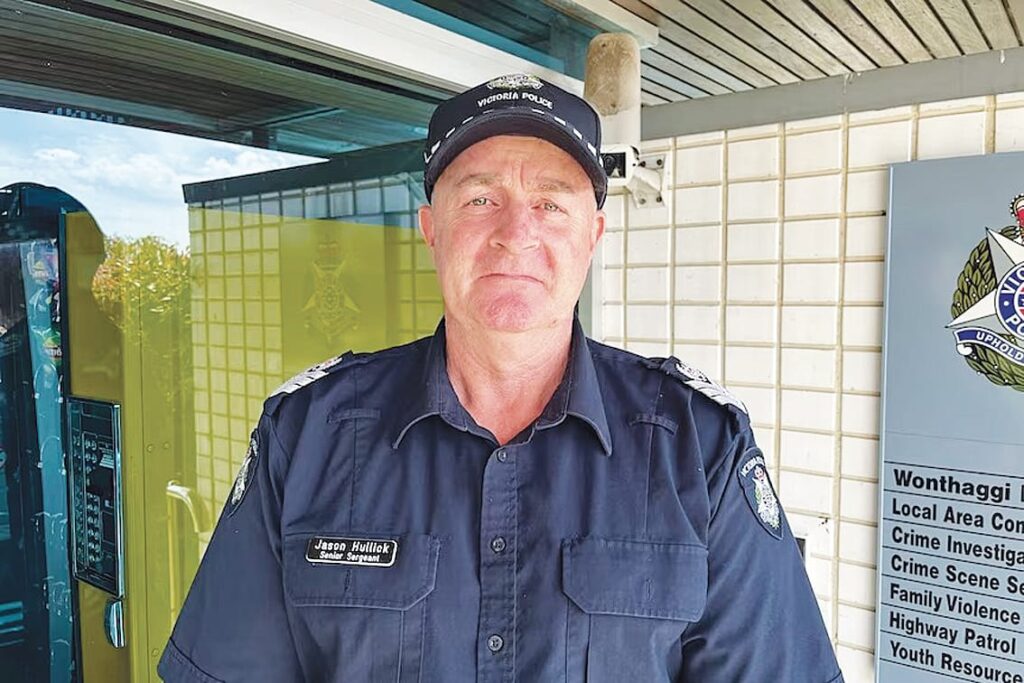
The response to family violence incidents is a significant focus for local law enforcement. Senior Sergeant Jason Hullick of Wonthaggi acknowledged the considerable time police allocate to these matters. “Responding to reported incidents of family violence does take up a large amount of police time. However, this is indicative of how seriously we take these matters. While family violence continues to occur in the community, we will continue to provide a policing response,” he stated.
Questions have arisen regarding the efficacy of Family Violence Intervention Orders (FVIOs) in reducing incidents and managing behaviour. Hullick believes that FVIOs are a vital part of a broader strategy to combat family violence. “They play an important part in protecting victims. When there is an active order in place, it allows police to hold respondents accountable for their behaviour,” he explained.
There is an ongoing dialogue about whether more can be done to ensure that individuals subject to FVIOs understand the seriousness of these orders. Hullick noted that conditions are fully explained to individuals upon issuance, and written materials accompany the orders to underscore the implications of breaching them. He stated, “While we welcome new ideas to improve processes, there is also an expectation that people are responsible for their own actions.”
To tackle the continuing issue of family violence, various referral agencies offer support for both victims and respondents. According to Hullick, engaging with these agencies often leads to positive outcomes, contributing to a reduction in reported incidents. “When people get involved with support services and are open to their suggestions, it can lead to a significant change,” he said.
Ongoing training and the exploration of new methods are essential for police responses to family violence. Although the approach has remained consistent over recent years, Hullick emphasized the importance of education, accountability, and follow-up contact in addressing these issues effectively.
For those experiencing family violence, support services are available. Individuals can contact 1800 RESPECT at 1800 737 732 or reach out to Lifeline at 13 11 14 for assistance.