Screenshot
The New South Wales Independent Commission Against Corruption (ICAC) is conducting an investigation into the University of Wollongong, as officials scrutinize governance practices amid allegations of conflicts of interest and misuse of public funds. This comes on the heels of a tense inquiry session on October 18, 2023, where Chancellor Michael Still faced extensive questioning regarding key decisions that have significantly impacted the institution.
ICAC officers reportedly visited the university last week, seizing laptops as part of their investigation. The inquiry’s focus includes governance failures, particularly surrounding the removal of former Vice Chancellor Patricia Davidson and the controversial appointment of interim Vice Chancellor John Dewar, whose consulting firm was later awarded substantial contracts by the university.
During the inquiry, Still was questioned about his decision to appoint Dewar as interim vice-chancellor for approximately eight months instead of seeking a permanent replacement post-Davidson’s departure. He justified this choice by stating that appointing a permanent vice-chancellor would have taken “many months,” and Dewar’s experience could facilitate “significant change” in the university’s operations.
Critics, however, raised concerns about granting extensive authority to an interim figure, especially concerning decisions that included mass redundancies and executive departures. One committee member noted a “disconnect” regarding the authority given to an interim appointee, suggesting that such powers should not rest with someone in a temporary position.
The inquiry further scrutinised Dewar’s ties to KordaMentha, where he was still a partner while serving as interim vice-chancellor. The firm received nearly $3 million for operational reviews that underpinned significant job cuts at the university. Still acknowledged that Dewar worked a nine-day fortnight for the university while retaining a connection to KordaMentha, yet he maintained no conflict of interest existed.
Documents obtained through freedom of information requests revealed that Still was aware as early as June 2024 that Dewar would continue to work with KordaMentha, despite public assertions that he was on leave from the firm during the tender process. When questioned about public perception, Still conceded the optics were concerning but insisted safeguards were in place.
As the inquiry unfolded, attention also turned to Davidson’s resignation in April 2023. Still indicated he had multiple discussions with Davidson regarding her departure but denied any direct suggestion for her resignation. The inquiry noted a pattern of senior executive exits following her departure, raising questions about the centralisation of authority under Still’s leadership.
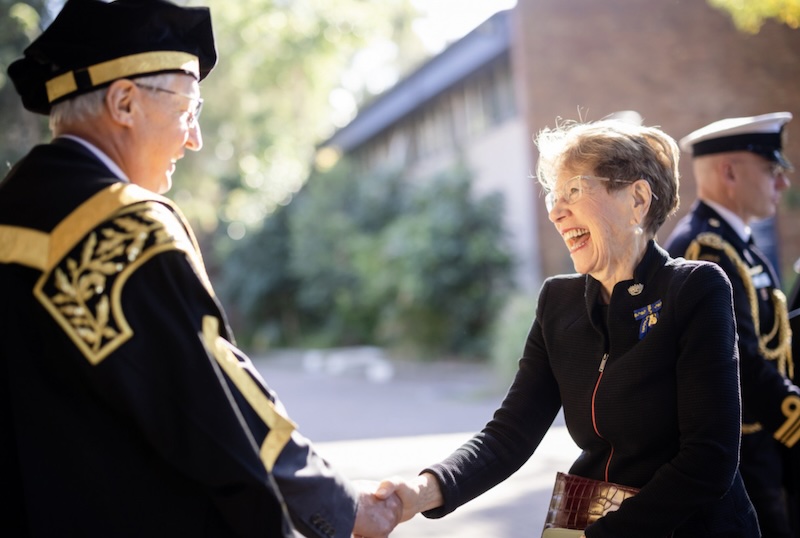
The committee also examined Still’s personal expenditures, including the controversial $62,000 cost of his installation ceremony as chancellor. Committee chair Dr. Sarah Kaine questioned the appropriateness of such expenses amid claims of financial strain at the university. In response, Still stated he was unaware of the ceremony’s cost at the time and described the expense as “unfortunate,” agreeing to provide further information regarding its approval.
The inquiry revealed that nearly $300,000 had been spent on expenses associated with the chancellor’s role over an 18-month period from January 2024. These revelations prompted criticisms from committee members regarding the university’s financial management and governance.
Former academics from UOW, including Dr. Adam Lucas and Professor Fiona Probyn-Rapsey, provided testimony highlighting governance issues and the reliance on external consultants for decision-making. Lucas expressed concerns that the university’s use of consultants often dictated predetermined outcomes rather than genuinely seeking input. He pointed out a lack of transparency, asserting that significant council discussions were largely confidential.
Probyn-Rapsey further criticised the governance structure, questioning why the university seemed to cede control to a private consultancy firm. She expressed concern about the impact of recent job cuts, noting that over 270 jobs had been eliminated since Still took office and $29 million had been paid in redundancy costs.
The inquiry also examined UOW’s international expansion through its subsidiary, UOW Global Enterprises, which operates campuses in countries such as Dubai, Hong Kong, Malaysia, Singapore, and India, with plans for a campus in Saudi Arabia. Critics questioned the rationale behind investing in overseas campuses while cutting local jobs and programs, urging the university to prioritise its obligations to the Illawarra region.
In response to the inquiry, a spokesperson for the University of Wollongong firmly rejected any allegations of misconduct. “The University operates within established governance, probity, and delegation frameworks, and major decisions are made through documented processes with appropriate oversight,” the spokesperson stated.
As the investigation continues, the findings from the ICAC and the Parliamentary Inquiry will likely have significant implications for the future governance of the University of Wollongong and its handling of public funds.